

Nature Tree Classic – Free icon download
Download all to grab every PNG variant.
In the vast tapestry of visual design, certain icons emerge not just as symbols but as cultural touchstones—simple yet profoundly resonant. One such icon stands out with a quiet elegance and enduring relevance: the Classic Tree in Nature. This icon masterfully weaves together three powerful and interdependent themes—Nature, Tree, and Classic—to create a design that is both timeless and deeply grounded in the natural world. More than just an illustration, this icon serves as a visual embodiment of balance, growth, continuity, and harmony between humanity and the environment.
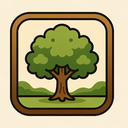
The foundation of this icon lies in its depiction of a Tree. The tree is rendered with meticulous simplicity—its trunk is straight and robust, rising vertically from a rounded base that suggests fertile soil. Its branches are elegantly spaced, forming a natural canopy with gentle curves, evoking the organic rhythm found in real-world flora. No excessive detailing or stylization is used; instead, each line follows the principles of balance and symmetry. The leaves are not depicted as dense clusters but rather as soft, feather-like formations that suggest growth without overwhelming the viewer. This attention to natural form ensures authenticity—each element reflects a genuine representation of how trees grow in nature, emphasizing their organic origin and biological grace.
Yet this is no ordinary tree icon. It belongs to the realm of Nature, which is not only a setting but a philosophy embedded in its design. The icon does not isolate the tree from its environment; instead, it integrates it into a broader ecological context. Subtle gradients in color—often earthy tones like deep green, warm brown, and soft gray—mimic the natural light of dawn or twilight. These colors are not chosen for aesthetic appeal alone but to reflect how nature exists: grounded, sustainable, and ever-present. The icon may appear static on a screen, but its essence is dynamic—a silent reminder of seasonal changes, wind patterns, and the slow passage of time through natural cycles. It evokes a sense of calm and continuity that resonates with people seeking balance in an increasingly fast-paced world.
What truly sets this icon apart is its adherence to the Classic aesthetic. Classic design principles—simplicity, clarity, minimalism, and timeless appeal—are not mere suggestions; they are foundational tenets of this icon’s creation. In a digital age where trends shift rapidly and visuals often become overly complex or exaggerated, this tree stands as a beacon of restraint. Its form is uncomplicated: no ornamental flourishes, no unnecessary shadows or textures. It communicates instantly—within one glance, the viewer understands that it represents growth, stability, and life. This clarity ensures universal recognition across cultures and age groups. Even in small sizes or on low-resolution devices, the icon remains legible and meaningful.
The simplicity of the Classic Tree does not mean a lack of depth. On closer inspection, one can perceive layers of meaning. The trunk suggests strength and resilience—qualities often associated with enduring values such as integrity and perseverance. The branching structure symbolizes expansion, growth through challenges, and the interconnectedness of life. In a world increasingly dominated by artificial systems and digital abstraction, this tree serves as a grounding force—a reminder that all life begins in soil, grows through time, and contributes to a larger whole. It is both literal and metaphorical.
Furthermore, the integration of Nature into the icon’s design reflects an awareness of environmental responsibility. Unlike many modern icons that prioritize functionality over ecological sensitivity, this one celebrates biodiversity and sustainability. It invites viewers to pause and appreciate the quiet beauty of a single tree in a forest or park—something that has long been recognized as essential to mental well-being, climate stability, and human health. The icon thus becomes not just an image but a call to action—an invitation to protect nature, preserve forests, and live in harmony with the natural world.
The Classic Tree also serves as a cultural anchor. Across generations and continents, trees have held symbolic significance—whether as life-giving forces in ancient myths or as symbols of wisdom in modern teachings. By embedding these universal themes into its form, the icon transcends language and geography. A child in Japan may see it as a representation of longevity, while someone in North America might interpret it as a symbol of environmental stewardship. This cross-cultural resonance is a hallmark of truly classic design.
From an artistic standpoint, the Classic Tree icon demonstrates how minimalism can be powerful. It does not rely on color saturation or motion to capture attention; instead, it relies on form and structure. Its clean lines and balanced composition make it highly scalable—ideal for use in mobile apps, websites, environmental campaigns, educational materials, and branding for eco-conscious companies. Because of its simplicity and elegance, it can be easily paired with other elements such as icons for water, wind, or soil to create a cohesive natural-themed design system.
In conclusion, the Classic Tree in Nature is far more than just a visual motif. It is a philosophy in iconography—a harmonious convergence of organic truth (Nature), biological realism (Tree), and enduring design principles (Classic). It speaks to both the aesthetic and ethical dimensions of modern life. In an era where digital content often feels cold or impersonal, this icon offers warmth, wisdom, and a return to what is natural, authentic, and timeless. Its presence on any platform reminds us that even in the most technological landscapes, a single tree can stand as a quiet testament to life’s enduring beauty.
Create your own icon with our GoGPT AI prompt:
GoGPT