

Technology Book Cyberpunk – Free icon download
Download all to grab every PNG variant.
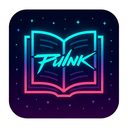
Description of the Icon: "Neon Codex"
The "Neon Codex" is a striking and intricate icon that seamlessly fuses the core elements of Technology, Book, and Cyberpunk into a single, visually compelling symbol. This icon transcends mere aesthetic design; it serves as a conceptual gateway into a future where information is both powerful and fragile, where knowledge is digitized yet deeply rooted in human history, and where the line between the physical world and virtual reality blurs in the neon-drenched streets of a dystopian metropolis.
At its core, the icon features a towering, vertically oriented book structure—its pages not made of paper but rendered as shimmering digital screens. The cover is composed of holographic glass that pulses with soft blue and electric purple hues reminiscent of data streams. As the viewer’s eye moves across the surface, it appears to shift dynamically: flickering glyphs form and dissolve like code, revealing snippets of ancient languages interwoven with modern programming syntax such as Python, C++, or binary sequences. The book stands not on a pedestal but suspended in mid-air, supported by glowing data filaments that resemble neural networks extending from its spine—visual metaphors for how information flows through human consciousness and artificial intelligence in a cyberpunk world.
The Technology aspect of this icon is embodied in every detail. The edges of the book are embedded with microchip patterns, tiny circuit-like veins that pulse faintly as if alive. These circuits form a complex network that spirals outward from the spine, resembling both a motherboard and an organic neural structure. Embedded within the pages are floating data points—floating particles made of translucent light—each representing a different piece of stored information: scientific equations, encrypted messages, historical records, and even personal memories. As one would expect in a cyberpunk environment where technology is both omnipresent and invasive, these data points emit subtle electromagnetic fields that create a soft ambient glow around them. The background behind the book is not static; it's a simulated cityscape—a futuristic metropolis with towering skyscrapers lit by flickering neon signs, rain-slicked streets, and flying vehicles that hover silently above like drones.
The Book element is not merely decorative—it represents knowledge as a sacred artifact in an age of information overload. Unlike traditional books, which are static and physical, the "Neon Codex" functions as a living repository of human wisdom. Each page is interactive; by hovering over it (in digital form) or focusing attention on it (in physical interpretation), the viewer can "read" through layers of meaning—some pages show classical texts like Plato’s dialogues or Shakespearean sonnets, while others display fragmented, futuristic predictions about AI governance, climate collapse, or human augmentation. The book's spine contains a small embedded device—a miniature biometric scanner—that simulates a heartbeat-like rhythm when activated. This rhythm symbolizes the pulse of thought and memory—the way knowledge lives in people’s minds and evolves with time.
The Cyberpunk aesthetic is woven throughout every layer of this icon. The color scheme dominates with deep indigo, electric cyan, magenta, and neon yellow—colors associated with dystopian futures where corporate power overshadows individual freedoms. The lighting effects are hyper-realistic: reflections ripple across surfaces like digital rain, and shadows stretch unnaturally long in the low-light environment typical of cyberpunk cities. The typography used to label sections of the book is distorted and glitched, mimicking corrupted data files—a nod to how truth can be manipulated or hidden within vast digital archives. In some corners of the icon, small holographic advertisements for corporate data services flash briefly—such as "NeuralSync™: Access Your Mind in Real-Time" or "Memory Vault: Store Your Past Forever"—reinforcing the cyberpunk theme of commodified information and surveillance.
Moreover, the icon embodies a philosophical tension central to cyberpunk: the duality between progress and decay. The book, while technologically advanced, carries traces of age—pages are worn at the edges, ink blurs in places that resemble digital artifacts from degraded storage media. This blend of decay and innovation suggests that even in a world saturated with technology, human vulnerability and imperfection remain essential. The cyberpunk setting reflects a society where technology has outpaced ethics—where algorithms dictate behavior, AI controls emotions, and information is hoarded by megacorps. Yet within this grim backdrop, the book stands as a beacon of resistance—a symbol that knowledge must not be owned or controlled but shared and preserved.
From a design standpoint, the "Neon Codex" is intended for use in digital interfaces such as app icons, logos for AI-driven educational platforms, or visual metaphors in futuristic literature. It can also serve as a standalone emblem representing the intersection of ancient wisdom and cutting-edge technology. Its complexity invites interaction—whether through augmented reality overlays that reveal hidden content when viewed with a compatible device or through animated versions where the pages turn automatically to showcase evolving knowledge.
In conclusion, the "Neon Codex" icon is not just a fusion of Technology, Book, and Cyberpunk—it is a narrative in visual form. It speaks to the future of information: how books may evolve into digital entities that preserve memory and thought while being shaped by technology. In a world where cyberpunk themes dominate our cultural imagination, this icon serves as both an artistic statement and a warning—a reminder that while technology can enhance knowledge, it must never replace the human spirit’s quest for understanding. It is a symbol of balance: between digital progress and timeless wisdom, between innovation and introspection, between the mechanical and the metaphysical.
The "Neon Codex" stands as a monument to what knowledge might become in a world shaped by code, light, and neon—where every page turns not just to reveal information, but to challenge our very perception of reality.
Create your own icon with our GoGPT AI prompt:
GoGPT