

Technology Book Origami – Free icon download
Download all to grab every PNG variant.
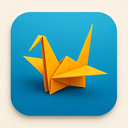
In a rapidly evolving world where digital innovation meets timeless human traditions, the convergence of Technology, Book, and Origami represents not just a visual metaphor but a philosophical journey. This icon is more than an aesthetic construct—it is a symbol of harmony between progress and tradition, between information and artistry. Designed with intention, it captures the essence of how modern technology can preserve, enhance, and reframe the enduring value of written knowledge through creative transformation—specifically through the ancient art of origami.
At its core, this icon features a stylized Book, not as a static object on a shelf or in a library corner, but as an actively evolving entity. The book is depicted in three-dimensional form with soft, flowing folds that resemble both the pages of traditional paper books and the delicate creases found in origami. Each page of the book appears to be made from folded paper, suggesting not only physical materiality but also layers of meaning—each fold representing a new layer of thought, understanding, or innovation. The spine is subtly illuminated, as if lit by internal digital energy, symbolizing how knowledge now lives not just in physical form but in dynamic digital ecosystems such as cloud storage, e-learning platforms, and AI-driven research systems.
Crucially, the book’s structure is interwoven with Origami. Instead of traditional paper folding patterns like crane or lotus, this icon uses geometric origami motifs that reflect both mathematical precision and artistic expression. The folds form a lattice-like network that visually connects the pages, suggesting interconnected knowledge systems. These folds are not random—they follow principles found in algorithmic design, fractal geometry, and even neural networks in artificial intelligence. In this way, origami becomes a visual metaphor for how information is structured and processed: complex systems emerge from simple folding rules—just as recursive algorithms build intelligent models from basic operations.
Surrounding the book are subtle digital elements that represent Technology. A soft glow emanates from the edges of the book, resembling data streams or network connections. Floating glyphs and micro-symbols (like binary code fragments or circuit patterns) appear within the folds, merging seamlessly with paper textures. These technological features do not overwhelm the design—they enhance it. They suggest that technology is not a separate domain but an integral part of how knowledge is accessed, stored, and shared today. For instance, when one opens a digital book on a tablet or reads e-books through augmented reality lenses, the interface might visually resemble this icon—where paper-like folds appear to unfold into interactive screens.
What makes this icon truly unique is its balance between preservation and transformation. The Book represents legacy—the accumulated wisdom of human thought, history, philosophy, science, and literature. Yet through the lens of Origami, that book is not static; it transforms dynamically as new ideas are folded into it. Each fold symbolizes a new concept being introduced—whether a scientific discovery in quantum computing or a philosophical idea from ancient Eastern thought. This dynamic folding mirrors how technology does not erase the past but reinterprets and enriches it.
The fusion of these three elements also speaks to education and lifelong learning. In classrooms today, students are taught to think creatively while using digital tools. This icon embodies that ideal: it suggests that learning is not a passive act of reading pages, but an active process of folding ideas into new forms—much like origami where every fold requires intention, precision, and imagination. It encourages learners to see technology not as a distraction from traditional knowledge but as a tool for deepening understanding through visualization and structure.
Moreover, the icon reflects cultural synthesis. Origami originates in Japan—a culture deeply rooted in balance, harmony, and respect for nature—while technology is often associated with Silicon Valley or Western innovation. By merging these two worlds through the universal language of books (a symbol of knowledge shared across cultures), this icon celebrates global interconnectedness. It suggests that even as we advance technologically, we must return to foundational human values: curiosity, patience, and creativity.
From a design standpoint, the icon is minimalist yet deeply layered. The use of clean lines and soft gradients allows viewers to focus on the relationships between elements without visual clutter. It can be used across various digital platforms—from educational apps to corporate branding—as a symbol that promotes innovation grounded in human wisdom. For example, a university offering AI-driven courses on classical literature might adopt this icon as its logo: representing how cutting-edge technology helps students explore timeless books with new perspectives.
Additionally, the icon serves as an accessible metaphor for individuals navigating the modern information age. In a world saturated with data, it reminds us that true understanding comes not from volume of information but from thoughtful integration—much like how origami requires folding in specific sequences to achieve balance and beauty. Just as a paper crane takes time to fold, so too does meaningful knowledge take effort and reflection to internalize.
Ultimately, the icon of Technology, Book, and Origami stands as a powerful visual statement about the future of human knowledge. It is not just about what we know but how we know it—through creative processes that blend ancient traditions with modern tools. Whether used in branding, education, or digital design, this icon inspires a vision where technology enhances rather than replaces tradition, and where books remain living entities—folded, reimagined, and ever-evolving.
It is a call to embrace both the digital revolution and the enduring power of human thought. In every fold of paper and every line of code, we find not just innovation—but wisdom in motion.
Create your own icon with our GoGPT AI prompt:
GoGPT