

Technology Microphone Classic – Free icon download
Download all to grab every PNG variant.
In the ever-evolving landscape of digital design and visual communication, icons serve as vital bridges between human intention and technological interface. Among the countless icon concepts that have emerged over time, one stands out as a masterful synthesis of three essential elements: Technology, Microphone, and Classic. This icon is not merely a visual representation; it is a narrative — a thoughtful, layered embodiment of innovation rooted in tradition. Designed to resonate across generations, this icon captures the essence of modern communication while honoring the timeless elegance that defined early design principles.
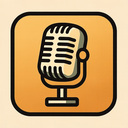
The central focus of this icon is the Microphone. Yet, it is not a simplistic or generic microphone drawn with minimal lines. Instead, it is rendered with intricate attention to detail — a curved, slightly elongated shape reminiscent of vintage phonograph devices from the early 20th century. The mouthpiece curves gracefully toward the center, suggesting both sound capture and human voice interaction. What sets this microphone apart is its integration with a modern technological framework: subtle circuit lines flow along its sides, forming an organic network that mimics neural pathways or data transmission channels. This fusion of form and function illustrates how the act of recording or transmitting sound — once a purely mechanical process — has evolved into a complex digital interaction.
Embedded within this design is the deep significance of Technology. The icon does not merely suggest technology; it embodies it. Every curve, every line, reflects principles of data flow, signal processing, and user interface design. The microphone’s base incorporates a subtle digital waveform pattern that pulses gently in rhythm with its surface — a visual metaphor for real-time sound processing and streaming. This waveform is not just decorative; it serves as a dynamic indicator of the technology at play — whether in voice-to-text conversion, live broadcasting, or virtual assistant interactions. Moreover, the icon’s overall structure is built using clean geometric shapes derived from both 20th-century design theory and modern minimalism, ensuring that technological complexity remains accessible and intuitive.
Yet what truly elevates this icon beyond a mere gadget representation is its embrace of the Classic aesthetic. The classic elements are not afterthoughts — they are foundational. The proportions of the microphone mirror those found in mid-century design, such as vintage telephone receivers and early radio sets, evoking a sense of reliability and authenticity. The color palette is carefully curated: warm ochre tones for the body of the device contrast with cool blue accents along its edges — a nod to both traditional earthy materials and modern digital interfaces. This duality creates visual harmony, bridging the gap between analog memory and digital innovation.
The classic influence extends to composition as well. The icon follows a balanced symmetry — reminiscent of 1950s graphic design principles where form followed function. The microphone is centered, with a subtle shadow effect that adds depth without overwhelming the viewer. This attention to balance ensures that the piece feels timeless and not fleeting — something that technology often threatens to become in its rapid iterations. By preserving classic visual grammar, this icon maintains emotional resonance and user familiarity.
From a cultural standpoint, this icon symbolizes a powerful truth: technological progress does not have to erase the past. Instead, it can coexist with and even celebrate traditional design values. The microphone, as a symbol of communication — whether spoken word or voice-based interaction — has long been central to human expression. From radio broadcasts in the 1920s to podcasting today, voices have remained a core component of information sharing. By placing this symbol at the heart of modern technology, the icon asserts that voice-driven systems are not just functional tools, but cultural anchors.
Furthermore, this design speaks to inclusivity and accessibility. The classic simplicity ensures that users from diverse backgrounds — including older generations or those less familiar with digital interfaces — can instantly recognize and connect with the icon. At the same time, its technological depth appeals to developers, engineers, and tech-savvy users who appreciate nuanced design cues. This dual appeal makes it a versatile asset in user interfaces ranging from mobile apps to smart home devices.
Another critical aspect is context. This icon can be used across various domains: as a symbol for voice assistants (e.g., Siri or Alexa), in educational software where speech recognition is taught, or even as a branding element for legacy communication platforms undergoing digital transformation. In each case, it carries the message that modern tools are built upon enduring principles — that communication remains human at its core.
Ultimately, this icon transcends mere visual representation. It is a philosophical statement: technology should not be cold or alienating. Instead, it should feel familiar, grounded, and expressive. By weaving together Technology, Microphone, and Classic into a single cohesive form, the icon becomes both a functional tool and a cultural artifact — reminding us that innovation can be rooted in tradition, and that the most powerful designs are those that respect both the present and the past.
In sum, this icon is not just about what it depicts — it's about how it feels. It evokes trust, clarity, authenticity, and connection. In an age of overwhelming digital stimuli, such a design offers a calm presence — a gentle reminder that at the heart of every technological advancement lies human voice and timeless design.
Create your own icon with our GoGPT AI prompt:
GoGPT