

Technology Piano Organic – Free icon download
Download all to grab every PNG variant.
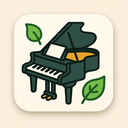
In a world where digital innovation constantly reshapes human experience, the fusion of Technology, Piano, and Organic creates a unique and profoundly resonant icon — one that transcends traditional boundaries between the mechanical, the artistic, and the natural. This icon is not merely a visual representation; it is an embodiment of harmony, evolution, and convergence. Designed with intentionality and depth, it weaves together three seemingly disparate realms into a singular aesthetic experience that speaks to both emotion and function.
At its core lies the Piano. The piano is not just an instrument — it is a symbol of human expression, emotional depth, and time-honored craftsmanship. In this icon, the piano appears as a stylized yet recognizable silhouette — its wooden frame rendered in flowing curves that mimic natural growth patterns. Each key is subtly illuminated with a soft glow reminiscent of sunlight filtering through trees during dawn. This isn’t just representation; it’s transformation. The piano keys are not rigid or mechanical as seen in traditional depictions; instead, they appear as organic structures, shaped like the branching of tree roots or the delicate veins in a leaf. Each key pulses gently with a faint bioluminescent rhythm — a visual metaphor for music that breathes and evolves.
Beneath this artistic surface lies Technology. The icon is embedded with subtle digital elements that do not overpower the organic form but rather complement it. Embedded in the piano’s structure are micro-circuit patterns, invisible at first glance but revealed upon closer inspection. These circuits flow like rivers through the wood — not cold and metallic, but fluid and warm, resembling veins within living tissue. The technology is not intrusive; it is integrated with grace. It appears as glowing data streams that ripple across the keys in sync with subtle musical notes, suggesting an intelligent system capable of interpreting emotional intent or even generating music based on environmental inputs. This integration reflects a future where artificial intelligence does not replace human creativity, but enhances it — much like how a modern piano might connect to a smart app to adjust tone or tempo based on the musician’s mood.
Yet what truly defines this icon is its Organic essence. The entire composition is rooted in nature’s language — curves, growth patterns, and natural rhythms. The piano’s body is made of layered textures that resemble aged oak, with a grain structure that grows thicker toward the base and thins at the top — just like a tree trunk. The soundboard features subtle wave-like formations reminiscent of tides or wind patterns across a valley. Even the way light interacts with the instrument follows organic principles: diffused, soft, and changing depending on time of day or ambient conditions. There are no sharp angles or digital edges; instead, every line flows like water over stone or leaves in motion.
Consider the atmosphere around this icon. It is not static. The icon seems to respond — gently shifting with the environment. When placed near a window in a sunlit room, the piano keys subtly change hue from deep amber to golden bronze as daylight shifts. At night, when ambient noise rises — perhaps from distant traffic or rainfall — the circuit lines pulse in harmony with those sounds, producing an almost imperceptible vibration that can be felt more than heard. This dynamic interaction illustrates how technology and organic systems can coexist symbiotically: the piano listens to nature and translates it into sound, while the embedded technology records and interprets human emotion through sensors placed in the instrument’s structure.
This icon also represents a philosophical shift — one where technology is not seen as alien or cold, but as an extension of natural processes. Just as plants grow in response to sunlight and rainfall, this piano learns from its environment. Its "intelligence" isn't artificial in the traditional sense; it emerges from patterns found in nature — such as the Fibonacci sequence visible in key spacing or fractal patterns in the wood grain. These mathematical principles, often considered purely abstract, are here brought to life through visual design and sound response.
Moreover, this icon challenges our perception of what a "modern" instrument could be. In traditional music technology, we have seen digital synthesizers replacing acoustic instruments — a trend that often leads to loss of tactile connection and emotional authenticity. This icon reverses that narrative. Instead of replacing the piano with code, it reimagines the piano as an interface between human feeling and technological possibility. The organic form ensures emotional resonance; the technology enables responsiveness and adaptation; together, they create a new kind of musical instrument — one that grows with its user.
The icon is not only visually captivating but also conceptually rich. It invites viewers to pause, reflect on their relationship with nature and technology, and consider how art can evolve without losing its soul. Whether displayed in a museum, a smart home studio, or an urban green space, this icon serves as both a statement and a sanctuary — a place where the past (the piano), the present (technology), and the future (organic evolution) meet in perfect balance.
In essence, this icon embodies what could be called "biotechno-organic harmony." It demonstrates that innovation need not come at the expense of beauty or authenticity. Instead, it can emerge from a deep respect for natural rhythms and human expression. Through its elegant fusion of Piano, Technology, and Organic elements, this icon becomes more than a design — it becomes a promise: that technology, when guided by empathy and rooted in nature, can create experiences that are not only functional but profoundly human.
This vision is not just futuristic; it is timeless. Like the piano itself — an instrument built for centuries to convey emotion through simplicity — this icon reminds us that the most powerful innovations are those that connect us to our inner world and our natural surroundings. In a time of rapid digitalization, it stands as a beacon: harmony between human creativity, technological capability, and organic wisdom is not only possible — it is essential.
Create your own icon with our GoGPT AI prompt:
GoGPT