

Animals Globe Origami Free icon download
Download all to grab every PNG variant.
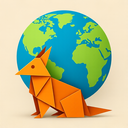
The icon in question is a masterful synthesis of three powerful symbolic elements—Animals, Globe, and Origami—fusing natural wonder with global connectivity and artistic craftsmanship. At first glance, the icon appears as an elegant paper sculpture suspended mid-air in a stylized form that seems to defy gravity. Upon closer inspection, it reveals a deeply layered narrative that speaks to harmony between nature, humanity’s shared planet, and the human capacity for creativity.
Central to the icon is a meticulously crafted origami animal—specifically an abstracted but unmistakable representation of a crane. The crane is not merely drawn; it is folded. Each wing, leg, tail feather, and head tilt are rendered with precision typical of traditional Japanese origami artistry. The lines are clean and crisp, suggesting the delicate symmetry that results from a single sheet of paper transformed through careful folding. This choice of animal is profoundly symbolic: in Japanese culture, the crane represents longevity, peace, and hope—qualities that resonate universally. Its presence as a centerpiece underscores the icon's deeper message about preservation, resilience, and interconnection.
What elevates this icon from mere symbolism to visual poetry is how the origami crane seamlessly integrates with the second major component: the Globe. The body of the crane appears to emerge from a stylized globe that forms its base or core. This globe is not rendered as a perfect, solid sphere, but rather as a flat, two-dimensional map projected in an artistic way—reminiscent of an ancient cartographic projection or the classic Mercator style—but softened by hand-drawn lines and textured paper folds. The continents are subtly indicated through shading and tonal variations in the paper’s color scheme: soft greens for forests, blues for oceans, and earthy browns for deserts. The globe appears to be made from the same origami paper as the crane, suggesting unity between Earth's natural systems and artistic expression.
The integration of Animals is not limited to just one species; rather, a subtle network of other animal silhouettes emerges from the folds and creases of the globe. Tiny origami representations of creatures—such as a fox peeking from behind Africa, an elephant emerging near India, a polar bear forming part of the Arctic ice cap’s edge—are delicately folded into the map’s surface. These animals are not mere decorations but active participants in the icon's narrative. They symbolize biodiversity and the interdependence of species across different ecosystems. Their presence in paper form emphasizes how fragile life on Earth is—like origami, life is beautiful, intricate, and easily disrupted by a single misfold or harsh touch.
Light plays a crucial role in bringing out the icon’s depth. The surface of the globe and crane glimmers with subtle highlights that simulate sunlight reflecting off paper. This creates an ethereal glow around the figure, as if it is floating in space—neither fully terrestrial nor entirely celestial. This positioning between Earth and sky reinforces the concept of global interconnectedness: animals travel across continents; human ideas spread across the globe; art transcends borders. The icon exists in a liminal space, much like modern ecological awareness itself—a bridge between nature and culture, local identity and global responsibility.
The color palette is intentionally muted yet meaningful. Shades of cream, pale gray, and soft blue dominate—colors reminiscent of aged paper or vintage maps. These tones evoke nostalgia for a time when discovery was slow, deliberate, and reverent. Yet subtle splashes of green near the equator and gold in the crane's wings hint at hope: life persists; art endures; balance is possible. The use of natural materials in design—paper, ink, light—echoes a sustainable ethos that aligns with conservation values.
From a technical standpoint, the icon demonstrates mastery of negative space and visual economy. Despite its complexity, every fold serves a purpose: some are structural (supporting the crane’s form), others are symbolic (marking migration routes or endangered regions). The artist’s intent is clear: to create something that can be instantly recognized yet invites deeper contemplation. When viewed on small screens, the icon remains legible due to its high contrast and bold shapes; when enlarged, it reveals intricate details that reward close examination.
Ultimately, this icon transcends its individual components. It becomes a metaphor for the delicate balance we must maintain between humanity’s creative spirit (Origami), our responsibility toward Earth's living systems (Globe), and the countless species that share our planet (Animals). It calls to action—reminding viewers that just as a single sheet of paper can become a crane, one person’s choice can transform the world. In its quiet elegance, it speaks volumes: creativity nurtures nature; nature inspires art; and together, they form a global tapestry worth protecting.
Through the fusion of Animals, Globe, and Origami, this icon stands not just as a visual symbol but as an invitation—to reflect on our place in the world, to honor biodiversity through imagination, and to remember that even the most fragile forms—like a paper crane or an endangered species—can carry immense meaning.
Create your own icon with our GoGPT AI prompt:
GoGPT