

Animals House Retro Free icon download
Download all to grab every PNG variant.
```html
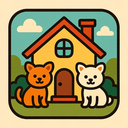
The retro animal house icon is a masterful fusion of three distinct thematic elements—animals, house, and retro—crafted in a stylized digital artwork that evokes nostalgia while maintaining modern clarity. At first glance, the icon captivates with its bold color palette and distinctive shapes, immediately signaling its vintage inspiration through subtle design cues reminiscent of 1970s and 1980s graphic art. The central composition features a whimsical, anthropomorphic house that doubles as a home for various animals—each element carefully integrated into the overall structure to create an imaginative narrative.
The house itself is rendered in the form of a two-story cottage with rounded edges and playful proportions, typical of retro architectural design from mid-century modernism. Its exterior is painted in warm, earthy tones: sun-kissed ochre for the main body, with contrasting turquoise blue shutters and a bright coral red door. The roof is slanted at an exaggerated angle, topped with a weather vane shaped like a curious fox's head—adding both charm and symbolic weight to the piece. The windows are large, circular in shape, resembling oversized eyes that give the house an almost sentient quality. From these windows peek various animal faces: a rabbit's twitching nose from one window on the left side, a cat’s mischievous grin from another near the top right corner.
What makes this icon truly unique is how animals are seamlessly integrated into the structure of the house. The chimney isn't just functional—it's shaped like a giant turtle with its head sticking out at an angle, blowing smoke rings that resemble tiny stars. A pair of squirrel-like creatures playfully dangle from vines that grow around the base of the house, their tails curling into decorative swirls resembling vintage patterns. From behind a bush near the front door, a fox's tail wiggles suggestively as if it were about to peek out, inviting viewers into this secret animal world. The yard is designed with symmetrical flower beds in retro geometric shapes—hexagons and concentric circles—each filled with stylized flowers that resemble the popular “doodle” patterns from the 1970s.
The retro aesthetic is evident not just in color but in design execution. The entire icon uses a limited color palette of only five dominant shades: ochre, turquoise, coral red, mustard yellow, and black—colors commonly found on vintage postcards and psychedelic posters. The lines are crisp yet slightly wobbly, reminiscent of hand-drawn illustrations from old children’s books or mid-century advertisements. There's a deliberate imperfection in the rendering that enhances its authenticity; for instance, the edges of the house have tiny pixel-like artifacts (intentionally added to mimic early digital graphics), and some shapes appear slightly off-center, creating a charming sense of asymmetry typical of retro design.
Animals are not merely decorative—they are integral to the icon's identity. Each creature is stylized in a way that blends cartoonish exaggeration with subtle realism. The house’s “residents” include a family: an elderly dog wearing glasses perched on one of the upper windowsills, reading a book titled "The Art of Relaxing"; a young raccoon holding onto the door handle; and two baby birds nesting in the roof tiles, their feathers patterned with repeating wave motifs. Even the trees surrounding the house are not ordinary—they're shaped like upside-down question marks, a playful nod to 1960s experimental typography.
The background of the icon is rendered in a faded, textured parchment-like design with faint grid lines and light scratches—simulating an aged paper surface. This subtle texture enhances the vintage feel without distracting from the main subject. In one corner, there's a small circular sticker that reads “1983” in retro font, reinforcing its time period. The overall composition uses a balanced but dynamic layout: while centered on the house, movement is encouraged through diagonal lines of vines and animal limbs that guide the eye across the entire space.
Functionally, this icon could represent a variety of concepts—home for animals, an animal sanctuary app interface, a retro-themed children’s book cover, or even a nostalgic video game character. Its symbolic power lies in its fusion of domestic comfort (house) with wild innocence (animals), all wrapped in the visual language of bygone eras (retro). The icon is not just an image; it’s a story—a small, self-contained universe where nature and shelter coexist in joyful harmony. Every detail, from the whimsical window designs to the hand-drawn texture effects, speaks to a time when imagination ruled over realism and design was meant to delight as much as inform.
In essence, this retro animal house icon transcends mere visual appeal. It’s a nostalgic journey through memory and creativity—a celebration of how animals can be both wild and domesticated, how homes can be whimsical sanctuaries, and how the past continues to inspire new forms of artistic expression in the digital age. Whether viewed on a smartphone screen or printed on vintage stationery, it remains instantly recognizable—and deeply beloved.
```Create your own icon with our GoGPT AI prompt:
GoGPT