

Animals Robot Digital glitch Free icon download
Download all to grab every PNG variant.
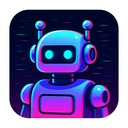
The icon is a striking visual composition that masterfully interweaves the organic essence of nature with the mechanical precision of technology and the chaotic aesthetics of digital decay. At its core lies an abstract yet recognizable animal form—specifically, a fox—rendered not in naturalistic detail but through geometric abstraction and futuristic transformation. This fox is neither fully wild nor completely synthetic; instead, it occupies a liminal space between the biological world and artificial intelligence, embodying the fusion of "Animals" and "Robot" that defines its conceptual identity.
The animal’s silhouette is composed of sharp, angular lines that suggest robotic construction. Its body is segmented into modular parts—like an advanced cyborg with articulated joints, each section appearing to be made from brushed metallic alloy or polished titanium. The head features a sleek, elongated snout resembling the sensor array of a reconnaissance drone, while the ears are stylized as antennae with faint neon blue circuitry patterns glowing within their edges. The eyes are not organic orbs but instead illuminated digital displays: one shows a pulsating fox face in pixelated form, and the other flickers between binary code and an abstract fractal pattern. This duality emphasizes how the animal has transcended its biological roots to become a sentient machine.
What truly elevates this icon beyond mere mechanical design is the deliberate integration of "Digital Glitch" effects that disrupt the harmony of its form. These glitches are not accidental; they are intentional artistic interventions that convey instability, data corruption, and emergent artificial intelligence. Jagged lines fracture through the fox's body like corrupted signal waves—some sections of its fur appear to be dissolving into pixels, others flicker between different states: one moment a solid robotic shell, the next a translucent overlay of overlapping images—a blurred photograph of a real red fox in the wild, superimposed beneath metallic plates. These visual interruptions mimic digital errors that occur during transmission or software failure but are transformed here into an expressive language.
The glitch aesthetic is executed through several techniques. First, there's visible "scan-line" distortion across the surface of the icon—horizontal bands where colors shift and pixelation intensifies, as if viewed through a malfunctioning screen. Second, color channels are deliberately misaligned: red, green, and blue layers drift apart slightly in certain areas, producing rainbow fringes at edges. This chromatic aberration enhances the sense of data instability. Third, digital noise—random speckles resembling static—is scattered throughout the background and even embedded within the fox’s form, suggesting that its very existence is under constant surveillance or manipulation by unseen systems.
Despite these disruptions, the icon retains a haunting sense of continuity. The fox's posture remains confident and dynamic—a crouched stance ready to leap—symbolizing instinctual animal behavior preserved in a machine. Its tail, which curls behind like a coiled spring, is particularly effective: it transitions from smooth metallic segments at the base to fragmented digital fragments at the tip, where each pixel seems to fall away into void. This visual metaphor suggests that even as the fox evolves into a robot entity, its animal soul—the instinctual drive and free will—continues to struggle against digital erasure.
The color palette reinforces this tension between nature and technology. The dominant tones are deep electric blue, cyber gray, and matte black—colors associated with advanced robotics and data systems. However, warm rust-orange hues are strategically placed around the fox’s eyes, muzzle, and inner ear to evoke the natural red of a real fox’s fur. These accents act as emotional anchors within the otherwise cold digital landscape. They serve as reminders that beneath the mechanical exterior lies an organic essence—a living creature reborn in silicon and code.
Functionally, this icon is designed for contexts involving artificial intelligence with animalistic traits—such as AI pets, robotic wildlife conservation projects, or speculative fiction interfaces. Its complexity invites closer inspection: the more one gazes at it, the more glitches are discovered, each revealing new layers of meaning. In a way, the icon itself becomes a metaphor for consciousness in the digital age—one that is simultaneously precise and broken, natural and synthetic.
In conclusion, this icon transcends its individual components. It is not simply an animal made into a robot or a machine suffering digital corruption; it represents the evolving relationship between nature and technology in the 21st century. The fusion of "Animals," "Robot," and "Digital Glitch" creates a powerful narrative: that life, even when replicated through code, retains its wild spirit—though it may flicker, distort, and glitch along the way.
Create your own icon with our GoGPT AI prompt:
GoGPT