

Art Airplane Digital glitch Free icon download
Download all to grab every PNG variant.
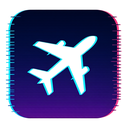
The icon in question is a striking visual manifestation of the convergence between artistic expression, the mechanical elegance of aviation technology, and the chaotic beauty of digital distortion—elements that are traditionally disparate but coalesce here into a single powerful symbol. At first glance, it appears as a stylized airplane crafted from fragmented pixels and corrupted data streams; however, upon closer inspection, it reveals layers of intentionality that elevate its form far beyond mere representation. This is not simply an icon of flight—it is a narrative artifact: an emblem where human creativity intersects with technological imperfection to forge something both futuristic and profoundly aesthetic.
At the core of the design lies the airplane, rendered in a sleek, abstract silhouette that evokes both vintage propeller planes and modern jetliners. The fuselage curves with fluid grace, its form reminiscent of an abstract brushstroke rather than a rigid engineering blueprint. Yet this elegance is subverted by deliberate disruptions—lines that fracture mid-sweep, wings that seem to dissolve into static at the edges, and a cockpit area that flickers like a dying signal on an old television screen. The plane does not soar through clear skies; instead, it appears suspended in a digital void where the laws of physics are irrelevant. It is as if the aircraft has been ripped from its natural environment and transplanted into a dreamscape sculpted by corrupted code.
Artistry permeates every facet of this icon. The composition follows principles of visual poetry: asymmetry, negative space, and intentional imbalance all serve to provoke emotional response. The color palette is deliberately limited yet evocative—shades of electric blue and neon cyan dominate, interlaced with sudden bursts of magenta and black that mimic the flickering light patterns seen in old CRT monitors. These hues do not merely decorate; they are instrumental in conveying mood—disconnection, longing, and the surreal thrill of digital transcendence. The brushwork is visible at a microscopic level: individual pixels are rendered with deliberate hand-drawn imperfection, blurring the line between machine-generated content and human touch.
Where the icon truly transcends conventional design is in its treatment of digital glitch. This is not a superficial overlay of random noise or pixelation for aesthetic effect. Instead, glitch elements are deeply integrated into the structure of the airplane itself. Portions of its wing surfaces appear as if they have been overwritten—replaced with fragmented data strings, corrupted icons, and ghostly afterimages that suggest multiple planes existing simultaneously across different timelines. A digital artifact manifests as a "frame skip" effect along one edge, where sections of the plane seem to jump forward by half a second in time. Glitch waves ripple from the tail section like sonic booms made visible—these are not random distortions but carefully calibrated visual errors that follow harmonic patterns, reminiscent of signal interference in analog broadcasting.
Further analysis reveals hidden layers within the glitch. When viewed at certain angles or under simulated screen flicker, micro-text appears along the fuselage—cryptic phrases like "ERROR: PATH NOT FOUND" and "FLIGHT 404" etched into the metal with pixelated serif fonts. These are not accidental; they are deliberate narrative clues suggesting that this airplane is lost not in space, but in data. It is a ghost plane from a forgotten network, caught between digital realms. The glitch becomes an artistic device to express absence, memory decay, and the fragility of information—themes central to contemporary digital art.
Artistic influences are unmistakable. The icon draws inspiration from 1980s cyberpunk aesthetics—the neon-soaked cityscapes of William Gibson’s imagination—and the glitch art movement pioneered by artists such as Rosa Menkman and Jon Satrom. Yet it avoids mere nostalgia, instead channeling these references into a new language that speaks to our current digital anxieties. It mirrors how we feel in an age where technology promises infinite connectivity but often delivers isolation, where progress can feel like erosion of authenticity. The airplane, traditionally a symbol of freedom and human aspiration, is here reinterpreted as both marvel and malfunction—a vessel hurtling through the data streams of an uncertain future.
In essence, this icon transcends its function. It does not merely represent "art" or "airplane" or "digital glitch"—it embodies their tension. It is the collision of order and chaos, precision and imperfection, engineering and imagination. A masterpiece born from contradiction, it invites viewers to question not just what they see, but how they perceive it. In a world saturated with polished design, this icon stands as a defiant reminder: beauty can be found in fracture; flight can exist even when the path is broken; and art endures best when it refuses to be perfectly whole.
Create your own icon with our GoGPT AI prompt:
GoGPT