

Art Credit card Flat design Free icon download
Download all to grab every PNG variant.
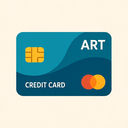
The Artistic Flat Design Credit Card icon represents a harmonious convergence of three distinct yet complementary concepts—art, credit card functionality, and flat design principles. This icon is not merely a visual symbol; it embodies an innovative approach to digital interface elements that balances aesthetic appeal with practical utility. At its core, the icon transforms the familiar image of a credit card into an artistic statement while maintaining clarity and recognition for users across diverse digital platforms.
The foundation of this design lies in its adherence to flat design philosophy—characterized by minimalism, absence of gradients, shadows, or textures. The icon employs clean lines, solid colors, and geometric precision to create a visually crisp representation that is instantly recognizable yet refreshingly modern. Unlike older skeuomorphic designs that attempted to mimic real-world objects with excessive detail and depth effects, this flat design credit card icon strips away the unnecessary clutter. It presents only the essential elements: a rectangular shape resembling a standard credit card (measuring approximately 85mm × 54mm in real life), with rounded corners for softness and realism.
However, what sets this icon apart is its integration of artistic expression. The artist’s hand is evident not just in the layout but in the thoughtful use of color, symbolism, and visual storytelling. Instead of using generic gray or black hues typical of traditional credit cards, the design incorporates a vibrant yet balanced color palette—perhaps a deep indigo base with accents of gold and coral—to suggest both financial security and creative energy. These colors are not arbitrary; they reflect psychological associations: blue conveys trust and stability (ideal for financial instruments), gold evokes luxury and value, while coral adds warmth and modernity.
Artistic elements extend beyond color choices. The icon features stylized, abstract illustrations subtly integrated into the card’s surface. For example, thin line art resembling brushstrokes or geometric patterns inspired by contemporary digital art might be embedded within the background of the card. These patterns do not distract from functionality; rather, they serve as visual metaphors—each stroke representing a transactional journey, a digital signature, or an artistic contribution to modern commerce. The lines are executed with precision and consistency in width, adhering strictly to flat design standards while conveying movement and creativity.
The credit card details—the logo of the issuing bank or financial institution—are rendered in minimalistic typography. Instead of elaborate logos that consume visual space, the icon uses a single lettermark or stylized monogram created with clean, sans-serif typeface. This typographic element is positioned discreetly in the lower right corner of the card, maintaining hierarchy and ensuring readability without overwhelming other visual components.
Another innovative artistic touch lies in the inclusion of a small but meaningful emblem near the center of the card: a stylized paintbrush or canvas motif, rendered in flat design style. This is not just decorative—it serves as a symbolic bridge between finance and creativity. It communicates that this credit card is more than a tool for transactions; it's an instrument for creators, artists, designers, and entrepreneurs to fund their visions. The brushstroke may even subtly form the shape of the letter "A" or a stylized "C," referencing both "Art" and "Credit," reinforcing the icon’s dual identity.
Functionally, the icon retains all necessary features for usability. The card includes a magnetic stripe at the top (simplified into two parallel horizontal lines), an embossed card number in segmented format (using flat, geometric digits), and a signature panel with three short horizontal bars—each element rendered without shading or depth. This commitment to flat design ensures scalability across devices: whether viewed on a smartphone, tablet, desktop monitor, or smartwatch display, the icon remains clear and legible.
From an artistic perspective, the icon demonstrates how minimalism can coexist with expressiveness. Every pixel serves a purpose. The balance between negative space and positive form creates visual harmony. The design respects principles of Gestalt psychology—users instantly perceive a credit card due to its familiar proportions and layout, while also appreciating the subtle artistic flourishes that invite closer inspection.
In essence, this Artistic Flat Design Credit Card icon is more than a digital symbol—it’s a statement. It reflects the evolving relationship between finance and creativity in today’s digital economy. It appeals to artists who need reliable financial tools but also desire visual elegance. It speaks to designers and developers who value clean, scalable UI elements that don’t sacrifice personality or meaning.
Ultimately, the icon succeeds because it honors all three keywords: Art through its creative expression and symbolic depth; Credit card by faithfully representing its form and function; and Flat design by embracing minimalism, clarity, and modern visual language. In doing so, it becomes not just a functional icon but a piece of digital art—a small but powerful representation of how innovation thrives at the intersection of purpose, aesthetics, and simplicity.
Create your own icon with our GoGPT AI prompt:
GoGPT