

Art Credit card Retro Free icon download
Download all to grab every PNG variant.
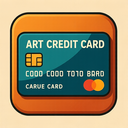
The retro art credit card icon is a masterful synthesis of three distinct yet harmoniously intertwined concepts: Art, Credit Card functionality, and Retro aesthetic. This meticulously crafted digital icon serves not merely as a visual symbol but as a cultural artifact that encapsulates the evolution of personal finance, design movements from past decades, and the enduring power of artistic expression in everyday technology. At its core, this icon is more than just an image—it's a narrative stitched together through typography, color theory, geometric form, and symbolic depth.
At first glance, the retro art credit card icon exudes a warm sense of nostalgia. Its design pays homage to the visual language of the 1970s and 1980s—eras defined by bold lines, vibrant primary colors, geometric patterns, and an unapologetic embrace of futurism that looked both optimistic and slightly fantastical. The card itself is rendered in a slightly exaggerated rectangular shape with rounded corners reminiscent of vintage plastic credit cards from the analog era before chip technology became standard. The edges feature subtle embossed lines suggesting texture, as if one could almost feel the ridges of a real plastic card beneath their fingers.
Art is not merely a theme in this icon—it’s its foundation. The entire composition reflects principles of modernist and pop art aesthetics, borrowing from iconic designers such as Saul Bass and the bold visual grammar of mid-century advertising. The card’s surface is adorned with stylized abstract patterns—swirling concentric circles, angular zigzags, and playful dot matrices—that evoke the kinetic energy of early computer graphics while simultaneously recalling textile designs popular in retro fashion. These elements are not decorative fluff; they function as deliberate visual metaphors for data flow, financial transactions, and digital connectivity.
Color plays a pivotal role in establishing both the retro identity and artistic intent. The background is rendered in a gradient of sun-kissed yellow to coral pink—colors that were omnipresent in 1980s design palettes and instantly signal warmth, optimism, and approachability. This warm glow contrasts beautifully with cool metallic silver accents used for the card’s edges, magnetic stripe (rendered as a stylized series of parallel lines), and the credit card logo. The combination of warm tones with reflective metallics creates a sense of depth and tactile realism that elevates the icon beyond flat vector graphics into an object that feels physically present.
The central element—the credit card number—is designed with intentional imperfection, mimicking handwritten notation on vintage receipts or checks from the pre-digital age. Instead of sleek digital digits, the numbers appear in a hand-drawn style font with slight variations in height and curve—subtle irregularities that add character and authenticity. These digits are spaced using a retro-inspired layout: groups of four separated by small geometric symbols (stars, triangles, or stylized lightning bolts), reminiscent of how financial institutions used to format card numbers on physical cards to aid memorization.
Embedded within the icon’s design is a hidden layer of artistic symbolism. The magnetic stripe, typically ignored in modern icons, becomes a canvas for miniature art. It features a micro-scale mural composed of tiny abstract shapes and glyphs that resemble ancient hieroglyphs or early computer code—suggesting that financial transactions are not only technical processes but cultural rituals with symbolic significance. This artistic choice transforms the card from a tool into an artifact, elevating everyday finance to the realm of ceremonial exchange.
Even the logo on the card is artistically reimagined. Instead of a corporate emblem, it features a stylized version of “ArtCard” in a retro-futuristic typeface—thick block letters with glowing inner outlines and subtle perspective distortion that gives them an illusion of depth. The letters are colored with neon gradients (cyan to magenta), echoing the aesthetic of 1980s arcade machines and synthwave album covers. This logo functions not just as a brand identifier but as a statement: finance can be creative, expressive, and aesthetically charged.
When viewed in context—on a smartphone app, embedded within an art gallery’s digital interface, or used in a retro-themed financial platform—the icon becomes more than functional. It sparks curiosity. It invites users to pause and reflect on the intersection of money and meaning. In doing so, it embodies the idea that even transactions can be acts of personal expression when framed through an artistic lens.
Ultimately, this retro art credit card icon is a celebration of design heritage and creative innovation. It honors the past—specifically the optimistic futurism of mid-century modernism and the vibrant energy of 1980s pop culture—while reimagining financial tools as artistic objects. In an era dominated by minimalism and sleek digital interfaces, this icon stands out not for its simplicity but for its richness: a dense tapestry woven from nostalgia, craftsmanship, and the enduring belief that art has a place—even in the most practical corners of our lives.
Create your own icon with our GoGPT AI prompt:
GoGPT