

Art DNA strand Glassy Free icon download
Download all to grab every PNG variant.
```html
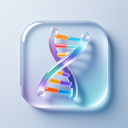
At the intersection of molecular biology, artistic expression, and modern design aesthetics lies a truly captivating icon—the Glassy DNA Art Icon. This visually striking emblem masterfully blends three fundamental elements: "Art," "DNA strand," and "Glassy"—each contributing to a harmonious fusion that transcends mere visual representation. The icon is not merely an illustration; it is an artistic statement about the beauty of life’s blueprint, rendered through a lens of ethereal transparency and refined craftsmanship.
At its core, the icon features a double helix structure representing the iconic DNA strand. However, this is no ordinary depiction. Rather than being rendered in traditional biological schematics with rigid lines or flat colors, the DNA strand emerges as an intricate sculpture composed of delicate glass-like filaments. Each coil spirals upward with perfect symmetry, echoing the natural elegance found in both nature and mathematics. The helix structure is not static but appears to subtly shift and shimmer as if suspended in a transparent medium—creating a sense of motion within stillness that draws the viewer into deeper contemplation.
What sets this icon apart is its "glassy" quality—a term that speaks not only to materiality but also to visual perception. The DNA strands are rendered with a translucent, crystalline finish, as if forged from liquid glass cooled mid-flow. Light refracts through the structure in subtle patterns, casting faint rainbows along its edges when viewed under certain angles or lighting conditions. This optical interplay gives the icon a dynamic presence; it changes subtly depending on the viewer’s perspective and surrounding environment. The surface possesses a high polish, mimicking polished quartz or fine crystal, yet it maintains an ethereal fragility—something that appears both strong and delicate simultaneously.
As an artistic expression, this icon redefines the boundaries between science visualization and creative design. It transforms the scientific symbol of life’s foundation into something profoundly beautiful. The artist has employed techniques reminiscent of stained glass artistry, where color is not just decorative but integral to meaning. The DNA strands are subtly tinted in soft gradients—pale blues, lavender hues, and hints of silver—evoking both the molecular structure and a dreamlike atmosphere. These colors are not flat but layered with depth, allowing light to pass through them like watercolor on glass. The result is a piece that feels more like a stained glass window dedicated to the origin of life than a schematic diagram.
Moreover, the "art" aspect is further emphasized by intentional asymmetry and organic imperfections. While the overall helix maintains perfect symmetry, individual strands feature gentle undulations and slight variations in thickness—elements that mimic natural biological variation rather than artificial precision. These subtle irregularities suggest a living, breathing system rather than a static model, reinforcing the idea that life itself is not purely mechanical but inherently artistic in its complexity. Tiny luminous specks—resembling atoms or nucleotide bases—are embedded along the strands like stars in a cosmic ribbon, each one carefully placed to enhance both visual interest and symbolic depth.
Surrounding the central helix are delicate fragments of abstract patterns that resemble neural networks, fractals, or even musical notation—further expanding the icon's narrative. These elements do not detract from the DNA strand but rather complement it, suggesting that life is interconnected with consciousness, creativity, and rhythm. The entire composition floats within a void-like space defined by negative space and faint gradients of light—an artistic choice that emphasizes purity and focus on the central form.
Functionally, this icon serves not only as a symbol of genetics but also as an emblem for innovation in biotechnology, bio-art, or scientific exploration. Its glassy texture makes it ideal for digital interfaces where visual clarity and elegance are paramount—perfect for apps related to genomics, medical research, or even artistic projects inspired by biology. When animated (in digital applications), the DNA strands can gently rotate or pulse with a soft glow—enhancing their lifelike quality while preserving their glassy aesthetic.
In essence, the Glassy DNA Art Icon is more than a visual representation—it is a meditation on life’s elegance. It captures the scientific truth of DNA while elevating it through artistic interpretation and tactile illusion. The "glassy" finish creates an atmosphere of wonder and fragility, reminding viewers that even the most fundamental building blocks of life are beautiful and complex. Through this fusion of Art, DNA strand, and Glassy qualities, the icon stands as a modern masterpiece—a bridge between science and soul.
```Create your own icon with our GoGPT AI prompt:
GoGPT