

Communication Book Origami – Free icon download
Download all to grab every PNG variant.
In the intricate tapestry of human expression and connection, few symbols embody the depth of understanding, cultural heritage, and intergenerational exchange as powerfully as the fusion of Communication, Book, and Origami. This icon is not merely a visual design—it is a profound metaphor for how ideas flow across time, space, and cultures through both written knowledge and the delicate art of paper folding. At its core lies a harmonious blend of three essential elements: the timeless medium of communication, the enduring vessel of knowledge represented by a book, and the expressive formality of origami—an art deeply rooted in Japanese tradition that emphasizes precision, patience, and transformation.
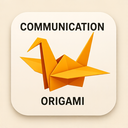
The icon features an open book resting gently on a central base composed of folded paper shapes resembling origami birds. The pages of the book are not rigid; instead, they flutter slightly as if breathing, symbolizing the dynamic nature of communication—alive with exchange and movement. Each page is subtly textured to resemble real paper, with faint creases that echo the lines formed during origami folding. This visual detail bridges the physical act of crafting paper models with the intellectual process of reading and interpreting written words. The book’s spine is curved like a gentle wave, suggesting both flow and continuity—emphasizing how knowledge is not static but evolves through dialogue and interaction.
From a symbolic standpoint, the Communication aspect dominates this icon’s narrative. Communication transcends mere speech or text—it includes listening, empathy, shared understanding, and mutual respect. In this design, the book represents not just information storage but active dialogue: readers engage with its pages as participants in a conversation between past wisdom and present thought. The origami elements—such as an open crane or folded lotus—serve as silent messengers of connection. These forms are often associated with messages of peace, balance, and harmony; thus, they reinforce the idea that communication is not only about transmitting content but also about fostering emotional and cultural understanding.
The Book component is central to the icon’s meaning. Books have historically served as bridges between generations. They preserve stories, philosophies, scientific discoveries, and personal reflections. In this icon, the book is depicted not as a static object but as a living entity—its open pages inviting readers into a world of exploration and reflection. The binding is minimalist yet elegant, with subtle engravings that resemble traditional calligraphy or ancient scripts. This reflects how knowledge is often passed down through cultural traditions that value handwriting, scribes, and personal interpretation. The book’s presence also suggests accessibility—everyone can approach it as a tool for learning, healing, or inspiration.
Meanwhile, the Origami element brings a dynamic quality to the icon. Origami is more than paper folding; it is a philosophy of transformation through intention and care. Each fold represents a deliberate step in building meaning—just as communication grows through thoughtful exchanges, not just transmissions. The origami forms integrated into the icon are not random but structured: one bird flutters upward toward the sky, representing aspiration and connection beyond boundaries; another rests beside the book, suggesting that knowledge can be shared gently and respectfully. The folds themselves resemble lines of dialogue—each crease a moment of reflection or decision in a conversation.
What makes this icon truly unique is its synthesis of all three elements into one cohesive vision. The communication process is not linear—it spirals, loops, and evolves like the folds in origami. A message written in a book may inspire someone to fold paper into a bird, which then becomes a symbol of peace shared with another person. In turn, that shared gesture opens new lines of communication across cultures and languages. This creates a feedback loop where knowledge (the book), expression (origami), and interaction (communication) feed into each other in perpetual motion.
Moreover, the icon carries cultural significance. Origami has deep roots in Japan as both an art form and a spiritual practice, often used to convey messages of hope and resilience. The book, throughout history, has been a universal symbol of wisdom—whether in ancient scrolls or modern e-books. Together, they represent a global dialogue between tradition and innovation. This icon is designed not only for aesthetic appeal but also as an educational tool—a visual guide that teaches users about how communication can be enriched through literature and creative expression.
For educators, the icon can serve as a teaching aid in classrooms focused on language arts, cultural studies, or emotional intelligence. Students might use it to explore how stories are shared across cultures or how paper folding can help express emotions in non-verbal ways. In workplaces or community centers, it could be used to promote inclusive communication environments where diverse perspectives are valued and respected—just like the way each fold in origami is unique and purposeful.
In essence, this icon transcends its visual form to become a living metaphor for human connection. It reminds us that communication is not just about words—it is about intention, patience, and respect. The book holds the wisdom of our ancestors; the origami embodies our creativity and adaptability; and together, they form a powerful system for transmitting meaning across time and space. This icon does not simply represent these concepts—it actively invites viewers to reflect on how they communicate with others, how they learn from books, and how they express themselves through mindful, thoughtful acts of creation.
Ultimately, the fusion of Communication, Book, and Origami in this design creates a symbol that is both timeless and deeply contemporary. It speaks to a world where information moves rapidly but genuine understanding remains elusive. By merging tradition with expression, it offers hope—that even in the digital age, we can return to simple acts—reading a book or folding paper—to rebuild deeper connections between people.
Create your own icon with our GoGPT AI prompt:
GoGPT