

Communication Bus Classic – Free icon download
Download all to grab every PNG variant.
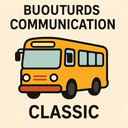
The "Communication, Bus, and Classic" icon is a meticulously designed visual symbol that seamlessly integrates three powerful thematic elements—Communication, Bus, and Classic—into a single cohesive and meaningful representation. This icon serves not only as an aesthetic centerpiece but also as a functional narrative device that bridges the gap between technology, transportation, and timeless design principles. Through its form and composition, the icon communicates a deep understanding of how human interaction (communication) is facilitated by modern systems (bus networks), while maintaining a classic aesthetic rooted in simplicity, reliability, and enduring appeal.
At the heart of this icon lies the principle of Communication. This is not merely a suggestion but a foundational element that governs every aspect of its visual language. The icon incorporates flowing lines and interconnected pathways that resemble open channels, signals, or digital networks—symbolizing the constant exchange of information between individuals and systems. These communication pathways are represented using clean, angular lines with subtle gradients that suggest movement and transmission. The use of overlapping arcs suggests data flow in multiple directions—upward for feedback, downward for requests—and creates a dynamic sense of interaction.
The icon’s central hub functions as a node—a metaphor for a communication center where information converges and disperses. This central point is often depicted as an open circle or geometric polygon with intersecting radiating lines, evoking the idea of connectivity. These elements are designed to resonate with both digital and human communication systems—from mobile networks to public messaging platforms—emphasizing that the icon is not limited to a single context but transcends time and medium.
Furthermore, the color palette used in this icon emphasizes clarity and accessibility. Soft blues, warm grays, and muted greens are employed to convey trust, calmness, and reliability—qualities essential in any communication system. The subtle use of gradients on lines represents data transmission over distance or time, reinforcing the concept that effective communication is not static but dynamic.
The Bus element is not just a literal transportation vehicle; it serves as a metaphor for movement, reach, and accessibility within communities. In this icon, the bus is rendered in a stylized form that preserves its essential structure—two large wheels at the front with an open roof or streamlined body—while maintaining simplicity and clarity. The shape of the bus is often integrated into the communication pathways: its body becomes a curved pathway that connects various nodes across a central field, symbolizing how transportation enables communication by moving people and ideas from one location to another.
Each wheel of the bus is subtly linked with a line or dot representing passenger movement—tiny figures (or abstract shapes) that move along the route. These passengers are not literal but symbolic, representing individuals engaging in conversations, sharing information, or simply moving through urban environments where communication naturally occurs. This integration shows how physical mobility enables social interaction and data exchange.
The bus path is often drawn as a central spine of the icon, connecting two or more circular nodes that represent destinations or communication hubs. This creates a visual map of connectivity—showing how transportation infrastructure supports broader networks of communication. In this way, the bus becomes not just a vehicle but a conductor, linking people and ideas across cities and regions.
The "Classic" aspect is what grounds this icon in enduring values—simplicity, clarity, reliability, and timelessness. Unlike modern icons that rely on heavy graphics or animations, the "Communication, Bus, and Classic" icon maintains a minimalist design philosophy. Its forms are clean and uncluttered; lines are straight or softly curved without unnecessary embellishments. This classic aesthetic ensures immediate recognition and understanding across diverse audiences—whether in digital interfaces, educational materials, or public signage.
The use of symmetry is central to the design. The icon is often balanced both horizontally and vertically, with the communication network radiating outward from a central point that mirrors the structure of a classic bus route. This balance conveys stability and predictability—qualities essential in both transportation systems and communication networks.
Typography, if included (as in an accompanying label), follows classic design standards—sans-serif fonts with moderate weight, centered alignment, and high legibility. The font style is neutral and professional, avoiding trends or flashy effects that might distract from the core message. This ensures that the icon remains timeless and adaptable to changing contexts without losing its original identity.
What makes this icon truly unique is how Communication, Bus, and Classic are not merely listed as separate features but are deeply interwoven. The communication pathways originate from the bus’s rear or center, symbolizing that transportation enables connection. Meanwhile, the classic design ensures that these ideas remain accessible and familiar—never overwhelming or confusing.
The icon can be interpreted in multiple contexts: as a public service logo for transit agencies offering digital communication platforms, as an educational tool teaching students about urban mobility and information exchange, or even as a branding element for community organizations promoting civic dialogue. Its versatility lies in its ability to serve both functional and symbolic roles.
In an era of rapid technological change, this icon stands as a reminder that the most effective systems are those built on reliable foundations—where people move freely, communicate openly, and do so through designs that feel familiar, trustworthy, and timeless. It embodies the idea that progress does not mean abandoning tradition; instead, it means enhancing tradition with modern functionality.
The "Communication, Bus, and Classic" icon is more than a visual representation—it is a statement on how human connection thrives when mobility meets accessibility and design remains grounded in simplicity. It speaks to the interconnectedness of society, where information flows as naturally as people move from place to place. By blending the dynamic energy of communication with the practicality of public transit and the timeless elegance of classic design, this icon becomes a powerful symbol for an inclusive, accessible future—one that respects both innovation and tradition.
Create your own icon with our GoGPT AI prompt:
GoGPT