

Communication Bus Retro – Free icon download
Download all to grab every PNG variant.
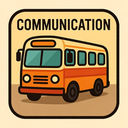
The icon in question is a richly layered, imaginative representation that seamlessly weaves together three powerful and distinct themes—Communication, Bus, and Retro. This isn’t just a simple illustration; it is a conceptual masterpiece designed to evoke nostalgia, convey connectivity, and celebrate the enduring power of human interaction. At its core lies the retro-styled bus—a vehicle from an earlier era of design, embodying simplicity, charm, and mechanical authenticity—yet transformed into a living symbol of modern communication networks.
The Communication aspect is not merely implied; it is central to the icon’s structure and purpose. The bus itself becomes a conduit—an active agent in the exchange of information. Its form is designed with subtle visual cues that suggest data flow: windows on the bus are filled with flowing lines resembling digital signals or text messages, while its roof features a glowing network of interconnected nodes that resemble early internet cables or telephone wires. These elements suggest an environment where ideas, words, and emotions travel from one point to another—just as they do in a global communication system. Each window displays a small message bubble or emoji—simple but expressive icons like “❤️”, “💡”, or “💬” — reinforcing the idea that this bus is not just transporting people, but also carrying conversations, thoughts, and cultural exchanges.
The Bus element is rendered in a vintage aesthetic: curved lines, rounded corners, and a minimalist color palette reminiscent of 1950s or 1960s public transportation design. The bus features classic details such as exposed wooden paneling on the sides, retro-style chrome trim along the edges, and vintage signage with faded lettering that reads “MetroLink” or “Express Route #7.” It has a small driver’s cab at the front with a round windshield, and in one of its side panels, an old-fashioned analog radio plays faintly—symbolizing real-time communication from the past. The bus is slightly tilted to give it movement, suggesting that communication is not static; it flows dynamically across time and space.
What truly sets this icon apart is how it integrates the Retro theme into both form and function. Every detail—be it the faded paint, the stylized font on signs, or even the design of its interior seats—resembles artifacts from a bygone era of design thinking. The retro style isn’t just about nostalgia; it serves as a metaphor for how communication evolves through time. Just as retro technology (like fax machines or telegraphs) once defined interaction, today’s digital tools are now reimagining what connection looks like—by drawing on the simplicity and authenticity of past systems. This icon pays tribute to that evolution by showing a retro bus not as obsolete, but as a symbol of timeless human need: to be seen, heard, and understood.
Moreover, the interior of the bus is designed with thoughtfulness. Seats are arranged in a circular layout around the center—a design inspired by communal spaces like diners or early community centers—where people gather not just to travel but to talk. The floor has small symbols indicating "Wi-Fi access points" and "voice call stations," suggesting that even in a retro setting, modern communication tools are still present and integrated. A vintage telephone on the dashboard displays a dial tone, hinting at the transition from analog to digital voice communication. This duality—retro form meeting modern function—is what gives the icon its depth.
The color scheme is carefully chosen to reflect both warmth and technology: warm earth tones like mustard yellow, deep green, and faded red contrast with soft blue accents that suggest digital signals. The retro palette evokes a sense of authenticity and familiarity—something people can relate to from their childhood memories of school buses, family trips, or neighborhood commutes. Yet these colors also subtly represent data transmission: blue lines represent networks; yellow reflects energy and clarity in messages; green symbolizes connection and stability.
From a cultural perspective, this icon speaks to the importance of bridging generations through shared communication experiences. The retro bus becomes a vessel that transports not just passengers from one city to another, but also ideas across cultures, languages, and eras. It reminds us that communication is not limited by time or technology—it thrives when we honor our past while embracing innovation. Whether viewed on a smartphone app interface, a public service logo, or in an educational presentation about digital evolution, the icon acts as both a visual anchor and an emotional connector.
Ultimately, this icon transcends mere aesthetics. It is a narrative piece—a visual story that combines the practicality of transportation with the emotional depth of human connection. By blending retro design elements with dynamic communication features and a nostalgic bus form, it invites viewers to reflect on how we share information today and how those methods have evolved from analog roots. In doing so, it becomes more than an icon—it becomes a cultural touchstone that celebrates both the past and the future of global dialogue.
In summary, this retro bus icon is a powerful fusion of Communication, Bus, and Retro elements. It captures the essence of shared human experiences through travel and conversation, using timeless design principles to convey a modern message. It is not just an image—it is an experience, a reminder that even in a fast-paced digital world, the warmth of real connection remains vital.
Create your own icon with our GoGPT AI prompt:
GoGPT