

Communication Car Classic – Free icon download
Download all to grab every PNG variant.
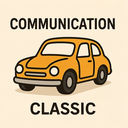
The "Communication, Car, and Classic" icon is a meticulously crafted visual symbol that fuses three powerful and distinct themes—Communication, Car, and Classic—into a harmonious, evocative representation. Designed not just for aesthetic appeal but for deep symbolic resonance, this icon transcends mere illustration to become a narrative tool that speaks to history, modernity, connection, and heritage. At its core lies the intention to represent the enduring human need to connect through movement and tradition—where automobiles are more than vehicles; they are vessels of communication and cultural continuity.
Communication is not just a function in this icon—it is a living, breathing element. The design incorporates subtle yet powerful visual cues that suggest dialogue, exchange, and shared understanding. For instance, the car’s shape subtly opens into two flowing lines resembling interwoven paths or signals—like waves meeting at sea or hands reaching across space. These lines are not random; they represent the transmission of ideas between individuals and generations. In some interpretations, these lines transform into a network pattern, resembling early telephone wires or radio waves—symbols universally associated with communication technology.
Moreover, within the icon’s composition, one can observe a small hand-drawn style letter “C” forming part of the car's side panel. This simple yet intentional detail serves as an emblematic reference to communication—both literal and metaphorical. The curve of the letter mirrors the arc of a conversation or thought passing between two people, suggesting that even in motion, connection persists.
Additionally, the background subtly features a gradient that shifts from deep blue (symbolizing trust and clarity) to warm orange (representing energy and engagement). This color transition reflects how communication begins with silence and grows into vibrant exchange—much like a classic car engine starting up and gaining momentum. The entire icon thus becomes an active metaphor for dialogue, where every element contributes to the idea that connection thrives in motion.
The car is central to this icon’s identity—not just as a machine, but as a symbol of journey, mobility, and freedom. The vehicle depicted is not futuristic or high-tech; instead, it embodies the classic design language: rounded fenders, elegant curves, minimal ornamentation with subtle chrome accents. This reflects a timeless aesthetic that has remained influential since the early 20th century—a hallmark of vintage automobiles like those from the 1950s and 1960s.
Positioned at the center of the icon, the car is slightly angled, as if in motion—perhaps mid-drive or preparing to start. This dynamic posture evokes a sense of purpose and forward movement. The wheels are not just mechanical parts; they are depicted with subtle tire patterns that resemble Morse code or ancient writing systems—further reinforcing the link between travel and communication.
The car’s hood features a small, stylized radio antenna rising upward from the grille. This detail is significant: it ties directly to historical developments in automotive communication. Early cars were often equipped with radios, allowing drivers and passengers to listen to news, music, and conversations—establishing the car as a mobile platform for social interaction. Even today, cars serve as spaces where people communicate through phone calls, music streaming, or shared stories during travel.
The car’s silhouette is carefully balanced so that it doesn’t dominate the icon—instead, it acts as a container for communication. It suggests that movement and connection go hand in hand. Whether you’re traveling across town or on a long road trip, the car becomes a stage where conversations unfold—the vehicle itself becoming part of the message.
“Classic” is not merely a descriptor—it is the soul of this icon. The classic style influences every layer: from the clean lines and symmetrical forms to the use of vintage color palettes such as deep red, polished black, and faded white. These colors evoke nostalgia, authenticity, and timelessness—qualities that resonate with people who value tradition and heritage.
Visually, the icon features a hand-drawn texture overlay—delicate brushstrokes that mimic the style of vintage illustrations or early 20th-century posters. This texture gives the image a handmade quality, distinguishing it from digital renderings and emphasizing its artisanal roots. The classic motif is not superficial; it reflects a philosophical stance—that true communication and meaningful connection stem from shared experiences rooted in history.
Within the car’s interior, faint outlines of vintage dashboard elements—such as analog clocks, mechanical gauges, and leather seats—are visible. These details suggest a bygone era when cars were not just machines but personal companions. In that context, communication within the car became intimate: between driver and passenger, between passengers and the journey itself.
Furthermore, the icon subtly incorporates elements of classic literature or film—such as a small map folded into the glovebox corner or a vintage phone resting on a center console. These touches elevate it beyond mere iconography; they make it feel like an artifact from a bygone age where people used cars to travel, meet, and share stories.
The true brilliance of the “Communication, Car, and Classic” icon lies in how these three elements converge. The car is not just a mode of transport—it is a social hub. Communication thrives within it, driven by shared experiences and conversations that unfold during journeys. And all of this is grounded in the timeless spirit of classic design—where simplicity meets elegance, functionality meets sentiment.
This icon functions not only as a visual representation but as a cultural statement. It reminds us that modern technology has advanced rapidly, yet human connection remains fundamental. The car, rooted in classic design, becomes a bridge between generations—where people share stories from the past while navigating new technologies and global landscapes.
Whether used in branding for heritage automotive companies, educational materials about communication in transportation history, or as a symbol of family road trips and shared memories, this icon captures the essence of enduring human values: connection through movement, preserved through tradition.
In summary, the "Communication, Car, and Classic" icon is far more than a visual design—it is a narrative masterpiece. It weaves together the timeless appeal of classic automobiles with the vital function of human communication and the dynamic journey of movement. Every line, color, and detail serves a purpose: to honor tradition while celebrating connection. As society evolves, this icon stands as a constant reminder that even in an age of digital advancement, simple acts—like sharing stories on a road trip in a classic car—remain one of humanity’s most profound forms of communication.
Create your own icon with our GoGPT AI prompt:
GoGPT