

Communication Piano Asymmetrical – Free icon download
Download all to grab every PNG variant.
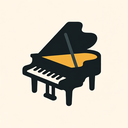
The icon described here is a powerful visual metaphor that seamlessly integrates three distinct yet deeply interconnected concepts—Communication, Piano, and Asymmetrical. Far from being a mere amalgamation of elements, this icon functions as a dynamic symbol of human connection through artistic expression, where music becomes the medium and form reflects the complexity and unpredictability of dialogue. At its core, it is not just an aesthetic choice but a conceptual framework designed to evoke emotional resonance, intellectual engagement, and visual intrigue.
Beginning with Communication, this icon embodies the essence of human interaction—both verbal and non-verbal. The central motif features flowing lines that resemble musical notes or conversation threads, gently curving into one another like conversations unfolding in real time. These lines do not form rigid, balanced structures; instead, they branch out unpredictably, symbolizing the organic and often chaotic nature of communication. Messages are not delivered in neat sequences but emerge through a network of overlapping ideas—some clear and direct, others subtle or ambiguous. This reflects how real-world communication is rarely linear or symmetrical: it includes misunderstandings, silences, interruptions, and layers of meaning that only become apparent through context.
The Piano element is not merely decorative—it serves as the foundational structure of the icon’s emotional and intellectual framework. Instead of showing a traditional piano keyboard with keys or hammers, this version abstracts the instrument into a series of rhythmic, staggered lines that echo the patterns found in musical phrasing. Each line represents a note, but they are not uniformly spaced or aligned; rather, they vary in length and angle to mirror the natural cadence of piano performance—where dynamics shift from soft to loud, from sustained to staccato. The icon incorporates subtle wave-like textures that resemble vibrato or sustain pedals, adding depth and movement. Furthermore, the colors used—such as warm amber for sustained notes and deep blue for sharp attacks—reflect how tone and emotion are intrinsically tied to musical expression.
Crucially, the Asymmetrical composition is not just a stylistic choice; it is central to the icon’s message. Unlike conventional designs that rely on symmetry for balance and harmony, this icon embraces visual imbalance as a form of authenticity and vitality. The arrangement of elements—notes, communication threads, musical waves—is deliberately uneven. One side might feature dense clusters of note lines forming complex harmonies, while the opposite side appears sparse and open-ended, suggesting unresolved questions or open dialogue. This asymmetry mirrors real-life interactions where power dynamics, emotional states, or cultural backgrounds create natural imbalances in how messages are received and interpreted.
The interplay between communication and music within the icon is profound. A piano performance is inherently communicative—it expresses feelings through tone, tempo, and phrasing. In this icon, each note acts as a message: a greeting, a confession, an apology, or even silence. The asymmetrical layout ensures that these messages do not reach all audiences equally; some are heard clearly and with emphasis while others fade into background noise—just like how certain voices in social or political discourse are amplified while others remain unheard. This reflects the importance of inclusive communication in diverse environments.
Additionally, the icon’s asymmetry fosters cognitive engagement. Viewers are not merely passive observers—they are invited to interpret patterns, track movement, and predict where new notes or conversations might emerge. The lack of rigid symmetry introduces curiosity and invites exploration. This mirrors how effective communication requires active listening and interpretation rather than just transmission of information.
From a design perspective, the icon is constructed using a mix of vector-based lines and subtle gradients that simulate the tactile qualities of real piano keys under touch or sound vibration. The use of negative space between elements enhances the sense of breath—similar to pauses in music—providing visual rhythm and allowing for internal reflection. The overall composition feels alive, as if it is in motion, with notes subtly shifting position over time like a live performance.
Moreover, this icon transcends cultural boundaries. While piano music is rooted in Western traditions, its emotional language—joy, sorrow, tension—is universally understood. By linking that emotion to the act of communication across cultures and contexts, the icon becomes a universal symbol of connection through shared human experience. The asymmetrical form avoids dogma or uniformity, embracing diversity in expression and dialogue.
In essence, this icon is not just a visual representation—it is a philosophical statement on how music enables deeper forms of communication than words alone can achieve. It suggests that true understanding often comes not from symmetry or completion, but from embracing imbalance, complexity, and the beauty of imperfection. In an era where information overload threatens meaningful conversation, this icon offers a reminder that human connection thrives in rhythm, resonance, and asymmetry.
Ultimately, the fusion of Communication, Piano, and Asymmetrical design makes this icon a unique tool for education, art installations, user interface design (especially in apps related to collaboration or creative expression), and even therapeutic environments where emotional balance is cultivated through music and dialogue. It stands as a testament to the idea that meaningful interaction is not about order—it’s about flow, resonance, and the courage to listen differently.
This icon does not simply show communication or music; it reveals how they are fundamentally intertwined—through rhythm, emotion, and visual tension. Asymmetry becomes a vessel for truth: truth that is messy, layered, and alive. It challenges viewers to see dialogue as an ever-evolving musical performance where every note matters.Create your own icon with our GoGPT AI prompt:
GoGPT