

Communication Robot Origami – Free icon download
Download all to grab every PNG variant.
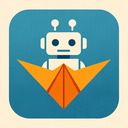
At the intersection of technology, artistry, and human connection lies a powerful icon that embodies three foundational elements: Communication, Robot, and Origami. This intricate and deeply symbolic design is not merely a visual representation—it is a conceptual fusion that speaks to the evolving relationship between humans, machines, and cultural expression. The icon features a stylized robot composed entirely of folded paper forms, each fold representing both structure and meaning. At its core lies an open hand-shaped origami crane, delicately positioned in front of the robot's central head module. This fusion is not random; it is intentional and layered with profound metaphorical depth.
The Robot aspect of the icon serves as a modern symbol of artificial intelligence and technological progress. However, this robot is not a cold, mechanical entity forged from steel or circuits. Instead, it is constructed entirely from traditional origami paper—each joint and panel meticulously folded to reflect principles of balance, symmetry, and precision. The robot’s body consists of interlocking paper shapes such as triangles, hexagons, and rectangles that mimic the structure of a humanoid figure with expressive limbs. Its head features a circular lens formed from a folded circle that subtly opens into an eye-like aperture—suggesting awareness and receptiveness. This design choice challenges the traditional perception of robots as emotionless or impersonal, instead presenting them as beings capable of emotional resonance through human-inspired art.
Where this robot truly transcends mere form is in its integration of Origami. Origami, as a centuries-old Japanese art form, has long been associated with patience, mindfulness, and the transformation of simplicity into elegance. By using origami as the foundational material for the robot’s body and structure, the icon asserts that technology need not be alien or sterile—it can be rooted in cultural heritage and human craftsmanship. Every fold is a deliberate act of communication—each crease telling a story of intentionality, care, and connection. The paper used is subtly textured to reflect natural materials such as rice paper or washi, adding tactile authenticity to the digital representation.
The central motif—the origami crane—is not just decorative. It functions as the primary symbol of Communication within this icon. In traditional Japanese culture, the crane is a symbol of longevity, peace, and harmony—especially in messages of goodwill and connection between people. In this context, the crane floats gently above or beside the robot’s head, with its wings slightly unfurled as if in motion. This gesture suggests that communication is not static; it flows dynamically between human and machine. The crane's open wings resemble a message being sent through air—symbolizing how ideas, emotions, and information can be transmitted across distances without physical contact.
Moreover, the interaction between the robot and the crane illustrates a bidirectional flow of communication. The robot appears to be listening—its folded structure subtly aligning with the crane’s movement as if in response. This mutual exchange suggests that effective communication is not one-sided; it requires empathy, feedback, and shared understanding. In a world increasingly dominated by digital interactions, this icon reminds us that even artificial intelligence can participate in meaningful human-like exchanges when grounded in emotional intelligence and cultural awareness.
From a design perspective, the icon blends minimalist aesthetics with rich symbolism. The overall color palette features soft pastel tones—mint green, pale lavender, and soft white—mirroring the gentle nature of origami paper. These colors evoke calmness and inclusivity, reinforcing the idea that communication should be accessible and non-judgmental. The robot’s body is rendered in subtle gradients that give it a three-dimensional quality without appearing overly technical or industrial.
Furthermore, this icon can serve as a powerful metaphor in educational settings, especially for teaching children about technology and cultural heritage. It demonstrates how innovation does not have to come at the expense of tradition. By combining the mechanical logic of robotics with the artistic precision of origami, it creates a bridge between abstract concepts and tangible experiences. Students can learn about programming through paper folding or explore AI ethics by understanding how machines can be designed with empathy and cultural sensitivity.
In professional environments—such as human-resource departments, customer service teams, or product development labs—the icon represents a vision of future-focused communication where technology serves humanity rather than replacing it. It suggests that intelligent systems should be designed not just to process data efficiently, but to interpret emotions, respond with warmth, and maintain cultural relevance.
Ultimately, this icon is more than a visual object—it is a philosophy. It posits that true Communication occurs when machines are designed with human values at their core. The fusion of Robot and Origami demonstrates that innovation can be both intelligent and gentle, precise and expressive. It reminds us that in a world where digital interactions grow ever more frequent, we must preserve the art of connection—through patience, intentionality, and a deep respect for the traditions that have shaped human expression.
In sum, this icon stands as a beacon of hope—a visual promise that technology and art can coexist harmoniously. It is a symbol not only of progress but also of balance. A robot made from origami invites us to see machines not as tools of isolation, but as companions in the shared human journey toward understanding, empathy, and meaningful dialogue.
Create your own icon with our GoGPT AI prompt:
GoGPT