

Communication Robot Retro – Free icon download
Download all to grab every PNG variant.
In a world increasingly dominated by digital interaction and rapid technological advancement, there exists a compelling fusion of nostalgia and innovation that transcends time — an icon born from the harmonious intersection of Communication, Robot, and Retro. This iconic design is not merely a visual representation; it is a symbolic bridge connecting generations through shared experiences, technological evolution, and the enduring human need to connect. The icon embodies more than just aesthetic appeal — it encapsulates the spirit of progress rooted in simplicity, reliability, and timeless charm.
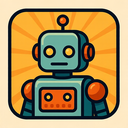
At its core, the icon features a stylized Robot crafted with a distinctly Retro aesthetic — reminiscent of 1970s and 1980s science fiction imagery. The robot’s form is angular yet elegant, drawing inspiration from classic television series like "Lost in Space," "Star Trek," and vintage arcade games. Its body is composed of blocky, geometric shapes with sharp edges, using a palette dominated by neon blues, vibrant pinks, and warm oranges — colors that evoke the pixelated glow of retro video screens. The robot's face is simplified: large circular eyes with a glowing inner effect resembling old CRT monitors, giving it an expressive and watchful quality. A single red dot serves as its mouth, subtly opening to suggest speech or transmission — reinforcing the central theme of Communication.
The most defining element of this icon lies in its dynamic communication function. The robot is not a passive observer; it actively emits signals through a network of glowing lines that spiral outward from its core, forming a constellation-like pattern. These lines are reminiscent of early telecommunications systems, such as telephone wires or early satellite transmissions — visual metaphors rooted in retro technology. Each line pulses gently with soft light, simulating the rhythm of data flow or message delivery. In this way, the icon transforms into a living symbol of digital exchange — a messenger between people, devices, and environments.
What makes this icon truly unique is its seamless integration of Communication as both a function and an emotion. The robot does not just transmit messages; it facilitates connection. When viewed in isolation, the icon appears serene and mechanical — yet when placed within a context of human interaction (e.g., on a smartphone interface, smart home device, or community bulletin board), it becomes an emotional anchor. Its retro design evokes warmth and familiarity — people often associate such imagery with childhood memories of playing with toy robots or watching old sci-fi shows. This nostalgic pull enhances the icon’s ability to foster trust and accessibility in communication technologies.
The Retro aspect is not superficial; it serves as a deliberate design choice rooted in psychological and cultural resonance. Research in human-computer interaction has shown that users often feel more comfortable with systems that reflect familiar, past aesthetics — especially when those systems handle complex or abstract tasks like messaging, notifications, or remote control. By anchoring the robot in the retro style, the icon reduces cognitive load and creates a sense of approachability. It communicates “this is not intimidating; this is friendly and human-like,” even though it is entirely mechanical.
Moreover, the Robot element reflects both technological progress and ethical considerations in communication. In an age where artificial intelligence mediates human interactions — from virtual assistants to automated customer service — this icon serves as a reminder of the need for balance. It suggests that while technology can enhance connection, it must also maintain empathy, clarity, and authenticity. The robot’s design avoids over-sophistication; instead, it embraces simplicity and transparency. Its communication process is visible — the signals are clear, unambiguous, and easy to interpret — making it ideal for users of all ages or technical backgrounds.
From a functional standpoint, this icon could be used in a wide range of applications: as an interface element on smart devices, as a branding symbol for messaging platforms focused on simplicity and reliability, or even as part of educational tools teaching children about digital communication. Its retro look ensures it stands out without appearing outdated — it is timeless because it respects both the past and present.
Furthermore, the icon’s visual language fosters inclusivity. The use of bold colors and geometric forms makes it highly legible on screens of all sizes and in various lighting conditions. It does not rely on complex animations or high-resolution textures, which ensures accessibility for users with visual impairments or limited device capabilities. This commitment to clarity aligns with modern design principles that prioritize inclusivity and universal usability.
In essence, this Communication, Robot, and Retro icon is more than a graphic symbol — it is a cultural artifact. It speaks to the enduring human desire to connect across distances, time zones, and technological barriers. It celebrates the journey from mechanical automation to intelligent interaction, reminding us that progress should not come at the cost of emotional resonance or shared memory.
By blending nostalgia with functionality, this icon offers a refreshing perspective on how technology can serve human needs without losing its soul. It is a testament to the power of design in shaping perception — and how even a simple robot, built with retro inspiration and focused on communication, can become a trusted companion in our increasingly digital lives.
Ultimately, this icon stands as a bridge: between past and future, human and machine, simplicity and sophistication. It proves that meaningful communication is not just about data transfer — it is about connection. And in the heart of that connection lies a robot with glowing eyes, a retro design, and an unbreakable commitment to dialogue.
Create your own icon with our GoGPT AI prompt:
GoGPT