

Communication Satellite Retro – Free icon download
Download all to grab every PNG variant.
In a world where technology evolves at lightning speed and digital connectivity dominates daily life, there exists a compelling vision that blends the past with the future—a vision embodied in an icon that seamlessly merges three powerful themes: Communication, Satellite, and Retro. This icon is not merely a visual symbol; it is a narrative device, a piece of design poetry that speaks to both nostalgia and innovation. At its core, the icon captures the essence of how humanity has long relied on celestial connections—specifically through satellites—to transcend geographic boundaries and establish global communication. Yet instead of presenting this concept with cold, modern technology aesthetics, the design embraces a retro sensibility—a nostalgic return to analog forms such as vintage radio waves, dial-up signals, and early space-age design elements.
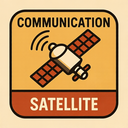
The icon features a stylized satellite orbiting Earth in a circular motion. However, rather than depicting a sleek, futuristic satellite with metallic sheen and digital interfaces, this version is crafted with the warmth and charm of 1960s or 1970s space exploration art. The satellite itself is shaped like a retrofuturistic spacecraft—think of the iconic Apollo missions or early NASA illustrations—complete with angular lines, bold curves, and a slightly rounded silhouette reminiscent of vintage sci-fi posters. Its surface is rendered in pastel gradients: soft pinks, faded blues, and mint greens that evoke the color palettes often found in mid-century science fiction films. This deliberate choice of color scheme reinforces the retro aspect while simultaneously grounding the icon in a familiar emotional space—one where technology feels not just functional but magical.
The most striking visual element lies within the communication function. Radiating outward from the center of the satellite are elegant, wave-like lines that mimic early analog radio waves or television signals. These waves are not digital pulses or sharp binary patterns, but instead resemble hand-drawn, flowing signals reminiscent of those seen in vintage radio manuals and 1950s broadcast technology. Each wave curves gently and forms a symmetrical pattern—like a cosmic network of connection—suggesting the reach and universality of communication across time zones, continents, and cultures. These waves subtly intersect with the satellite's body, creating an organic fusion between sender and receiver.
Crucially, this icon does not merely represent technology—it represents human connection through technology. In an era where digital communication often feels impersonal or transactional, this retro-inspired design emphasizes the emotional depth and shared experience behind communication. The satellite symbolizes a bridge—not just between points on Earth, but between people across generations, cultures, and languages. It suggests that even in the age of smartphones and satellites in low Earth orbit, there is still value in analog aesthetics and human-centered design. The retro elements evoke a sense of wonder—a reminder that technology should serve people’s emotions, not replace them.
The inclusion of a retro aesthetic also serves as a commentary on technological evolution. By using design cues from the 1960s–70s space race—such as bold typography, geometric forms, and optimistic futurism—the icon subtly critiques how modern tech often feels alienating or overly complex. In contrast, this retro version celebrates simplicity and clarity. The communication waves are not cluttered with data streams or notifications; they flow naturally and harmoniously around the satellite, emphasizing accessibility over overload. This reflects a philosophical undercurrent: true communication is not about speed or scale, but about understanding and empathy.
The satellite itself is positioned in a dynamic orbit—not just floating above Earth, but actively engaged with the planet’s surface. Its path traces an elegant spiral that intersects with imagined locations on Earth: cities, mountain ranges, oceans—each marked by faint dot patterns resembling old-style map pins or telephone booths from the early days of telephony. This creates a visual metaphor for how satellite communication once revolutionized global connectivity—connecting remote villages to major cities, bringing news and entertainment directly into homes that had previously been isolated.
Moreover, the retro aspect introduces tactile elements. The icon may feature subtle textures—such as faint grain patterns or brushed metallic finishes—that mimic film stock or old CRT monitor screens. These details make the design feel handcrafted and personal, rather than algorithmically generated. This tactile quality reinforces the human touch in communication—an element often lost in digital interfaces that rely solely on pixels and code.
From a user experience standpoint, this icon is designed to be instantly recognizable yet deeply meaningful. It can function as a brand logo for telecommunications services, educational platforms focused on technology history, or even as part of a wellness app that encourages mindful communication. Its retro design helps users feel at ease—less overwhelmed by modern tech—and more connected to the human side of digital interaction.
Ultimately, this icon transcends its functional purpose. It is a tribute to the pioneers who first envisioned global communication through satellite technology—visionaries like Carl Sagan and engineers from NASA’s early missions. At the same time, it honors our collective desire to remain in touch with one another, even across vast distances and technological shifts. By merging Communication (the act of sharing ideas), Satellite (the medium enabling that connection), and Retro (the nostalgic aesthetic that reminds us of humanity’s shared journey through innovation), this icon becomes a symbol of resilience, unity, and timeless aspiration.
In a world where technology can feel cold and disconnected, this icon serves as a warm reminder: behind every signal sent through space lies not just data, but stories—stories of love, discovery, and connection. And perhaps that is the most enduring legacy of satellite communication: not just the ability to send messages across continents, but the power to bring people together through shared moments of wonder and understanding.
Create your own icon with our GoGPT AI prompt:
GoGPT