

Communication Smartphone Origami – Free icon download
Download all to grab every PNG variant.
At the heart of modern human experience lies a powerful and elegant fusion of technology and tradition—the icon that embodies Communication, Smartphone, and Origami. This is not simply a visual motif; it is a layered, symbolic representation of how we connect across time, space, and culture. The icon serves as both a technological metaphor and an artistic expression—a dynamic bridge between the digital age and the timeless craft of paper folding.
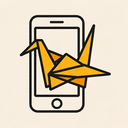
The central element of this icon is a smartphone delicately folded into the shape of an origami crane. This fusion is not arbitrary but deeply intentional. The smartphone, as a dominant tool in contemporary communication, symbolizes instant connection, information sharing, and global interaction. It enables voice calls, text messages, video chats, and social media—all fundamental to how we communicate today. However, the act of folding this device into the form of a traditional origami crane introduces a profound contrast: it transforms a digital object into something fragile yet resilient—an object that can be folded, carried with care, and reassembled with intention.
The origami aspect is not merely decorative. It represents patience, mindfulness, precision, and cultural heritage. Originating in Japan over centuries ago, origami embodies the philosophy of "wabi-sabi"—the beauty found in imperfection and transience. By folding a smartphone into an origami crane, the icon suggests that even our most advanced technologies can be brought back to their essential nature: simplicity, balance, and human-centered design. The crane itself is a universal symbol of peace, hope, and communication—flying freely across skies to connect people who may be physically distant.
Furthermore, the interplay between these three elements creates a narrative of evolution. The smartphone is the modern instrument of communication—fast-paced, powerful, capable of transmitting information across continents in seconds. But within its form lies the potential for stillness and reflection. When folded into an origami crane, it becomes less about constant connectivity and more about thoughtful interaction. This transformation reflects a growing societal awareness that digital communication, while essential, must be balanced with human presence and emotional depth.
The design of the icon carefully illustrates this balance through visual harmony. The smartphone is rendered in sleek, modern lines—curved edges, a clean screen display—representing the digital world's efficiency and innovation. Yet as it is folded into origami form, its edges begin to curve inward like paper folding: first one corner, then another, with smooth creases that follow the natural flow of origami techniques such as mountain folds and valley folds. The final shape—a crane in flight—presents a sense of motion and grace, suggesting that communication is not static; it evolves with intention and creativity.
Within this icon lies an implicit message: true communication transcends mere data exchange. It requires empathy, presence, and artistic sensitivity. The smartphone provides the tools—the platform—but the origami crane reminds us that meaningful connection is built through care, patience, and creativity. Just as a skilled origami artist folds paper with precision yet allows room for imperfection, so too should we approach communication with authenticity and emotional awareness.
The icon also speaks to cultural fusion. Origami is not just a Japanese art form; it has become a global symbol of peace and unity. When paired with the smartphone—a tool born in the digital west—the icon becomes a cross-cultural bridge. It invites viewers from diverse backgrounds to see shared values: the desire to connect, to understand, and to communicate with compassion. In this way, the icon becomes more than a visual representation—it serves as a cultural statement about inclusivity and mutual respect.
Moreover, this icon can be interpreted in multiple ways depending on context. In education settings, it could represent teaching students about responsible technology use and creative thinking. In corporate environments, it may symbolize innovation grounded in human-centered values. In personal life contexts, it evokes a call to slow down—the idea that even in our hyper-connected world, we must take time to listen deeply and respond thoughtfully.
What makes this icon truly unique is its ability to simultaneously celebrate advancement and honor tradition. It acknowledges that technology has revolutionized how we communicate—making distance irrelevant, information accessible, and global conversations possible. But it also reminds us that the essence of communication lies not in speed or volume, but in meaning, empathy, and human connection.
Therefore, the icon of Communication, Smartphone, and Origami is more than a simple design—it is a philosophical statement. It suggests that our tools should serve humanity rather than dominate it. That our most powerful instruments of connection—like smartphones—should be used with wisdom and mindfulness, folded into forms that reflect balance, beauty, and shared human experience.
In conclusion, this icon stands as a modern testament to the enduring power of communication. It marries the efficiency of digital technology with the elegance of traditional artistry. Whether viewed in a digital interface or displayed in a cultural exhibit, it reminds us that at the core of all human connection lies not just data, but care—care that is nurtured through both smart devices and silent paper folds.
Create your own icon with our GoGPT AI prompt:
GoGPT