

Construction Bus Classic Free icon download
Download all to grab every PNG variant.
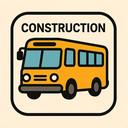
The icon in question is a masterful fusion of three distinct yet harmoniously integrated concepts: construction, bus, and classic. At first glance, it appears as a simple vector illustration, but upon closer examination reveals layers of historical significance, industrial functionality, and enduring design elegance. The image centers on a retro-styled bus—evoking the nostalgic charm of mid-20th-century transportation—modified with unmistakable elements of construction infrastructure to create a unique symbol that speaks to both urban development and timeless craftsmanship. At its core, the icon represents a **construction vehicle**, specifically a specialized transport bus used on building sites. However, rather than depicting an industrialized, modern construction trailer or cement mixer, this design takes inspiration from classic vehicle forms—particularly those seen in 1950s and 1960s European and American transit fleets. The body of the bus is rendered in clean, geometric lines with a slightly rounded front end and a bold chromed grille that resembles those found on vintage city buses. The color scheme leans toward traditional construction hues—industrial green, matte grey, rusted orange—and is accented with bright yellow or safety-orange trim along the sides and roofline. These colors are not merely aesthetic; they serve a functional purpose in real-world construction environments where visibility and hazard warning are paramount. The most striking feature of this icon is how it seamlessly blends **bus** functionality with **construction** utility. The vehicle is clearly shaped like a double-decker or single-decker bus, but its design incorporates features that indicate heavy-duty use on rugged terrain. The wheels are oversized, with thick rubber tires featuring deep treads to handle gravel, mud, and uneven ground—hallmarks of construction site equipment. Instead of standard passenger seating inside the bus body (which would be impractical in a work zone), the interior is subtly suggested through open side panels or transparent sections revealing tool racks, hard hat storage bins, and even a small crane arm mounted on the roof—a nod to its role in transporting not just workers, but essential machinery and materials. The **classic** nature of this icon is evident not only in its design language but also in the intentional choice of retro elements that harken back to an era when industrial vehicles were built with craftsmanship and durability. The bus’s headlights are round, with chrome surrounds resembling those found on 1950s American transit buses. The roofline gently curves upward at the front, echoing the aerodynamic curves popularized in mid-century design. Even the license plate is styled as an old-school metal plaque with embossed numbers and letters, giving it a sense of authenticity and historical weight. Yet this is no mere museum piece—it’s designed for purpose. Embedded within its classic façade are unmistakable construction features: a reinforced steel frame visible through subtle paneling on the lower sides, heavy-duty hydraulic lifts at the rear door (used to deploy work platforms), and small storage compartments along both flanks containing rolled cables, scaffolding poles, and even a miniature hard hat holder shaped like a vintage worker's cap. The front windshield is slightly tilted for better visibility during low-speed maneuvers in tight construction zones—a practical detail that enhances usability without compromising the overall aesthetic. What makes this icon truly remarkable is its ability to balance nostalgia with functionality. The **classic** elements provide an emotional resonance—evoking memories of simpler times when infrastructure was built by skilled laborers in durable, well-crafted vehicles. This evokes a sense of reliability and permanence, qualities often missing from today’s disposable technological culture. At the same time, the integration of **construction** features ensures the icon remains relevant to modern industries where transportation on-site is as critical as any other aspect of project delivery. The icon also carries symbolic weight. It represents not just a vehicle, but an entire ecosystem: workers arriving at a jobsite in style and safety; materials being transported efficiently; teams collaborating under one shared platform. In this way, the **bus** becomes more than transport—it's a mobile hub of productivity, echoing the communal spirit of construction crews. The design’s balance between form and function is masterful. Every line—from the gentle curve of the hood to the angular edges around each window—serves both an artistic and practical purpose. The use of bold silhouettes ensures visibility even at small sizes, making it ideal for digital interfaces in construction management software, urban planning tools, or workplace safety documentation. In conclusion, this icon stands as a celebration of heritage and progress. It honors the **classic** design principles that once defined industrial strength and durability while embracing the modern demands of **construction** environments. By reimagining the humble bus as a symbol of site logistics and labor coordination, it creates a powerful visual metaphor: progress built not in isolation, but through collective effort, time-tested methods, and vehicles that are both functional and beautiful. This is more than an icon—it’s a tribute to the craftsmanship behind every building we see today.
Create your own icon with our GoGPT AI prompt:
GoGPT