

Construction Bus Pixel art Free icon download
Download all to grab every PNG variant.
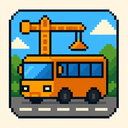
The pixel art icon described here is a meticulously crafted, 16x16-pixel digital illustration that seamlessly fuses the themes of construction, transportation, and retro digital aesthetics. At first glance, it appears as a simple blocky image — a hallmark of classic 8-bit and 16-bit video games — but upon closer inspection reveals a rich narrative of urban transformation. The icon embodies the dynamic synergy between progress (construction) and mobility (bus), rendered through the deliberate, limited palette and sharp geometric precision characteristic of pixel art. Each pixel is purposefully placed to convey meaning, function, and visual charm in a style reminiscent of early computer graphics from the 1980s and 1990s.
At the heart of this icon lies a stylized, miniaturized yellow bus — not just any public transit vehicle, but one unmistakably engaged in an urban construction project. The bus is designed with clean, angular lines typical of pixel art: its body is composed of 12 distinct pixels forming a rectangle with slight curvature at the front and back ends to suggest rounded edges. The windows are represented by four small white squares arranged in a 2x2 grid on either side of the cab, while two red stop signs — miniature but unmistakable — appear at the rear, indicating that this vehicle is not just a standard transit bus, but one serving a dual purpose: transporting workers and materials to construction sites. The roof features an orange-and-white stripe pattern in 8-bit style, echoing the visual language of real-world transit buses while maintaining its digital authenticity.
What distinguishes this icon from typical transportation or construction icons is its integration of a construction crane — not as a separate element, but as an extension of the bus itself. From the roof of the vehicle rises a simple yet effective pixelated crane arm made entirely from four connected pixels: one vertical post, two horizontal arms, and a tiny hook at the end. This mechanical appendage is rendered in dark gray and black pixels to contrast with the yellow base body, creating immediate visual hierarchy. The crane’s presence suggests that this is not merely a vehicle carrying construction teams — it's an active agent of infrastructure development, capable of lifting materials mid-route or assisting in erecting structures directly from its platform.
The background elements are minimal but symbolic. A series of gray pixels form a low-hanging cloud, suggesting weather conditions common on urban job sites — perhaps a light drizzle or early morning mist. Beneath the bus, two sets of wheels (each consisting of four pixels) are drawn with careful attention to perspective and spacing, giving the impression that it is in motion. The tires feature black-and-white striped patterns in a 2x2 arrangement, mimicking real-life rubber treads but rendered through a single-bit pixel grid. This level of detail reinforces the icon’s commitment to authentic pixel art principles: every element must communicate meaning without reliance on gradients, anti-aliasing, or realistic textures.
Color usage is intentional and strategic. The palette is strictly limited to six colors: yellow (#FFFF00) for the bus body; black (#000000) for outlines and shadows; white (#FFFFFF) for highlights and windows; red (#FF0033) for stop signs; dark gray (#444444) for the crane arm, roof stripes, and wheels’ rims; and light gray (#CCCCCC) to represent the clouds. This constrained color scheme is a core component of classic pixel art — it forces creativity within limitations, ensuring that each hue serves multiple purposes. For example, white is used not only for windows but also as a reflector on the bus’s side panels and as cloud texture, maximizing visual impact while preserving consistency.
The icon's dual theme of construction and public transport is further emphasized through symbolism. The presence of both a crane and a bus suggests the interdependence of mobility and development in modern cities. In many growing urban centers, mobile work units like construction buses are used to transport crews, tools, and even modular building components directly to project sites — especially in large-scale infrastructure projects such as subway expansions or bridge repairs. This icon captures that reality through an artistic lens: a single vehicle embodying the convergence of labor, engineering, and transit.
From a design standpoint, this icon is highly scalable. Because it's built from discrete pixels rather than vector paths or continuous gradients, it maintains crisp clarity at both small screen resolutions (like those on older handheld consoles) and larger displays when enlarged with pixel-perfect scaling. This makes it ideal for use in retro-themed mobile apps, video game UIs, city-building simulation games (such as "Cities: Skylines" or "SimCity"), or even as a symbol in digital urban planning tools.
In conclusion, this 16x16 pixel art icon is not just a visual representation; it is a narrative device. It encapsulates the essence of modern urban evolution — where progress doesn’t come from isolated elements, but from interconnected systems: construction workers moved by efficient transit, building materials lifted by mobile cranes, and all powered by innovation. Its minimalist design belies its complexity of meaning, making it a perfect fusion of pixel art’s nostalgic charm with contemporary themes of infrastructure and mobility. Whether viewed on a handheld device or integrated into a digital city map, this icon stands as a small but powerful testament to the creative potential found at the intersection of construction, transit, and retro digital art.
Create your own icon with our GoGPT AI prompt:
GoGPT