

Construction House Organic pattern Free icon download
Download all to grab every PNG variant.
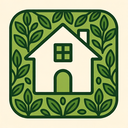
The icon in question is a meticulously crafted visual representation that masterfully intertwines the concepts of construction, house, and organic pattern into a single cohesive design. At its core lies an architectural symbol—a house—yet it transcends mere structural form through dynamic integration with natural elements and deliberate constructional motifs. The result is not just an icon but a symbolic narrative about sustainable living, human habitation, and the delicate balance between man-made order and nature’s flowing rhythm.
The central element of the icon is a stylized house. Instead of adopting a rigid, geometric box-like silhouette often associated with traditional house icons, this design embraces soft curves and asymmetrical lines that evoke both modern architectural innovation and a connection to the natural world. The roof gently arcs upward like a leaf or petal, suggesting growth rather than confinement. The walls are constructed with visible yet subtly rendered materials—wooden beams interwoven with stone-like textures, each line meticulously carved to resemble tree rings and weathered bark. This deliberate fusion of building materials and organic metaphors immediately establishes the icon’s thematic foundation: a home as both a shelter built by human hands and an extension of the living earth.
What elevates this icon from mere representation to artistic expression is its profound incorporation of an organic pattern. The entire structure appears to be grown rather than assembled, with vine-like lines radiating from the foundation upward through walls and across the roof. These lines mimic natural branching patterns—reminiscent of tree roots, river deltas, or neural networks—each element flowing seamlessly into the next with no sharp breaks. The organic pattern isn't merely decorative; it serves as a structural metaphor. The house seems to have emerged from the ground like a seedling breaking through soil, suggesting that construction is not an act of domination over nature but one of coexistence and symbiosis.
Construction is emphasized not through industrial imagery—no cranes, blueprints, or hard hats—but through architectural detail and intentional materiality. The house's walls are layered with textured gradients that suggest weathering and time. Small patterns resembling brickwork or timber joints are present but reimagined as part of the organic flow: instead of straight lines, the joints curve like root systems beneath the surface. Windows are not rectangular voids but circular or petal-shaped openings, each one framing a glimpse of greenery—perhaps a tree growing inside or sunlight filtering through leaves. This visual language tells us that construction here is mindful, sustainable, and rooted in natural processes.
Color plays an essential role in reinforcing these themes. The dominant palette consists of earth tones: warm terracotta, mossy greens, soft browns, and gentle beiges—colors drawn from soil, wood, and foliage. These hues are not flat but gradient-filled with subtle shifts that mimic sunlight filtering through a forest canopy or the dappled light on tree trunks. The organic pattern is rendered in varying intensities of green and gold, creating depth as if the patterns themselves were living organisms pulsing with life. The construction elements—wood beams, stone textures—are subtly highlighted in these tones, blurring the line between built environment and natural habitat.
At the base of the icon lies a root network that extends into a stylized soil layer. These roots are not separate from the house but appear to be integral to its foundation—suggesting that a truly sustainable home must be deeply rooted in its ecosystem. The pattern continues beneath and around the structure, forming an invisible lattice that supports both architecture and nature simultaneously. This design choice visually conveys the idea that construction does not have to sever ties with nature; rather, when done thoughtfully, it can enhance ecological balance.
From a practical standpoint, this icon is ideal for use in sustainable development platforms, eco-friendly architecture websites, green building certifications, or urban planning initiatives. Its aesthetic appeal and symbolic depth make it instantly recognizable as representing a future where homes are not just buildings but living ecosystems. The integration of construction principles with organic patterns creates an image that speaks to both the intellect and the emotions—inviting viewers to consider how we build our shelters not in opposition to nature, but in harmony with it.
In conclusion, this icon is a profound synthesis of three seemingly disparate concepts: construction, house, and organic pattern. Through careful attention to form, texture, color, and symbolism, it transcends its function as a simple visual marker. It becomes an emblem of sustainable human progress—one where the act of building is not about conquering nature but about belonging to it. In every curve of the roof, every vein-like line across the wall, and every natural hue in its palette lies a message: that our homes can be both strong and gentle, constructed with intention and grown with care.
Create your own icon with our GoGPT AI prompt:
GoGPT