

Culture Bicycle Sharp edges Free icon download
Download all to grab every PNG variant.
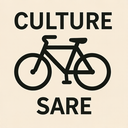
The icon in question is a powerful visual synthesis of three seemingly disparate concepts—Culture, Bicycle, and Sharp Edges—crafted into a single striking emblem that challenges conventional design expectations. At first glance, one might be drawn to its bold geometry and dynamic form. However, deeper inspection reveals layers of meaning woven intricately through the interplay of symbolic elements and deliberate visual tension.
At the heart of this icon lies the silhouette of a bicycle—an emblem that transcends mere transportation. The bicycle is not rendered in a whimsical or nostalgic manner; rather, it appears as a modern, almost mechanical construct, suggesting both movement and resilience. Its frame is composed of sharp, angular lines that converge at precise angles, forming what could be interpreted as the skeletal structure of a cultural artifact. This deliberate abstraction transforms the bicycle from an object into a symbol—representing not just mobility and freedom but also innovation and human ingenuity across civilizations.
What makes this icon particularly compelling is how its bicycle form interacts with the concept of 'Culture.' The spokes of the wheel are not simple circular elements but instead resemble stylized patterns from various global traditions: geometric motifs from Islamic art, Celtic knots, African tribal designs, and ancient Nordic runes. These patterns are seamlessly integrated into the metal framework of the bicycle, suggesting that cultural expression is embedded in our daily tools and modes of movement. The fusion implies that culture is not a static museum piece but a living force—woven into infrastructure, technology, and personal freedom.
Moreover, each spoke terminates at a point with acute precision—sharply defined edges that cut through space like blades. These sharp edges are not mere aesthetic flourishes; they represent tension, confrontation, and transformation. They evoke the idea that cultural evolution often arises from conflict—between tradition and modernity, between preservation and progress. The bicycle's motion is no longer gentle or peaceful but charged with energy—a symbol of revolutionary change moving forward through time with unyielding momentum.
The frame itself is constructed from intersecting polygonal shapes: triangles, parallelograms, and hexagons—all sharply defined. These forms create a sense of architectural strength, reminiscent of modernist design or urban infrastructure. Yet, within this rigid geometry lies a paradoxical fluidity—because the entire structure appears poised to move forward. The front wheel tilts slightly upward at an aggressive angle, while the rear wheel is positioned as if already in motion, suggesting acceleration rather than stillness.
Color plays a vital role in amplifying these themes. The icon uses a high-contrast palette—charcoal black for the frame, accented with electric blue and crimson red along the sharp edges. These colors are not decorative; they serve symbolic functions. Blue represents innovation, clarity of vision, and digital connectivity—the modern cultural landscape. Crimson red signifies passion, revolution, and the emotional weight of heritage in transition. The sharp edges glow faintly at their tips with a metallic sheen, giving them an almost dangerous brilliance—reminiscent of blades or lightning strikes.
From a typographical perspective, if this icon were accompanied by text, the lettering would mirror the visual language: angular, sans-serif fonts with clipped corners and embedded triangular notches. The letters themselves seem to be carved rather than printed—a reflection of how culture is inscribed into physical form through writing systems, architecture, and technology.
Ultimately, this icon serves as a metaphor for contemporary society: a world where cultural identity is perpetually in motion. Like the bicycle that requires constant pedaling to maintain balance, cultures must actively engage with change to survive. The sharp edges are not symbols of destruction but of transformation—of the cutting edge needed to redefine tradition in new contexts.
It challenges viewers to reconsider what a symbol can be: not just an image, but a narrative. A bicycle is no longer only for riding—it becomes a vehicle of cultural discourse. Culture is no longer confined to museums or heritage sites—it lives in the streets, on urban bikes, and in the sharp edges of progress. And the sharpness? It’s not aggression; it’s clarity—the kind that emerges when tradition meets innovation head-on.
In conclusion, this icon masterfully intertwines Culture, Bicycle, and Sharp Edges into a unified vision of dynamic evolution. It stands as a testament to the power of design to encapsulate complex ideas—where every angle carries meaning, every line tells a story, and every edge cuts through the noise of complacency.
Create your own icon with our GoGPT AI prompt:
GoGPT