

Culture Globe Classic Free icon download
Download all to grab every PNG variant.
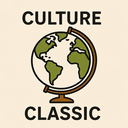
The icon under description is a masterful synthesis of three fundamental concepts—Culture, Globe, and Classic—crafted not merely as a visual symbol but as a profound emblem representing humanity’s interconnected journey through time. With meticulous attention to form, symbolism, and historical resonance, this icon transcends its digital or print origins to become a timeless representation of global unity rooted in diverse cultural heritage. At first glance, the design appears elegant and understated; upon closer examination, it reveals layers of meaning that speak to both the past and future of human civilization. At its core is a stylized globe—representing the world itself—not as a mere cartographic abstraction but as a living, breathing entity. The globe is rendered with subtle relief, suggesting continents formed not by lines on paper but by natural landmasses shaped over millennia. Yet unlike typical digital or minimalist globes that emphasize precision and symmetry, this version incorporates gentle irregularities in its surface: soft undulations where mountains rise subtly beneath the curve of the sphere, and delicate patterns resembling ancient trade routes woven into its surface like invisible threads. These details speak to the idea that while Earth is a unified planet, it is also composed of countless unique landscapes—each with its own story, language, traditions, and artistic expressions. What elevates this icon beyond simple geography is the integration of cultural motifs seamlessly embedded within the globe's design. Around the equator and along major latitudinal bands lie intricate patterns drawn from traditional textile arts across continents—the bold geometric symmetry of African Kente cloth, the swirling floral motifs of Persian carpets, the delicate ikat weaving traditions of Indonesia, and the sacred mandala designs from Indian spirituality. These elements do not compete with one another; instead, they harmonize on the globe’s surface like constellations in a night sky—each distinct yet part of a greater cosmic whole. The colors used are earthy and organic: deep ochres, forest greens, indigo blues, terracotta reds—all chosen to evoke natural materials and ancient craftsmanship rather than synthetic hues. This interweaving of culture into the very fabric of the globe symbolizes how identity is not isolated but interdependent. No civilization exists in a vacuum; every cultural expression has been shaped by exchange—by migration, conquest, trade, and dialogue. The icon reminds us that cultural richness thrives through interaction rather than isolation. It challenges modern assumptions of cultural purity by presenting diversity not as fragmentation but as a dynamic network of shared human experience. Embedded at the center of the globe is a classic design element—a circular medallion reminiscent of ancient coins or Renaissance-era seals. This central emblem features an engraved compass rose with four primary directions, but instead of pointing to mere cardinal points, each arm terminates in stylized symbols representing universal cultural values: music (a violin), education (an open book), agriculture (a wheat sheaf), and peace (an olive branch). The medallion is framed by a laurel wreath—another classic symbol drawn from Greco-Roman antiquity—signifying achievement, wisdom, and honor. The overall aesthetic of the center is deliberately antique: engraved lines, slight imperfections in the lettering, a weathered patina that suggests age and endurance. The typography used in any accompanying text would follow suit—a serif font with strong classical roots (perhaps reminiscent of Garamond or Trajan), ensuring that even when words appear alongside the icon, they maintain a sense of timelessness and authority. The balance between visual simplicity and symbolic depth is striking; no single element overwhelms the others. The classic style anchors the image in tradition, the globe gives it global scope, and culture infuses it with soul. This icon’s purpose extends far beyond branding or decoration. It serves as a powerful metaphor for inclusive progress—where innovation does not erase heritage but builds upon it. In educational contexts, it can represent multicultural curricula; in international diplomacy, a call for mutual respect; in cultural institutions, a celebration of diversity within unity. The fact that the design feels both modern and ancient simultaneously speaks to its universal appeal: it honors the past while remaining relevant to contemporary discourse. Moreover, the icon's scalability is noteworthy—it remains meaningful whether displayed on a mobile app or carved into stone at a world summit venue. Its layered symbolism ensures that viewers from different backgrounds can find personal significance in it, whether they see the globe as a symbol of environmental stewardship, the cultural patterns as tributes to ancestral artistry, or the classic elements as reminders of enduring human values. In conclusion, this icon is not simply about representing Culture, Globe, and Classic—it embodies them. It shows how these concepts are not separate ideals but deeply interconnected pillars of human existence. Through its thoughtful design language and layered symbolism, it invites contemplation: a reminder that our shared world is enriched not despite our differences but because of them. And in an age where division often dominates headlines, this icon stands as a quiet yet powerful testament to the beauty of unity in diversity—crafted with classic elegance, rooted in global reality, and alive with the spirit of culture.
Create your own icon with our GoGPT AI prompt:
GoGPT