

Culture Guitar Tribal Free icon download
Download all to grab every PNG variant.
```html
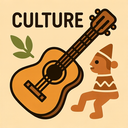
At the heart of this intricate and evocative icon lies a profound synthesis of three powerful themes: Culture, Guitar, and Tribal. This visual masterpiece is not merely an artistic rendering—it is a living testament to the interconnectedness of human expression across time and space. The icon fuses ancestral traditions with musical evolution, symbolizing how rhythm, heritage, and identity intertwine in the soul of humanity.
Central to the design is a hand-carved wooden guitar—its body not just an instrument but a sacred vessel. The wood used in the guitar's construction bears natural grain patterns reminiscent of ancient tree rings, each concentric circle representing a generation passed, a story told, and an emotion preserved. Deeply etched into the surface are tribal symbols: spirals that echo the cyclical nature of life, jagged lines symbolizing storms overcome, and geometric shapes derived from indigenous cosmologies found in African desert tribes, Amazonian communities, and Aboriginal Australian designs. These carvings are not decorative; they serve as a language—an oral history encoded in wood.
The neck of the guitar is fashioned from polished dark ebony, adorned with frets that glow faintly with an amber light, as though infused with ancestral memory. Each fret is subtly shaped like a tiny drumhead or ceremonial rattle, suggesting that every note played is not just sound but ritual. The tuning pegs are stylized into the forms of tribal masks—some serene and contemplative, others fierce and expressive—each representing different emotional states: joy, mourning, celebration, or spiritual awakening. When viewed from a distance, the guitar appears as a monolithic artifact; up close, one discovers it is alive with detail—an ecosystem of culture embedded in wood and wire.
From the body of the guitar emerges a series of intertwined vines made from braided leather cords and natural fibers. These vines wrap around the neck like ancestral roots, connecting past to present. Embedded within these vines are small symbolic charms: miniature drums, feathers from sacred birds, beads woven in patterns specific to various indigenous communities—Maasai reds and whites for courage and purity; Navajo turquoise for spiritual protection; Andean chakana symbols representing the three realms of existence. These elements emphasize the icon’s deep respect for cultural diversity while affirming a shared human narrative.
The strings themselves are not standard steel—they are crafted from twisted fibers of palm, reed, and sinew, materials historically used in traditional instruments across Africa, Southeast Asia, and South America. When plucked gently (even symbolically), they produce a sound that echoes beyond mere acoustics—it resonates as a memory. The lowest string is thickened into the shape of an ancient serpent or dragon—mythological figures common in tribal lore—representing wisdom and transformation.
At the apex of the guitar, where the headstock would normally be, instead of a traditional tuning mechanism, there stands a small carved figure: a tribal elder with eyes closed in deep meditation. His hands rest upon the strings not to tune them, but to feel their vibration. Around his neck hangs a pendant made from obsidian and gold—symbolizing both darkness and enlightenment—and on his brow rests an ornate headdress of feathers, roots, and dried herbs representing connection to earth, sky, and spirit.
This icon is more than a symbol—it is an invitation. It invites the observer to listen not only with ears but with soul. The fusion of Culture—understood as the sum total of beliefs, traditions, arts, and expressions passed down through generations; Guitar—as both a universal instrument and a vehicle for personal and collective storytelling; and Tribal—representing deep-rooted community identity, ancestral wisdom, and spiritual connection to land—is not coincidental. It is intentional. This icon reminds us that every song has ancestors. Every melody carries memory.
In the digital age where culture is often commodified or diluted, this icon stands as a guardian of authenticity—a reminder that music born from tribal roots carries within it the heartbeat of civilizations long forgotten yet still pulsing through our veins. It speaks to those who seek not just entertainment but meaning: the dancer whose steps echo ancient patterns, the poet who weaves stories into lyrics, and the listener who finds home in a chord progression that feels eerily familiar.
Ultimately, this icon is a fusion of earth and soul. It is where culture meets creation, where tribal knowledge becomes melody, and where the guitar—a humble instrument—becomes a bridge between worlds. In its design lies not only beauty but responsibility: to remember, to honor, and to keep the rhythm alive.
```Create your own icon with our GoGPT AI prompt:
GoGPT