

Culture Key Formal Free icon download
Download all to grab every PNG variant.
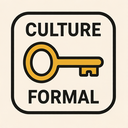
At the heart of symbolic design lies an intricate balance between concept and form—a convergence that gives life to icons capable of transcending mere visual representation. Among such powerful symbols is one that encapsulates the profound interplay between culture, key significance, and formal presentation. This icon is not merely a graphical element; it is an architectural metaphor for heritage, access, and structured elegance. It visually embodies the essence of tradition intertwined with authority and precision—where every line carries meaning, every curve reflects history, and every color choice speaks to societal values.
The central feature of this icon is a stylized key—its form both familiar and elevated in design. The key is not an ordinary implement used for unlocking doors; instead, it serves as a symbolic representation of access—specifically, access to the core values, knowledge systems, and historical legacies of a particular culture. The handle of the key is intricately carved with patterns inspired by ancient motifs: geometric designs from Byzantine mosaics on one side and flowing calligraphic lines reminiscent of Arabic or Persian script on the other. These details are not decorative fluff—they are deliberate references to global cultural traditions, indicating that this key opens doors not just to physical spaces but to entire civilizations' collective wisdom.
The shaft of the key is slender and symmetrical, crafted with a precision that reflects formal design principles. Its surface is smooth yet subtly textured, suggesting both refinement and durability. The teeth are carefully spaced and slightly angled upward, symbolizing not only mechanical functionality but also intellectual ascent—each tooth representing a step in the evolution of cultural understanding or scholarly progress. This deliberate proportioning aligns with classical ideals of balance and harmony found in Greek architecture and Renaissance art, reinforcing the formal aspect of the icon. In design terms, it adheres to golden ratio proportions and symmetrical balance, traits long associated with aesthetic perfection across time and geography.
What elevates this icon beyond a simple key is its integration with cultural symbolism. Surrounding the base of the key is a circular band that resembles an ancient medallion or ceremonial seal. Embedded within this ring are miniature emblems from various world cultures—African tribal patterns, Celtic knots, Japanese kanji characters, Native American totemic symbols, and Indian mandalas—arranged in a harmonious sequence around the circumference. This concentric design speaks directly to the theme of culture: it acknowledges diversity while affirming unity under a shared symbolic language. The band is enclosed by an ornate frame reminiscent of 18th-century European filigree or Mughal-era inlay work, further enhancing its formal and ceremonial character.
Color plays a pivotal role in amplifying the icon's layered meaning. The primary tone of the key is brushed silver—a metal associated with clarity, purity, and timelessness across many cultures. The handle features subtle gradients transitioning from deep navy to royal blue at the extremities, colors historically linked to wisdom, royalty, and intellectual authority. In certain cultural contexts—such as in East Asian traditions—blue symbolizes enlightenment; in Western formal attire (like diplomatic uniforms), it conveys trustworthiness and formality. The ring surrounding the key is rendered in gold leaf effect, suggesting value and sacredness—the kind of material reserved for royal artifacts or religious relics. This color choice reinforces the icon's association with high cultural importance.
The formal nature of this icon extends beyond aesthetics into its intended context of use. It appears most prominently in official documents, cultural institutions (such as museums, national archives, and UNESCO offices), academic publications, and digital platforms focused on heritage preservation. Its presence signals not just a functional purpose—accessing curated information—but also a solemn commitment to authenticity, respect for tradition, and adherence to established protocols. The icon functions as a seal of legitimacy: when displayed with proper spacing and in formal typography alongside institutional logos or official seals, it carries the weight of authority.
Moreover, this icon's design is intentionally scalable without losing integrity—an essential feature for formal digital assets. Whether rendered at 16px for mobile navigation or 256px on a museum kiosk screen, its details remain coherent and meaningful. This adaptability reflects the enduring nature of culture: resilient through change yet rooted in continuity. The icon is not meant to be trendy or transient; it is built for longevity, much like cultural heritage itself.
In essence, this icon is a masterful synthesis of three powerful concepts—Culture, Key, and Formal. It honors the depth of human civilizations by weaving together diverse symbolic languages into one cohesive form. It represents the key to understanding—not through brute force but through thoughtful access and respectful engagement. And above all, it does so with a formality that commands attention without arrogance, elegance without ostentation. In a world increasingly defined by fleeting visuals and instant gratification, this icon stands as a timeless reminder: true cultural insight requires both reverence and precision.
Create your own icon with our GoGPT AI prompt:
GoGPT