

Culture Key Origami Free icon download
Download all to grab every PNG variant.
```html
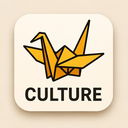
The icon described by the keywords "Culture," "Key," and "Origami" is not merely a visual symbol but a profound metaphor woven from the threads of tradition, discovery, and artistry. It presents an intricate design that fuses these three elements into a harmonious representation of human expression across time and space. At its center lies an elegantly folded origami shape—specifically, a crane—rendered in minimalist yet precise lines. The choice of the crane is intentional; in Japanese culture, the paper crane symbolizes peace, longevity, and hope. It is also deeply tied to the story of Sadako Sasaki and her wish for world peace after surviving the Hiroshima bombing by folding 1,000 cranes—a poignant testament to how cultural symbols can carry immense emotional and historical weight.
What makes this icon uniquely powerful is how it transforms the origami crane into a multifaceted emblem. The wings of the crane are not simply folded paper—they subtly transition into delicate key-like shapes, with one wing forming the shaft of a key while the other extends outward like its intricate teeth. This fusion represents both cultural heritage and personal discovery: just as a key unlocks doors to new possibilities, so too does culture unlock understanding, identity, and connection across generations. The origami crane serves as both vessel and carrier of meaning—its folded geometry representing the careful craftsmanship of human tradition, while the incorporated key form suggests that such traditions hold the power to open doors: to knowledge, innovation, belonging.
Culture is not a static artifact but a living process of creation and interpretation. The icon reflects this dynamism by integrating elements from different cultural expressions. While the crane originates in Japan’s rich tradition of origami—an art form that dates back centuries—its transformation into a key draws from universal symbols found across civilizations. Keys are ancient emblems of access, authority, and revelation: from the biblical “keys to heaven” held by Saint Peter to the keys used in medieval castles and modern digital security. By combining these two cultural icons—the Japanese crane and the archetypal key—the design transcends geographical boundaries, creating a global language of meaning.
Moreover, the art of origami itself is a profound cultural expression. It embodies values such as patience, precision, mindfulness, and respect for materials—qualities that are echoed in many traditional crafts worldwide. In this icon, the paper crane is not merely folded; it appears to be suspended in mid-air with gentle folds that suggest motion and balance. The creases are carefully rendered to convey both structure and fluidity—a duality common in many cultural philosophies, such as the Eastern concept of yin and yang or the Japanese aesthetic of wabi-sabi, which finds beauty in imperfection and transience.
The color palette further enhances the icon’s symbolic depth. A soft gradient from deep indigo to warm gold symbolizes night transitioning into dawn—a metaphor for enlightenment, cultural awakening, or personal growth. The indigo base evokes tradition and introspection, while the golden highlights suggest revelation and achievement. This chromatic journey mirrors the arc of cultural transmission: from preservation of ancestral knowledge to its re-imagining in new contexts.
From a design perspective, every element is intentional. The key component does not dominate but emerges organically from the crane’s form—a quiet revelation rather than an aggressive assertion. This reflects how culture often reveals itself gradually, through subtle gestures and enduring practices. The icon invites viewers not to demand answers but to observe, reflect, and participate in the ongoing narrative of human creativity.
Ultimately, this icon stands as a celebration of cross-cultural dialogue. It reminds us that our identities are shaped by shared stories and symbols—like the paper crane folded across continents or keys turned in locks of history. Whether used in cultural institutions, educational materials, digital platforms for global exchange, or personal expressions of identity, the icon speaks to a universal truth: that culture is both a key to understanding ourselves and others—and an art form as delicate and powerful as any origami masterpiece.
Through its elegant fusion of Culture, Key, and Origami, the icon becomes more than a symbol—it becomes a vessel for meaning. It challenges viewers to see tradition not as rigid heritage but as living art; to recognize that every cultural practice is both a key and a creation; and to embrace the beauty found in folding paper into shapes that speak across time, space, and language.
```Create your own icon with our GoGPT AI prompt:
GoGPT