

Culture Laptop Origami Free icon download
Download all to grab every PNG variant.
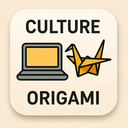
The icon is a masterful synthesis of three distinct yet harmoniously intertwined concepts: Culture, Laptop, and Origami. At first glance, it presents a modern digital interface element—clean lines and minimalist design—yet beneath its sleek surface lies a deep symbolic narrative rooted in tradition, technology, and creativity. This icon is more than an image; it is a visual poem that bridges the past with the future, handcraft with computation, and global identity with personal expression.
The central focus of the icon is a stylized laptop. However, this laptop is no ordinary device—it has been reimagined as a living artifact of cultural synthesis. Its sleek body resembles polished wood or aged paper rather than metallic plastic; its surface features subtle grain patterns reminiscent of traditional Japanese washi paper or ancient parchment from Mediterranean monasteries. The screen glows with a soft, warm light—perhaps not the harsh white of modern monitors, but something closer to candlelight—an invitation to reflect rather than merely consume information.
What makes this laptop truly extraordinary is the way it seamlessly integrates origami into its design. From its top surface rises a complex origami crane—one of the most iconic symbols in Japanese culture—folding gracefully upward as if it were taking flight from the device itself. The crane is rendered with intricate precision: every crease, fold, and shadow echoes the meticulous craftsmanship of traditional paper folding. Yet, this is no static sculpture; its wings are subtly animated in digital form (if interactive), fluttering as if caught in a gentle breeze from an unseen world. The crane’s body transitions smoothly from the laptop's screen to its open wings, symbolizing how technology can carry cultural traditions into new dimensions.
Each fold of the origami crane is not just decorative but deeply symbolic. In Japanese culture, origami represents harmony, patience, and transformation—the idea that something beautiful and meaningful can emerge from a simple sheet of paper through careful intent. The inclusion of the crane reflects this philosophy: technology (the laptop) becomes a vessel for cultural expression (origami), turning raw digital data into artful narratives. The crane’s head faces forward, symbolizing progress, while its tail extends toward the base of the laptop—a nod to roots and heritage even in innovation.
Surrounding the laptop are additional origami elements that further enrich the icon’s cultural depth. Delicate paper flowers—inspired by traditional Japanese ikebana arrangements—are folded into the corners of the screen, their petals softly unfolding as if responding to digital data streams. In one corner, a tiny origami boat floats on a ripple-like wave drawn across the device’s base, symbolizing journeys—both physical and intellectual—that are central to many cultures’ storytelling traditions. These elements subtly reference other cultural practices: Chinese paper-cutting art, Korean hanbok-inspired folds, and even Native American symbolic designs in their geometric patterns.
The color palette of the icon reinforces its cultural narrative. Instead of standard digital blues and grays, it blends warm earth tones—ochre yellow, deep indigo, soft saffron—with touches of silver that mimic aged metal or moonlight on paper. These colors are not arbitrary; they echo regional traditions: the reds and whites of Chinese festivals, the muted greens and beiges of Scandinavian design simplicity, and the serene pastels found in Mediterranean folk art. Together, they form a chromatic tapestry that suggests universality—a single icon representing countless cultural expressions.
Functionally, this icon could represent a platform dedicated to cultural preservation through technology—such as a digital archive for indigenous languages, an app for teaching traditional crafts via augmented reality, or a social media hub where users share stories and create art inspired by global heritage. The laptop symbolizes the tools of access and communication in the 21st century; the origami, the human touch and cultural memory that technology must preserve; and their fusion reflects a new era in which digital innovation does not erase tradition but elevates it.
Even in its smallest form—say, on a smartphone screen—the icon communicates profound meaning. The user sees not just an object but an invitation: to learn, to create, and to connect across borders. It challenges the perception that technology is cold or impersonal by embedding warmth and artistry into its very core.
In essence, this icon is a celebration of humanity’s dual nature: we are creators of machines and keepers of stories. The laptop represents our capacity for innovation; the origami, our enduring need for beauty, symbolism, and meaning. Together, they form a visual metaphor for how culture can thrive in the digital age—not by resisting technology, but by folding it into something more beautiful than before.
It is not merely an icon. It is a statement: that every click on a device carries within it the echo of ancient hands folding paper, the whisper of forgotten languages, and the hopeful wings of a crane taking flight toward tomorrow.
Create your own icon with our GoGPT AI prompt:
GoGPT