

Culture Moon Organic pattern Free icon download
Download all to grab every PNG variant.
```html
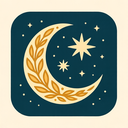
The icon in question is a profound visual metaphor that intricately weaves together three powerful symbolic elements: Culture, Moon, and Organic Pattern. At first glance, it appears as a delicate emblem—a circular composition radiating calmness and depth—but upon closer inspection, each element reveals layers of meaning that speak to the interconnectedness of human heritage, natural cycles, and the beauty found in flowing forms.
At the heart of this icon lies a stylized crescent moon, rendered not with harsh lines but with soft gradients that mimic lunar light diffusing through a velvet night sky. The moon's form is gentle yet commanding—its curve evokes both serenity and mystery, symbolizing timelessness, introspection, and the cyclical nature of life. Its surface is subtly textured with faint craters and valleys, not in a realistic way but through an abstract interpretation that suggests ancient wisdom passed down through generations. This lunar presence does not dominate; instead, it serves as the emotional core of the icon—a celestial anchor that grounds all other elements in a sense of rhythm and continuity.
Surrounding the moon is an expansive, flowing organic pattern—evoking vines, tendrils, and root systems intertwined with traditional cultural motifs. These patterns are not random; they are carefully designed to reflect the hand-drawn aesthetics of various indigenous art forms from around the world: from Maori koru spirals and West African Adinkra symbols to Celtic knotwork and Native American dreamcatcher designs. Each line is fluid, echoing natural growth—like a river winding through forest terrain or a tree’s roots delving deep into earth. This seamless blending of cultural signifiers with organic shapes creates a sense of unity between humanity and nature, suggesting that culture itself grows from the same soil as the natural world.
What makes this icon truly remarkable is how it elevates 'Culture' not as a static label, but as a living, breathing entity. Culture here is depicted not in isolation but as an evolving tapestry—a continuous thread that connects past to present and future. The organic patterns are arranged so they seem to originate from beneath the moon’s surface, suggesting that cultural traditions are nourished by the same cosmic rhythms that govern lunar phases. Just as the moon waxes and wanes, so too do cultures evolve—sometimes fading into quiet reflection, other times bursting forth in vibrant expression.
The choice of color is equally significant. The background is a deep indigo blue, reminiscent of the night sky at midnight—shadowed but full of potential. The moon glows with a pale silver-white hue that softly illuminates the surrounding patterns. These patterns are rendered in earth tones: warm siennas, soft moss greens, and muted terracotta—colors drawn from natural pigments used historically by artisans worldwide. This palette reinforces the icon’s message: culture is not separate from nature; it is born of it, sustained by it, and returns to it.
Even in its minimalism—often reduced to just a few interconnected shapes—the icon speaks volumes. It invites contemplation on themes such as sustainability, heritage preservation, and the sacredness of cycles. The organic pattern does not impose order but rather suggests harmony: like a forest where every tree and leaf has its place, so too do cultural expressions find their rhythm in the grand design of existence.
Moreover, this icon is inherently inclusive. It avoids appropriating any one culture by instead celebrating the universal presence of organic forms and lunar symbolism across human civilizations. The moon has inspired poetry in ancient China, spiritual rituals among Native American tribes, and navigation systems used by Polynesian seafarers—making it a shared symbol that transcends borders. Similarly, organic patterns are found in everything from African textiles to Japanese shibori dyeing techniques—a testament to humanity’s collective reverence for nature’s beauty.
In modern design terms, this icon is both timeless and contemporary. Its clean lines make it suitable for digital interfaces—apps related to wellness, cultural education, or environmental sustainability—while its depth ensures it remains meaningful in print or physical media such as books, murals, or ceremonial objects. It functions equally well as a logo for an international cultural festival celebrating moon festivals around the world (such as Mid-Autumn Festival in China and Tsukimi in Japan) or as a symbol for an eco-conscious organization promoting sustainable living rooted in ancestral wisdom.
In essence, this icon is more than a visual representation—it is a philosophical statement. It asserts that culture flourishes when it remains connected to natural rhythms, that the moon guides not only tides but also human memory and imagination, and that the most profound beauty lies in patterns that grow without force—like vines climbing toward light or stories passed down through generations. In its delicate balance of form, color, and meaning, this icon stands as a quiet yet powerful reminder: we are all part of something ancient, enduring, and beautifully interconnected.
```Create your own icon with our GoGPT AI prompt:
GoGPT