

Culture Tree Embossed Free icon download
Download all to grab every PNG variant.
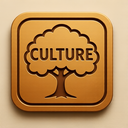
The icon in question is a masterful fusion of three profound themes—Culture, Tree, and Embossed—crafted not merely as a visual symbol but as an intricate narrative etched into form. At first glance, it appears as a serene yet striking representation of nature; upon closer inspection, it reveals layers of historical depth, spiritual significance, and tactile artistry. This icon is more than a design—it is a testament to human expression through symbolism. At its core lies the image of an ancient tree—its form both majestic and deeply symbolic. The tree stands upright in perfect balance, roots anchored deep into the earth while its branches stretch toward the sky like outstretched hands in prayer or celebration. The trunk is thick and weathered, suggesting centuries of growth and endurance. Its bark bears subtle grooves and fissures, each line a silent chronicle of seasons past—droughts endured, storms survived, life sustained. This tree is not a mere botanical illustration; it is an archetype—a living metaphor for continuity, resilience, and interconnectedness. The tree’s roots are intricately designed to resemble interwoven human figures or ancestral silhouettes emerging from the soil. This artistic choice speaks directly to the theme of Culture: the roots of a people, their traditions, wisdom passed down through generations. Each figure is carved with delicate detail—some holding tools, others cradling children or playing musical instruments—representing different facets of cultural expression: craftsmanship, storytelling, music, family bonds. These figures are not superimposed but seamlessly integrated into the natural form of the tree's roots, symbolizing how culture grows from shared heritage and collective memory. The branches of the tree are equally symbolic. They branch out in a radial pattern reminiscent of a mandala or sacred geometry found in many indigenous and ancient cultures—from Celtic knotwork to Native American tribal designs. Each limb ends in clusters of leaves that resemble stylized hands, open palms, or even pages of an ancient scroll. This subtle motif suggests knowledge being nurtured and shared—culture as both a living organism and a dynamic process. Some leaves are shaped like eyes, symbolizing awareness and perception; others resemble seeds, hinting at the potential for growth in future generations. What truly elevates this icon from visual art to artistic artifact is the Embossed quality—a defining feature that transforms it into a tactile experience as much as a visual one. The entire design has been rendered in high-relief embossing, meaning every contour, texture, and detail emerges from the surface with remarkable depth. When viewed under angled light, shadows play across its form like ripples on water—revealing hidden layers of meaning through the interplay of light and shadow. The embossing is not merely decorative; it is intentional in its craftsmanship. The artist has used traditional metalworking techniques—perhaps repoussé or stamping—to create a three-dimensional effect that mimics the natural texture of bark, yet elevates it to an almost sacred plane. The surface feels alive under the fingertips, even if only imagined, with ridges that mimic growth rings and patterns resembling tribal tattoos or ceremonial markings. This tactile quality invites interaction; one can almost feel the weight of history in every curve. The embossed technique also enhances cultural symbolism by evoking ancient practices—such as bronze casting in African Nok sculptures, Celtic metalwork, or Mesoamerican ceremonial masks—where raised surfaces were used to convey spiritual and societal values. The act of embossing itself is a form of cultural ritual: it requires patience, skill, and reverence for material. Each strike of the hammer during creation echoes the labor of ancestors who shaped meaning through craftsmanship. Color-wise, this icon is intentionally minimal—a monochromatic or earth-toned palette featuring deep browns, charcoal grays, and warm ochres. This choice enhances the tactile experience by emphasizing texture over hue. The lack of vibrant color ensures that attention remains on the form and depth of the embossing, allowing viewers to focus on the symbolic layers beneath. Beyond its aesthetic and technical qualities, this icon serves as a cultural emblem—a visual manifesto for sustainability, heritage preservation, and artistic continuity. It speaks to indigenous worldviews where nature and culture are inseparable; where trees are not just plants but ancestors or guardians of wisdom. In many traditions—from the Norse Yggdrasil to the Bodhi Tree under which Buddha attained enlightenment—the tree stands as a cosmological axis connecting heaven, earth, and the realm of memory. In modern times, this icon can be adapted for use in cultural institutions (museums, libraries), environmental movements advocating for reforestation and indigenous rights, or as a signature emblem for heritage projects. Its embossed nature makes it ideal for tactile media—braille signage, museum exhibits for visually impaired visitors, or ceremonial artifacts passed down through generations. Ultimately, the icon of the Embossed Tree is more than an image. It is a convergence of three powerful ideas: Culture as lived memory and shared identity; the Tree as a symbol of life, growth, and connection across time and space; and Embossed artistry as a method of honoring depth, tradition, and craftsmanship. Together, they form a unified vision—a timeless reminder that our deepest roots lie not in soil alone but in the stories we carry forward.
Create your own icon with our GoGPT AI prompt:
GoGPT