

Education Flower Origami – Free icon download
Download all to grab every PNG variant.
At the intersection of growth, beauty, and creation lies a profoundly symbolic icon that beautifully weaves together three essential elements: Education, Flower, and Origami. This icon is not merely a visual design—it is a metaphoric embodiment of the journey of knowledge, the blossoming potential within every individual, and the delicate artistry that emerges from thoughtful learning. In its form and meaning, it transcends conventional symbolism to become a living narrative of human development and aesthetic harmony.
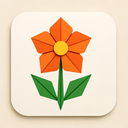
At its core, this icon represents Education not as a rigid institution or a series of standardized lessons, but as an organic process of discovery, growth, and self-realization. The icon is structured around a central element—a blooming flower—whose petals unfurl in carefully measured spirals. Each petal serves as an extension of a learning phase: the first petal symbolizes curiosity and inquiry; the second represents exploration and experimentation; the third embodies comprehension and critical thinking; while the fourth signifies creativity, application, and personal insight. As each layer of the flower expands outward, it reflects how education evolves from simple exposure to deep understanding. This process is not linear but recursive—like a spiral that returns on itself—mirroring how knowledge builds upon itself through reflection and iteration.
The Flower in this icon is more than botanical representation; it stands as a metaphor for human potential. Flowers bloom when nurtured under the right conditions of light, water, patience, and time—exactly like students thrive in environments that support emotional intelligence, mentorship, and inclusive learning opportunities. The flower’s vibrant colors—soft pinks, gentle yellows, radiant whites—symbolize hope and resilience. It suggests that every learner carries within them the capacity to grow into something beautiful and meaningful. Moreover, the symmetry of the flower reflects balance in education: between theory and practice, between individuality and collaboration, between intellectual rigor and emotional well-being.
Intertwined with the flower's structure is a delicate Origami pattern—a set of precisely folded paper creases that form both the stem of the flower and its central core. These folds are not random; they follow traditional origami principles such as valley folds, mountain folds, and pleats that emphasize precision and intentionality. The origami aspect represents the transformative power of learning through hands-on experience and creative expression. Just as paper becomes a three-dimensional object through careful folding, knowledge becomes actionable when it is applied in real-world contexts. Each fold reflects a skill developed through practice—problem-solving, attention to detail, spatial reasoning—all essential components of modern education.
The fusion of origami and flower creates a unique duality: the flower grows outward into beauty and expression, while the origami folds grow inward into structure and discipline. This duality illustrates how education must simultaneously nurture creativity and instill discipline. The paper's texture in the icon is subtle—light, almost translucent—suggesting that learning is not always loud or dramatic but often quiet, patient, and deeply internal. The origami folds also appear to gently bend around the petals like roots seeking stability, symbolizing how foundational knowledge supports personal growth and resilience.
Furthermore, this icon embodies a global perspective on education. Origami originates from Japanese culture—a tradition that values harmony, mindfulness, and simplicity. Flowers are universal symbols found across civilizations—whether in ancient Greek philosophy or contemporary environmental movements—demonstrating the cross-cultural resonance of learning and beauty. By merging these elements, the icon becomes a bridge between traditions: it honors cultural roots while promoting inclusive, accessible education for all. In classrooms around the world, students might engage in origami activities to teach geometry, improve hand-eye coordination, or explore cultural heritage—while simultaneously cultivating an appreciation for nature through flower-themed projects.
From a pedagogical standpoint, this icon suggests a shift from rote memorization to experiential learning. Instead of viewing education as merely the transfer of information, it positions learning as a dynamic, participatory process—one in which students become artists, creators, and stewards of knowledge. The act of folding paper into a flower form mirrors the process by which students construct their own understanding through active engagement. Just as an origami expert folds with precision and patience, learners are encouraged to approach education with focus, reflection, and respect for the process.
Additionally, this icon speaks to sustainability and mindfulness. Flowers grow naturally; they require no artificial intervention beyond care. Origami paper is often made from recycled or biodegradable materials—reinforcing the idea that learning should be environmentally conscious. The symbol reminds educators and students alike that knowledge should not come at the expense of nature or future generations, but rather grow in harmony with them.
Ultimately, this icon stands as a powerful visual language for 21st-century education—one where beauty, structure, and growth are not separate domains but deeply interconnected. It is a call to create learning environments that inspire wonder (like the flower blooming), value craftsmanship (like origami folding), and foster lifelong intellectual curiosity. In a world increasingly driven by technology and efficiency, this icon reminds us that true education is patient, intentional, and full of quiet blossoms—each one representing a student’s unique potential to grow into their fullest self.
Therefore, the icon of Education, Flower, and Origami is more than a design—it is a promise: that every learner, regardless of background or circumstance, can unfold into beauty through thoughtful practice, enduring patience, and the joy of creation. It is an emblem of hope, balance, and transformation—one that continues to bloom in classrooms, homes, libraries, and minds everywhere.
Create your own icon with our GoGPT AI prompt:
GoGPT