

Education Satellite Organic – Free icon download
Download all to grab every PNG variant.
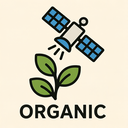
Imagine a striking, modern icon that transcends traditional representations of learning and technology—this is not merely a symbol; it is a vision. This emblem masterfully fuses three powerful, interwoven concepts: Education, Satellite, and Organic. Designed with intention and depth, the icon serves as both a visual metaphor and a guiding principle for sustainable, accessible, and holistic learning in the digital age. At its core lies an elegant fusion of celestial movement, biological growth, and human intellectual development—each element contributing to a greater narrative of connection between people, knowledge systems, and the planet.
The central form of this icon is an orbiting satellite—a sleek geometric shape resembling a small telescope or a stylized space station—floating in motion within a circular field. However, this satellite does not exist in isolation. Instead, it orbits gently around a radiant core made of interlocking, branching roots and leaves that resemble plant life growing upward through fertile soil. This core is not just decorative; it symbolizes the foundation of education—the living ecosystem of human thought, culture, and knowledge transmission rooted in our natural world. The satellite represents technology’s reach and capacity to connect people across vast distances—be it continents or generations—but in this context, its movement is not cold or distant. Rather, it is purposeful and cyclical, echoing the rhythm of natural processes like tides or seasons.
The integration of Education into the design begins with the satellite's path. As it moves around its central organic core, a trail of luminous data streams emerges—shaped like flowing rivers or neural pathways—showcasing how information flows from one learner to another, building upon prior knowledge. These data streams are not digital in a sterile way; they pulse gently with warm, earth-toned hues such as green, brown, and soft blue—a visual language that evokes both technology and nature. Each stream is subtly animated (in digital form), suggesting continuous learning—how knowledge accumulates over time like layers of soil or tree rings.
Further enhancing the educational aspect is the satellite's configuration: it carries a small, transparent module resembling a seed pod at its base. When viewed closely, this seed pod opens slightly, revealing miniature illustrations of students—of diverse ages, genders, and backgrounds—engaged in learning activities such as reading books under trees, conducting science experiments in gardens, or using tablets connected to solar-powered stations. These human elements ground the icon in reality and emphasize inclusivity. Education is not an abstract concept here—it is lived experience, accessible to all regardless of geography or economic status.
The Satellite component amplifies this vision by representing connectivity and global access. In our increasingly digital world, education must transcend physical classrooms. This satellite acts as a bridge—a beacon that sends knowledge to remote villages, rural schools in developing nations, or isolated communities with limited infrastructure. Its orbit is not fixed; it adjusts dynamically to the needs of learners around the globe, reflecting an adaptive and responsive educational model. The satellite also symbolizes innovation: it carries new teaching methods, open-source content, and interactive tools—developed with input from educators worldwide—and disseminates them efficiently.
Yet even as technology advances, this icon insists on grounding education in Organic principles. Unlike industrialized systems that prioritize speed and efficiency at the cost of human connection, this design celebrates growth rooted in nature. The roots beneath the satellite form a web of interlocking nodes—each resembling a student or educator contributing to the collective knowledge pool. These roots grow outward, not upward only—they spread across time and space, forming a resilient network where learning is collaborative and reciprocal. This organic structure implies that education does not happen in isolation but emerges from shared experiences, community dialogue, and environmental awareness.
Moreover, the colors used in this icon reinforce its organic nature. Earthy greens dominate the core—evoking forests, growth, and health—while soft blues represent clarity and openness in communication. The satellite itself is rendered with metallic silver or light gray tones to signify technology's role in enabling access without dominating the narrative. There is no digital glare or coldness; instead, the design balances warmth and precision. Even the motion of the satellite appears gentle, almost breathing—suggesting that learning should not be rushed but cultivated like a garden.
Consider how this icon could be used in real-world applications: a logo for an international educational platform that prioritizes sustainability and equity; a branding element for schools integrating nature-based curricula; or even a symbol embedded in policy documents to advocate for education systems aligned with ecological values. Its message is clear: knowledge must grow not just from technological advancement, but from the living, breathing world around us.
Ultimately, this icon challenges conventional thinking about education. It reframes technology not as a replacement for human learning but as an extension of it—one that can empower even the most isolated learners when guided by organic principles. By combining Satellite (connectivity), Education (human growth), and Organic (sustainability and harmony with nature), the design becomes a powerful statement on how we can build a future where knowledge is not just accessible, but also deeply rooted in empathy, equity, and environmental responsibility.
In essence, this icon is more than an aesthetic choice—it is a philosophical compass. It reminds us that true education does not exist in isolation from the planet or from one another. Instead, it thrives when technology serves humanity and nature in tandem. As we navigate a world facing climate change, inequality, and digital overload, this symbol stands as a beacon of hope: that learning can be both expansive and grounded—like a satellite orbiting Earth, yet always returning to its roots in the soil of shared human experience.
Create your own icon with our GoGPT AI prompt:
GoGPT