

Energy Bus 3D isometric Free icon download
Download all to grab every PNG variant.
In the evolving landscape of modern design and urban planning visualization, a compelling icon that seamlessly integrates Energy, Bus, and 3D isometric elements serves not only as an aesthetic symbol but also as a powerful communication tool. This specific 3D isometric icon is conceived with precision, intentionality, and functional clarity—designed to represent the dynamic intersection of public transportation efficiency and sustainable energy systems in a visually intuitive way.
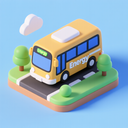
The central object of this icon is a stylized Bus, rendered in a clean, modern 3D isometric perspective. Unlike flat or two-dimensional representations, this bus occupies space with depth and dimensionality—its sides angled at 30-degree planes to create a sense of realism and spatial awareness. The front of the vehicle features a prominent window display with subtle gradients that suggest motion and activity, while the roof subtly curves upward to mimic real-world design principles in transit vehicles. The chassis is built with geometric precision, using clean lines and sharp edges that are characteristic of isometric rendering techniques—offering viewers an immediate understanding of scale, orientation, and volume.
What distinguishes this icon from conventional transportation illustrations is the integration of Energy. Rather than being a passive background element, energy flows dynamically through the structure. Represented as glowing lines emanating from the bus's engine compartment and radiating outward toward its wheels, solar panels on the roof, and even subtle light patterns along its sides, energy is not just depicted—it is felt. These visual elements are rendered with soft gradients transitioning from blue to gold and orange hues to convey both thermal efficiency and electrical potential. The energy streams are not static; they pulse gently in a wave-like motion, suggesting continuous movement, sustainability, and vitality.
The 3D isometric format plays a crucial role in how the viewer interprets both the Bus and its surrounding energy dynamics. In isometric design, all three axes—x, y, and z—are equally visible without distortion. This allows users to perceive the vehicle’s height, width, and depth simultaneously. As a result, it becomes easier for audiences—from engineers to city planners—to grasp spatial relationships between the bus and its environment. For instance, energy lines can be seen extending into surrounding areas such as roads or green spaces, indicating how energy from the bus is shared or recycled within urban ecosystems.
Furthermore, the 3D isometric nature of this icon enhances accessibility and scalability across various platforms—mobile apps, dashboards, educational materials, and public signage. Because it maintains visual clarity at different sizes and resolutions without losing detail or proportionality, it is ideal for digital interfaces where users need to quickly interpret complex systems. The lack of perspective distortion ensures that even when zoomed in or out, the icon retains its structural integrity and meaning.
From a thematic standpoint, this icon embodies a vision of sustainable urban mobility. By linking the Bus directly to renewable Energy, it promotes environmental responsibility and innovation in public transport. The visual language of energy—bright, flowing, active—mirrors the goals of reducing carbon emissions and improving efficiency in transit systems. This makes the icon particularly valuable in marketing campaigns for green transportation initiatives, government sustainability reports, or educational content on alternative fuel technologies.
Technically crafted using advanced vector-based design software with isometric projection tools (such as Blender, Adobe Illustrator, or specialized icon-making platforms), the icon maintains a balance between artistic expression and technical accuracy. It avoids clutter by focusing on essential visual components: the bus body, energy pathways, and directional flow. The background remains minimalist—often in neutral tones like white or light gray—allowing the core elements to stand out without distraction.
The use of color psychology adds another layer of depth. Cool blues and greens symbolize clean energy sources such as solar and wind power, while warm yellows and oranges suggest combustion efficiency or stored energy. This color palette supports emotional engagement, making the icon not only informative but also inspiring—encouraging users to view public transportation not just as a mode of travel, but as a vital part of a sustainable future.
Moreover, this icon is highly adaptable. It can be modified for different use cases—such as representing electric buses (with battery indicators), hybrid vehicles (with dual energy streams), or even autonomous shuttles powered by renewable sources. The foundation built on 3D isometric principles allows for easy customization while preserving the core message: that public transport can be both efficient and environmentally conscious.
Ultimately, this Energy-powered Bus, presented in a refined 3D isometric style, transcends traditional iconography. It becomes a bridge between technology, sustainability, and urban life—a symbol that communicates progress in real time. Whether displayed on a city website promoting green transit or used as an infographic element to teach about renewable energy integration, this icon stands out for its clarity, innovation, and deep thematic resonance.
In conclusion: This 3D isometric icon masterfully combines the functionality of a Bus with the sustainability message of Energy, creating a versatile and meaningful visual representation that reflects modern urban challenges and solutions. Its dynamic design ensures it is not only visually striking but also intellectually engaging—making it an essential asset in discussions around sustainable transportation systems.Create your own icon with our GoGPT AI prompt:
GoGPT