

Energy Credit card Retro Free icon download
Download all to grab every PNG variant.
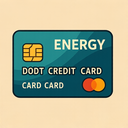
At first glance, the icon presents a striking visual synthesis of three seemingly disparate concepts—Energy, Credit Card, and Retro. Yet upon closer inspection, it reveals an intricate design that harmoniously blends modern vitality with nostalgic form, creating a symbol that feels both timeless and forward-looking. This icon is not merely a digital graphic—it is a narrative in visual form, telling the story of technological evolution through the lens of personal finance and dynamic power.
The foundation of the icon is shaped like a classic credit card—measuring approximately 85mm by 54mm, mirroring the standard size introduced in the 1960s. The edges are slightly rounded, evoking the tactile feel of a physical card from an earlier era. But unlike traditional credit cards with their flat, matte surfaces and embossed numbers, this icon radiates energy through its dynamic form and vibrant color scheme. A glowing gradient runs across its surface—from deep electric blue at the top to radiant gold at the bottom—suggesting both power and value. This color transition mimics a lightning bolt frozen in mid-arc, subtly hinting that the card is not just a financial instrument but a vessel for stored potential.
The most striking element of this retro-futuristic icon is its central symbol: an abstract, stylized lightning bolt that has been seamlessly integrated into the shape of a credit card. The bolt originates from the top-left corner, arcing diagonally across the card’s face before terminating in a stylized “0” at the lower-right edge—symbolizing both completion and infinite potential. This design choice is deeply symbolic: it transforms the card from a passive payment tool into an active generator of energy, suggesting that every transaction isn't just a transfer of funds, but also an exchange of power—economic, digital, and even metaphysical.
The retro influence is evident in several key design features. The card’s border is encased in a thick, textured line reminiscent of 1970s arcade game interfaces or old-school credit card sleeves from the era when plastic cards first became widespread. This border includes subtle holographic patterns—tiny repeating geometric motifs such as concentric circles and retro waveforms—that shimmer faintly when animated, giving the illusion of movement and vitality. Additionally, the font used for any text elements (such as a small “1979” in the bottom corner) is a distressed 8-bit style typeface, echoing early computer displays from video games and personal computing devices of that time.
Embedded within the card’s surface are three faintly glowing dots—positioned along the central lightning bolt—that pulse rhythmically, like heartbeats or data signals. These represent data flows, transaction confirmations, and energy fluctuations. They also serve as visual cues for interactivity: when hovered over in a digital interface, they brighten and expand slightly, reinforcing the icon’s dynamic nature. This animated behavior ties directly into the Energy theme—energy is not static; it pulses, flows, and responds to action.
The background of the icon features a vintage circuit board pattern with faded copper lines and small resistors resembling old-school electronic components. These elements are subtly rendered in a sepia tone over a dark charcoal base, blending retro hardware aesthetics with modern design minimalism. The contrast between the warm, nostalgic tones of the circuitry and the cool, electric glow of the lightning bolt creates tension and balance—symbolizing how past technology enables present innovation.
Perhaps most intriguing is the icon’s hidden layer: when viewed in low-light conditions or during a digital animation sequence, a faint silhouette of an old rotary telephone appears in the upper-left quadrant—a nod to 1950s communication devices. This detail reinforces the retro motif while also suggesting that modern financial technology builds upon earlier systems of connection and trust. The telephone’s receiver is subtly shaped like a charging port, merging analog history with digital utility.
The entire icon is designed with intentional imperfections: slight scratches on the surface, minor color bleed along the edges, and a subtle grain overlay—hallmarks of physical artifacts from past decades. These “flaws” do not diminish the icon’s professionalism; instead, they imbue it with authenticity and character. They suggest that this card has been used, tested, and proven over time—not just a new product but a legacy.
In essence, this icon is more than a visual representation of a payment method. It stands as a cultural artifact—a hybrid of Energy, Credit Card, and Retro. It celebrates the power behind transactions, honors the evolution of personal finance technology from analog roots to digital dominance, and invites users to feel connected not just to their money, but to a broader narrative of human progress. Whether displayed on a mobile app dashboard, embedded in a retro-themed website, or used as part of an art installation about digital culture and sustainability, this icon resonates on emotional, aesthetic, and symbolic levels.
In combining these three themes—Energy’s dynamism, Credit Card’s functionality, and Retro’s nostalgic charm—the icon becomes a powerful emblem of innovation that respects its origins. It doesn’t reject the past; it reimagines it. And in doing so, it sparks wonder: What if every transaction carried a spark of history? What if our wallets could glow with meaning? This icon answers both questions—not with words, but with light.
Create your own icon with our GoGPT AI prompt:
GoGPT