

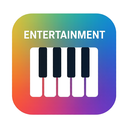
Entertainment Piano Gradient Free icon download
Download all to grab every PNG variant.
In the ever-evolving landscape of digital design and user interface creation, icons serve as visual ambassadors—concise yet powerful representations that communicate meaning instantly. Among the many icon themes that have emerged in recent years, one stands out for its emotional resonance and artistic appeal: the "Entertainment, Piano, and Gradient" icon. This sophisticated visual concept masterfully blends three essential elements—Entertainment, Piano, and Gradient—to form a dynamic symbol that transcends mere functionality and becomes an immersive experience for users.
The foundation of this icon lies in its strong connection to the realm of entertainment. Entertainment is not merely about passive consumption; it's about engagement, joy, emotional stimulation, and the creation of shared experiences. In today’s digital age, users seek interfaces that inspire delight and invite interaction—whether through music, games, videos, or social features. The "Entertainment" aspect of this icon reflects a deep understanding that technology should not only serve utility but also elevate mood and foster connection.
This icon does not simply depict a static image of music; instead, it embodies the spirit of entertainment. It suggests movement, rhythm, and spontaneity—elements that are central to how people experience music in real life. The design is intentionally expressive, evoking a sense of playfulness and liveliness. Whether used in an app for streaming music, a virtual concert platform, or a creative workspace for musicians, the icon signals that this space is welcoming to joy and creativity.
Moreover, the "Entertainment" dimension is embedded in every stroke of the design. The shape of the icon subtly mimics musical notes in motion—like a melody unfolding across time. It conveys a sense of possibility: users can expect not just functionality, but moments of wonder and emotional reward when they engage with it. This makes the icon particularly effective as a brand identifier for platforms where music is central to user experience.
At the heart of this icon lies the piano—a timeless instrument with deep cultural and emotional significance. The piano represents not only music but also expression, discipline, and harmony. In the context of digital design, choosing the piano as a central motif is more than an aesthetic choice; it's a meaningful decision that speaks to users’ universal connections with sound and artistry.
The icon features an abstract yet recognizable silhouette of a piano. It is not a detailed, realistic drawing but rather an artistic interpretation—simplified to emphasize form, balance, and visual flow. The piano's body is rendered with gentle curves and symmetrical lines that suggest both stability and fluidity. This abstraction allows the design to be scalable across various screen sizes while retaining its identity.
Crucially, the piano in this icon is not static. It appears as though it is "playing"—a subtle suggestion of motion through slight curvature or a dynamic line that mimics a key being struck. This subtle animation metaphor reinforces the idea of active entertainment rather than passive observation. For users, especially younger demographics or those new to music technology, this element instantly communicates accessibility and fun.
The piano also serves as an inclusive symbol. It bridges generational gaps—appealing to both classical music enthusiasts and modern digital creators who use music production tools. Whether in a fitness app with a "music therapy" feature or a mobile game that uses rhythm mechanics, the piano icon acts as a universal gateway to creative expression and emotional well-being.
What truly elevates this icon from being merely thematic to truly stunning is the use of gradient. A gradient is not just a visual effect—it’s a narrative device that conveys depth, emotion, and movement. In this icon, the gradient transitions seamlessly from deep purples and rich blues at the base to vibrant pinks and golds toward the top—mirroring the arc of a musical phrase: rising to climax, then fading into resonance.
The gradient begins in a cool tone (a deep indigo or navy), symbolizing calm, focus, and preparation—much like before a performance. As it moves upward, it warms into softer pastels and shimmering golds, evoking the joy and energy of a well-executed melody. This color journey mirrors the emotional arc of music itself: from quiet beginnings to triumphant resolution.
Technically, the gradient is smooth and fluid, avoiding harsh transitions that could distract from the design’s elegance. It's applied not only to the piano body but also subtly across its keys and surrounding contours—giving a sense of light and movement. This makes the icon feel alive on screens, especially when viewed in motion or under different lighting conditions.
From a design perspective, gradients enhance legibility and visual appeal. They reduce flatness in icons, which is especially important in modern user interfaces where users are bombarded with countless symbols. The gradient also helps the icon stand out on diverse backgrounds—whether dark mode or light theme—without losing its essence.
The true power of this icon lies in how these three elements are not isolated but intricately woven together. The piano provides structure and identity. Entertainment provides purpose and emotional value. The gradient gives life, depth, and a sense of progression. When viewed collectively, they form a visual symphony.
For instance, the gradient enhances the entertainment aspect by making the icon more engaging—users feel drawn to it because it looks dynamic and joyful. The piano anchors the design in music culture, while the gradient reflects how music evolves over time. Together, they create an icon that is both functional and emotionally intelligent.
Designers working on platforms related to audio experiences—music apps, streaming services, gaming with rhythm mechanics—can leverage this icon to communicate a sense of warmth, creativity, and joy. It does not just inform; it inspires.
The "Entertainment, Piano, and Gradient" icon is more than a graphic—it is a holistic representation of the emotional journey users take when engaging with music-based digital experiences. By thoughtfully combining the cultural resonance of the piano, the emotional depth of entertainment, and the visual poetry of gradient design, this icon becomes a powerful symbol for innovation in user-centered design. It stands as an example of how thoughtful integration of form, function, and feeling can create icons that are not only seen but felt.
Whether displayed on a smartphone home screen, embedded in a music streaming app, or used as part of an interactive learning tool for children learning instruments, this icon speaks to the soul. It reminds users that technology can be beautiful, meaningful, and deeply human—especially when it honors the universal language of music.
Create your own icon with our GoGPT AI prompt:
GoGPT