

Fashion Globe Abstract Free icon download
Download all to grab every PNG variant.
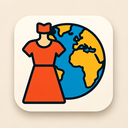
In the evolving landscape of visual symbolism, few concepts are as rich and multifaceted as the intersection between fashion, globe, and abstract design. At first glance, these three elements may appear disparate: fashion evokes style, identity, and cultural expression; the globe symbolizes global connection, diversity of cultures, and planetary consciousness; while abstraction suggests formlessness beyond literal representation—inviting interpretation rather than definitive meaning. Yet when harmoniously fused into a single icon, they become more than the sum of their parts. This iconic design emerges as a powerful visual manifesto representing the modern world’s interconnected identity—one where fashion transcends borders, global awareness informs creativity, and abstraction becomes the language of universal expression.
The icon begins with a dynamic spherical form that serves as its central axis—the globe. However, this is no ordinary depiction of Earth. Instead of traditional cartographic details or political boundaries, the globe is rendered through stylized, fluid contours reminiscent of flowing fabric or textile patterns. The surface appears to ripple like silk in motion—each curve suggesting movement and transformation rather than static geography. This deliberate abstraction blurs the line between a physical planet and a garment in progress, symbolizing how fashion itself can be a form of global mapping: each stitch represents cultural exchange, every seam connects continents, and every pattern carries history.
Encircling the globe are layers of abstract design elements that represent the ever-evolving nature of fashion. These are not literal garments but rather suggestive forms—suggestive silhouettes, fragmented collars, sweeping hemlines suspended in midair like brushstrokes in motion. Some shapes resemble haute couture draping captured at the exact moment it transforms from three-dimensional structure into two-dimensional impression. The lines dance across the surface of the globe with a sense of rhythm and flow, mimicking not only fabric but also music, dance, and emotion—core components of fashion’s expressive power.
Color plays a pivotal role in conveying this fusion. Rather than adhering to realistic Earth tones (blue oceans, green continents), the icon employs a vibrant spectrum that reflects both global diversity and sartorial innovation. Hues shift dramatically from warm terracotta to electric indigo, from deep emerald to radiant gold—colors drawn not from geography but from fashion runways around the world. The transitions are smooth yet dynamic, as though each color represents a different cultural tradition or a different designer’s vision: Japanese minimalism blends with African boldness, Parisian elegance merges with Brazilian exuberance. In this way, the globe becomes less an object of physical geography and more a canvas for global fashion narratives.
At the center of the icon lies an abstract core—an undefined yet compelling focal point that defies categorization. It might resemble a stylized human silhouette, but one that is fractured into geometric shards or composed entirely of flowing lines. This ambiguity is intentional: it invites viewers to project themselves onto the icon. Are we seeing a model? A designer? The wearer of global identity? Or perhaps simply the concept of self in an interconnected world where clothing is not merely protective or decorative, but declarative—political, spiritual, personal?
Textural depth further enhances the icon’s complexity. Through subtle gradients and layered opacity effects, the surface appears both solid and ethereal—like a fabric woven from starlight and wind. Some areas shimmer with metallic sheens reminiscent of sequins or couture embellishments, while others fade into transparency, suggesting impermanence and change. This interplay between substance and illusion reflects the transient nature of fashion trends themselves—ever-changing, always reinventing—but also the enduring human desire to express identity through adornment.
The icon’s abstract quality is not a limitation but a strength. It resists definitive interpretation, allowing each observer to find their own meaning within its forms. For some, it may symbolize sustainable fashion’s global reach—the idea that ethical clothing must transcend borders and unite communities in shared responsibility. For others, it may represent digital fashion—virtual garments worn on avatars across global metaverses. For yet another viewer, it could be a meditation on cultural appropriation versus appreciation: the globe as a stage where styles are borrowed, transformed, and reimagined.
In essence, this icon stands at the crossroads of three powerful ideas. Fashion is no longer confined by geography or time—it is a living dialogue between cultures. The globe is not just a planet but a canvas for human creativity and connection. And abstraction? It becomes the language that allows these complex themes to be understood not through words, but through feeling, movement, and intuition. Together, they form an icon that speaks to the present moment: where fashion shapes identity on a global scale; where every stitch carries meaning across continents; and where abstraction gives form to ideas too vast for literal representation.
In its elegance and complexity, this icon is more than a design—it is an invitation. To travel without leaving your seat. To dress in the spirit of the world. And to see beauty not just in what we wear, but in how we connect through it.
Create your own icon with our GoGPT AI prompt:
GoGPT