

Finance Credit card Pixel art – Free icon download
Download all to grab every PNG variant.
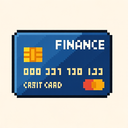
The icon described as combining Finance, Credit card, and Pixel art is a meticulously crafted digital visual that seamlessly merges financial functionality with playful, retro aesthetics. Designed for clarity, simplicity, and instant recognition, this icon serves as both a functional symbol and a stylistic statement within modern user interfaces—especially in fintech applications, budgeting tools, payment platforms, and mobile banking solutions. At its core lies the integration of three pivotal concepts: finance as a theme; credit card as the central object; and pixel art as the visual language.
From a Finance perspective, this icon embodies trustworthiness, transparency, and economic activity. It does not merely depict money or transactions—it represents the entire ecosystem of financial management. The design is intentional in conveying stability and reliability through clean lines, balanced proportions, and a neutral color palette that evokes professionalism. Elements such as subtle gradients from blue to green (symbolizing trust and growth), or the use of geometric shapes that mirror balance sheets and charts, reinforce its finance-oriented identity. The icon acts as a visual shorthand for financial tools like spending tracking, payment processing, loan calculations, or investment dashboards.
The central motif of the icon is a Credit card, rendered not just in traditional 3D or vector form, but through the lens of pixel art—a style rooted in early video game graphics and retro computing. This credit card is composed of discrete, square-shaped pixels arranged to form a recognizable outline: rounded corners are constructed using small blocks of color (typically white with subtle gray shading), and the card’s surface is textured with a grid-like pattern to suggest digital rendering. The front face includes pixelated details such as a logo in blocky fonts (e.g., Visa, Mastercard, or Amex), a numeric account number represented as rows of small digits, and an expiration date formatted in pixel-based typography. These elements are not only visually engaging but also serve functional purposes—users instantly identify the type of financial instrument being referenced.
What sets this icon apart is its Pixel art approach, which transforms a common object into something nostalgic yet modern. The pixelated style gives it a unique charm—like a digital relic from the 1980s or 1990s video game era, yet it remains relevant and accessible in today’s high-resolution interfaces. Each pixel is carefully placed to maintain clarity at small sizes, ensuring the icon remains legible even on mobile devices or tiny dashboard panels. The use of a limited color palette—typically red, blue, green, black, and white—adds to its clean aesthetic while keeping it universally understandable across cultures and languages.
The pixel art technique also allows for creative depth without sacrificing simplicity. For instance, the card’s border may feature a subtle pixel pattern resembling digital circuitry or waves of data flow—symbolizing transactional movement. The back of the card might be represented as a series of vertical pixels forming a barcode-like structure, indicating payment validation or security features. These details reinforce the finance aspect by linking visual elements to real-world processes such as authentication and fraud detection.
Moreover, this icon is designed with scalability in mind. Whether it appears in a mobile app’s navigation bar, a desktop software toolbar, or an e-commerce checkout screen, the pixel art style ensures consistency and recognition. The high contrast between solid blocks of color enhances visibility on dark backgrounds or low-light conditions—essential features for user experience in financial applications where accuracy and clarity are paramount.
The combination of finance and pixel art introduces a fresh perspective on how we represent financial concepts. Rather than relying solely on abstract icons like money bags or graphs, this design uses familiar objects (credit cards) with a retro twist to create emotional engagement. Users may feel both comfort and curiosity—comfort in the recognizable shape of a credit card, and curiosity in the nostalgic pixel aesthetic that makes the interface feel more human and less mechanical.
Additionally, this icon can serve as an educational tool. In financial literacy apps or youth-focused platforms, its playful yet informative nature helps younger users understand real-world financial tools through familiar gaming-style visuals. It demystifies complex transactions by translating them into something approachable and fun—making finance feel less intimidating.
From a technical standpoint, the icon is optimized for performance. Being composed of a small number of pixels, it loads quickly and uses minimal memory space, making it ideal for web applications and responsive designs. It can be easily adapted across different screen sizes through scaling without loss of detail—something crucial in today’s mobile-first world.
In essence, the "Finance, Credit Card, Pixel Art" icon is not just a symbol—it is a fusion of utility and artistry. It bridges the gap between functionality and aesthetics by transforming a common financial tool into an engaging visual experience. With its strong foundation in finance, clear representation of credit card features, and distinctive pixel art style, it stands out as both practical and innovative. Whether used in banking apps, personal finance tools, or even educational games about money management, this icon serves as a powerful reminder that technology can be both smart and fun.
Ultimately, this design celebrates the intersection of tradition and innovation—where a simple credit card becomes more than just plastic; it becomes a story told through pixels, reflecting how we manage our financial lives in the digital age.
Create your own icon with our GoGPT AI prompt:
GoGPT