

Finance Laptop Retro – Free icon download
Download all to grab every PNG variant.
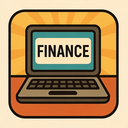
At the intersection of nostalgia, modern utility, and digital evolution lies a powerful visual symbol — the Retro Finance Laptop Icon. This meticulously crafted icon masterfully blends three essential elements: Finance, Laptop, and Retro. It is not merely a graphic; it is a narrative in miniature — a tribute to past computing eras while delivering present-day relevance in financial decision-making. The icon visually represents the convergence of vintage aesthetics and contemporary financial intelligence, making it an ideal emblem for fintech startups, retro-inspired design studios, or digital platforms seeking to appeal to both modern users and those who appreciate technological heritage.
The core structure of the icon features a vintage-style laptop with a pixelated interface reminiscent of 1980s or early 1990s computer graphics. The screen is rendered in bright, saturated colors — think deep blues, electric purples, and neon greens — echoing the bold digital design language of early personal computing systems. Unlike today’s sleek, minimalist screens that emphasize clarity and simplicity, this retro interface displays a stylized financial dashboard with elements such as fluctuating stock charts that resemble blocky bar graphs from the 1980s. These charts are constructed using sharp, geometric lines and blocky data points reminiscent of early spreadsheet programs like Lotus 1-2-3 or Quattro Pro. The digital representation is not just nostalgic — it functions symbolically to represent real-time financial monitoring, budgeting, investment tracking, and market analysis.
Embedded within the laptop's screen are subtle animations that evoke a sense of dynamic movement — such as a small cursor blinking in an old-school font or data values shifting like in early financial simulations. This animation is not overly complex but is carefully timed to resemble the "glitchy" transitions seen in retro computer games or early business software. These movements emphasize the idea that finance, even when rooted in the past, is inherently dynamic — always evolving, always adapting. The icon's design suggests that financial knowledge and technology are not static; rather, they grow through cycles of innovation and reflection — much like how vintage computing systems were built on foundational principles before being upgraded to modern standards.
The laptop itself is rendered in a retro-futuristic style with visible circuit board patterns etched into its sides, glowing faintly in a soft amber hue. This design choice reflects the inner workings of early computers, where hardware and software were closely intertwined. The presence of these circuit lines subtly implies that finance operates not just through data but through interconnected systems — banks, stock exchanges, digital wallets, and economic models all forming a vast network akin to the internal architecture of vintage machines. The glowing lines also symbolize transparency in financial systems — revealing the underlying mechanisms behind transactions and market trends.
On the top-right corner of the screen appears a retro-style calculator icon with a 7-segment display. This is not just decorative — it serves as a literal nod to financial operations, such as calculating interest rates, net worth, or profit margins. The numbers are displayed in bold, blocky typefaces with slight pixelation effects that give the interface its authentic retro feel. In this context, the calculator becomes a metaphor for accessible finance — reminding users that even complex financial calculations can be simplified and made available to everyone through user-friendly tools.
The overall color palette of the icon is carefully selected to evoke both warmth and professionalism. Dominant tones include deep cobalt blue, vintage gold, and soft red accents — colors commonly found in classic finance presentations or 1980s office environments. This choice bridges the emotional connection to nostalgia with the practicality required in financial applications. For instance, blue conveys trust and stability — essential qualities in any financial context — while gold represents value and profitability, a key theme in business finance.
Additionally, the icon subtly incorporates elements of vintage typography. The interface labels such as “Balance,” “Growth,” or “ROI” are styled using serif fonts reminiscent of 1980s corporate signage or early software menus. This attention to typographic detail reinforces the authenticity and cultural relevance of the retro aesthetic, while simultaneously maintaining readability in a modern design context.
One of the most powerful aspects of this icon is its dual function: it serves as both a visual identity and a statement. For users who grew up with early personal computers, it evokes fond memories — perhaps the first time they saw their savings grow in a spreadsheet or tracked stock prices on an old terminal. At the same time, it signals modern relevance — demonstrating that financial tools can be both powerful and accessible, even when designed with a nostalgic touch. In an age where digital finance is increasingly dominant, this icon acts as a bridge between generations — reminding younger users of the foundational principles of finance while honoring the legacy of early computing.
In summary, the Retro Finance Laptop Icon is more than just a design element — it embodies values such as innovation, heritage, transparency, and user-centered financial intelligence. By merging Finance with Laptop functionality through a Retro lens, this icon creates a compelling visual narrative that resonates across demographics. It celebrates the history of technology while promoting financial literacy in an engaging and memorable way. Whether used in branding for fintech applications, educational content about personal finance, or design portfolios showcasing nostalgic aesthetics, this icon stands as a testament to how the past can inform and enrich the future of financial technology.
Create your own icon with our GoGPT AI prompt:
GoGPT