

Food Car Pixel art – Free icon download
Download all to grab every PNG variant.
At the intersection of daily life, digital expression, and creative design lies a captivating icon that beautifully merges three distinct yet harmonious concepts: Food, Car, and Pixel art. This intricate yet accessible visual symbol is more than a simple image—it is a narrative in miniature, evoking the rhythm of modern existence where sustenance meets transportation, all rendered through the timeless charm of pixel-based design. The icon stands as a testament to how digital simplicity can convey complex ideas with clarity and emotional resonance.
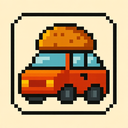
Centered within the composition is a stylized Car, crafted using clean, geometric blocks in vibrant but muted tones—typically shades of red, yellow, and gray—consistent with classic pixel art aesthetics. The vehicle is simplified to its core elements: a rounded front end resembling a retro 1980s sports car or a modern compact sedan, complete with two small wheels rendered in precise square pixels. The body is divided into vertical and horizontal segments, creating an unmistakable grid-based structure that defines the pixel art style. Each line and corner is sharp and defined, emphasizing clarity over realism—a hallmark of this design approach.
Integrated seamlessly into the car’s side or rear panel is a dynamic Food motif. Instead of a generic image such as a burger or apple, the food element is rendered in an abstract yet recognizable way—using pixel blocks to represent layered textures like steaming heat, crispy edges, and soft interior elements. A small circular shape with diagonal lines suggests a sizzling plate of fries, while adjacent pixels form a stylized sandwich with two vertical slices and a golden-brown cheese layer. The food is not just decorative; it functions as an active part of the composition, suggesting movement—perhaps the car has just pulled up to a diner or is on its way to deliver meals.
This fusion of Food and Car speaks volumes about contemporary lifestyle trends. In cities across the globe, food delivery services are becoming essential—driven by convenience, speed, and demand for on-the-go nutrition. The icon captures this reality: a car is not just a means of transport; it’s an agent of nourishment. Whether delivering pizza from a local pizzeria or transporting fresh salads to offices in the city center, the vehicle becomes an extension of culinary service.
The Pixel art style is not merely a design choice—it's a deliberate aesthetic philosophy. Originating in early video games and digital interfaces, pixel art relies on simplicity and repetition of small squares to create depth and character. This form has seen a resurgence in modern graphic design due to its nostalgic appeal and visual clarity on various screen sizes, from smartphones to digital signage. In this icon, every pixel is intentional—each block contributes to the overall balance between food imagery and vehicle structure. There's no over-saturation of color or blur; instead, the composition emphasizes contrast, sharp edges, and a strong sense of proportion.
For instance, the car’s body is constructed using 8x8 pixel blocks arranged in a symmetrical pattern, while the food component is made up of smaller 4x4 pixels that appear almost like digital "ingredients." The use of negative space between elements creates visual breathing room, making the icon both engaging and easy to recognize at a glance. This attention to detail ensures that even on small screens or low-resolution devices, the icon remains legible and meaningful.
Color plays a critical role in this design. The car is primarily rendered in warm tones—crimson for the front, yellow for highlights—to evoke energy and movement. The food elements use earthy hues like brown, cream, and pale green to suggest natural ingredients. This color scheme not only aligns with traditional food aesthetics but also enhances the emotional connection between viewer and icon. Warmth is associated with comfort, hunger relief, and human interaction—core values embedded in both food consumption and transportation experiences.
Additionally, the icon may include subtle motion cues: a small animation effect (in digital form) where pixels briefly shift or fade in sequence to suggest the car moving forward. In static versions, this could be implied by slightly offset positioning of the food block relative to the car—creating a sense of dynamic interaction. This element reinforces that food and transport are not static but intertwined in daily life, with delivery drivers often being both logistics experts and culinary ambassadors.
The cultural significance of this icon extends beyond aesthetics. It reflects global trends where digital platforms connect people to food services via vehicles—UberEats, DoorDash, or local delivery apps. The pixel art format makes it ideal for use in app interfaces, social media icons, or branding materials where simplicity and recognition are paramount. It can be used to represent a restaurant chain that partners with delivery services or a tech startup focused on smart food logistics.
Moreover, the fusion of food and car in pixel form offers educational value. In classrooms or design workshops, this icon could serve as an example of how abstract concepts—like supply chains or urban living—can be visualized in a way that is accessible to all ages. Students learning about design principles can study how balance, contrast, and color harmony contribute to effective communication through minimalism.
In conclusion, the "Food & Car" Pixel Art Icon is far more than a decorative image. It is a modern symbol of connectivity—between people and their needs for food, between communities and mobility solutions—and it does so through the lens of digital artistry. By combining Food, Car, and Pixel art in a balanced, thoughtful design, this icon transcends its form to become a meaningful representation of contemporary life. It invites viewers to think about how everyday experiences are shaped by technology, culture, and human desire—for nourishment and freedom of movement.
Create your own icon with our GoGPT AI prompt:
GoGPT