

Food Credit card Pixel art – Free icon download
Download all to grab every PNG variant.
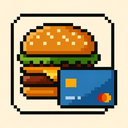
This meticulously crafted icon masterfully blends the vibrant simplicity of Pixel art, the universal appeal of Food, and the modern functionality associated with Credit card transactions. Designed for clarity, recognizability, and visual charm, this icon serves as a digital symbol representing not just consumption, but also the seamless integration of financial systems within everyday dining experiences. The artwork is constructed using a grid-based pixel style—typically 16x16 or 32x32 pixels—where each square is either black, white, or a carefully selected shade of gray or warm color to create depth and contrast. This style evokes nostalgia while maintaining contemporary relevance, reminiscent of retro video game graphics and early digital interfaces.
At the heart of the icon lies a stylized Food element. Instead of depicting a generic dish, the food component is designed to be both recognizable and symbolic. A central image features a pixelated plate with two distinct elements: first, a small circular pizza slice composed of bright red and white pixels, representing the classic Italian staple; second, a side of steamed rice or noodles in subtly contrasting tones—perhaps blue-gray or light beige—to suggest variety and balance. These food items are arranged with deliberate spacing to maintain visual harmony. The pixelation gives the food an intentional "digital" texture, making it feel like a snapshot from a retro gaming menu where meals could be selected with just one click. This approach ensures that the food symbol remains instantly interpretable even at small sizes, which is essential in mobile apps or digital dashboards.
Integrating the Credit card into this design requires careful thought to maintain balance and avoid visual clutter. The credit card element is not placed as a separate, floating object but instead becomes a subtle yet integral part of the food icon's composition. Positioned slightly below or to the right of the food item, the card appears as a minimalist pixelated rectangle with three visible features: a bold white stripe running horizontally across its top (representing the credit card's logo), and two small black digits on its left edge (e.g., "4242"), symbolizing payment details. The edges are rendered in crisp, clean lines characteristic of pixel art, giving it a sharp and modern look. Importantly, the card is not full-sized—it occupies only a few pixels in height and width to maintain focus on the primary food theme while hinting at transactional capability.
The synergy between food and payment is further emphasized through color coding. The food elements use warm, appetizing hues such as red, orange, yellow, and cream—colors that naturally stimulate hunger and joy. In contrast, the credit card portion uses cooler tones like gray or blue to provide visual contrast while maintaining a professional tone. This complementary color scheme enhances readability and creates a dynamic interplay between indulgence and financial responsibility. The pixel art style ensures that these colors are not blurred or diluted; each pixel contributes to the overall emotional impact of the icon, reinforcing both pleasure and practicality.
From a design standpoint, this icon is optimized for scalability and cross-platform use. Whether displayed on a smartphone screen, tablet interface, or desktop application menu bar, the pixel art ensures it remains legible at small sizes without losing its core identity. The high contrast between dark and light pixels allows for excellent visibility even in low-light conditions or when backgrounds are complex. Additionally, due to its vector-like structure within the pixel grid system (despite being made of discrete squares), the icon can be easily modified or adapted across different color themes—such as dark mode, minimalist designs, or vibrant interfaces—without losing its integrity.
Functionally, this icon is designed for use in digital payment apps, food delivery platforms, restaurant ordering systems, or even personal finance tools that track spending on dining. For example, when a user selects “Dining” in a budgeting app, this icon could serve as the visual cue indicating both the type of expense (food) and its method of payment (credit card). It acts as a bridge between emotional engagement—eating for pleasure—and rational behavior—paying with a card. In this way, it transforms abstract financial data into something tangible and relatable.
Moreover, the use of Pixel art adds a layer of cultural and technological nostalgia that appeals to both younger digital natives and older users familiar with classic computing environments. It evokes a sense of playfulness and creativity, making the icon not just functional but also emotionally resonant. People are more likely to remember or connect with an image that feels playful, familiar, or rooted in shared digital history.
In conclusion, this icon transcends simple representation by combining three key themes—Food, Credit card, and Pixel art—into a cohesive, visually engaging, and functionally meaningful symbol. It reflects modern life where dining out often involves digital payments, and where nostalgia in design can enhance user experience. Whether used as a menu icon, payment confirmation badge, or expense categorization tool, this pixel art fusion creates a memorable visual language that bridges appetite with accountability—making it not only useful but also deeply human.
Create your own icon with our GoGPT AI prompt:
GoGPT