

Gaming Drone Pixel art Free icon download
Download all to grab every PNG variant.
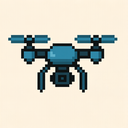
The icon described herein is a masterful synthesis of three powerful thematic elements: gaming, drone technology, and pixel art. At first glance, this compact visual representation—a mere 32x32 pixels or 64x64 pixels in standard formats—delivers an intense burst of digital nostalgia combined with futuristic innovation. The icon captures the essence of modern interactive entertainment by merging the nostalgic charm of retro video games with the sleek sophistication of contemporary unmanned aerial systems, all rendered through the deliberate constraints and aesthetic integrity of pixel art. The central figure is a stylized, miniature drone that hovers at the heart of the composition. Constructed entirely from individual pixels, its design follows a strict grid system to ensure crisp edges and consistent color palettes—hallmarks of authentic pixel art. The drone itself is not merely an abstract shape but a fully realized character with personality. It features a hexagonal body composed of 8 distinct shades in a carefully curated palette: deep navy blue (#001f3f) for the frame, bright electric cyan (#00ffff) for the rotating propellers, and radiant yellow (#ffcc00) highlights to denote energy flow. Each of its four arms extends outward at precise 90-degree angles, maintaining symmetry that enhances both visual balance and mechanical plausibility. The propellers spin with a dynamic illusion created through animation or a still representation suggesting motion via trailing pixel patterns. At the base of the drone's body, small pixelated thrusters emit faint orange and red sparks—rendered as jagged clusters of 2x2 pixel blocks—to suggest power output and flight readiness. These subtle effects reinforce the icon’s technological theme while staying true to the limitations of early 8-bit systems. The entire drone is elevated slightly above a grid-based terrain composed of simple, blocky pixels in earthy greens and browns, evoking a low-poly landscape reminiscent of classic arcade environments like those found in Super Mario Land or EarthBound. What truly elevates this icon from being just another digital symbol is its integration with gaming culture. The drone isn’t simply a machine—it’s a playable character, an avatar. On its front panel lies the glowing face of a pixelated gamer spirit: two large, expressive eyes made from alternating white and black pixels (a classic 8-bit facial style), suggesting awareness and alertness. A small smile is formed by three adjacent pixels in yellow, hinting at friendly interaction. The "face" serves as a narrative device—this drone isn't just flying through the air; it's a digital companion in an adventure game, perhaps piloted by the player from a top-down or isometric perspective. This connection to gaming extends beyond visual metaphors. The icon’s design follows principles commonly found in video game user interfaces: high color contrast for visibility, minimal detail to avoid clutter at small scales, and symbolic clarity even when rendered at 16x16 pixels. When used in a mobile app menu, game launcher screen, or inventory system (as seen in titles like Stardew Valley or Terraria), the icon instantly communicates its purpose—player-controlled aerial units within a game world. It functions as more than decoration; it's an essential interface element that conveys functionality and theme simultaneously. Moreover, the drone’s form reflects modern gaming trends such as customizable avatars, drone racing simulations (e.g., Drone Racing League), and open-world exploration mechanics. In the context of indie games or retro-inspired titles, this icon might represent a collectible gadget or upgrade that allows players to access hard-to-reach areas. Its pixelated construction makes it feel like an item from a game cartridge—something unearthed in a virtual attic, preserved with care. The choice of pixel art as the medium is not incidental but fundamental. Pixel art forces deliberate artistic decisions: every color choice matters, every line must serve both form and function. This icon exemplifies that philosophy perfectly. There’s no unnecessary detail—no shading gradients or anti-aliased edges—which would compromise its retro authenticity. Instead, it embraces limitations as strengths: the blockiness of shapes becomes charm, and the limited palette becomes a cohesive visual language. Furthermore, pixel art evokes emotional resonance with long-time gamers. For those who grew up playing Game Boy games or NES titles, this icon acts as a time capsule—a small but potent reminder of simpler times when gameplay was measured in pixels rather than megapixels. Yet, it also looks forward: the drone’s futuristic design suggests that classic aesthetics can evolve and thrive in modern digital ecosystems. In summary, this icon is not merely an image—it’s a cultural artifact. It bridges eras by fusing the tactile nostalgia of pixel art with the cutting-edge excitement of drone technology and the immersive depth of video game storytelling. Whether displayed in a mobile app drawer, used as a power-up indicator in a side-scrolling shooter, or featured on merchandise for gaming conventions, this icon speaks volumes about identity: it represents innovation within tradition, playfulness within precision. It’s gaming reimagined through the lens of retro craftsmanship—and a drone that doesn’t just fly through the air but soars through memory.
Create your own icon with our GoGPT AI prompt:
GoGPT