

Geography Heart Sharp edges Free icon download
Download all to grab every PNG variant.
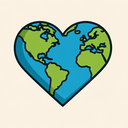
At first glance, the icon appears as a striking geometric abstraction that immediately commands attention. It is not merely a visual symbol—it is an embodiment of deep conceptual interplay between geography, emotion, and design precision. The central form combines the symbolic shape of a heart with the intricate topographical complexity of earth’s surface, all rendered with sharp angular lines that create an intense sense of dynamism and tension. This icon transcends traditional symbolism; it becomes a narrative object—an artistic manifesto about how place shapes feeling, and how emotion can be mapped onto terrain.
The foundation of the icon is its central motif: a stylized heart. However, this is no conventional romantic heart with smooth curves. Instead, the heart’s outline has been deconstructed and reassembled using a series of sharp, deliberate angles—each edge slicing through space like tectonic plates shifting beneath the earth’s surface. These angular segments are not random; they mimic the jagged lines of mountain ranges, fault lines, and continental borders. The result is a heart that does not appear soft or sentimental but rather resilient, fractured yet whole—a symbol of enduring emotional strength rooted in place.
Geography is not just a backdrop in this icon—it is its very essence. Every edge serves as both a topographic marker and an emotional boundary. The heart’s upper lobes, for instance, are composed of stylized mountain peaks—sharp, pointed formations that rise like monuments to personal or collective resilience. These peaks resemble real-world geographic features such as the Himalayas or the Andes, suggesting not just physical terrain but also metaphorical altitudes: emotional highs and lows experienced over time. The lower portion of the heart curves outward into a series of valleys and canyons, carved with precision to evoke deep riverbeds or rift zones. These recesses suggest vulnerability—but not weakness—indicating that the heart’s depth is not a flaw but a testament to experience.
What makes this icon truly unique is how it uses geographical principles as an architectural language for emotion. The sharp edges are not merely decorative; they serve as cartographic tools, dividing the heart into distinct zones of feeling. Some segments are defined by straight lines that represent clarity, direction, and resolve—like the unbroken horizons of a desert or the clean lines of a surveyor’s map. Other areas feature densely packed angles and intersections, evoking urban sprawl or complex social networks—echoing how cities shape identity and relationships in modern life.
The color palette reinforces this duality: cool blues and grays dominate the mountainous regions, suggesting distance, solitude, and intellectual clarity. Warmer reds and oranges emerge from the lower sections—the heart’s core—where sharp edges converge into dense clusters. These areas are not soft; they pulse with intensity, symbolizing passion, conflict, or transformation. The interplay of color and line creates a visual rhythm that mimics how emotional geography evolves: sometimes calm and measured, other times turbulent and overwhelming.
Even the negative space within the icon carries meaning. The gaps between sharp edges are not empty—they become symbolic territories. Some represent uncharted emotions, areas of life yet to be explored or understood. Others reflect boundaries: cultural divides, personal limits, or emotional walls that have been built over time. These spaces are as essential as the solid lines themselves—because geography is not just about landmasses but also about what lies between them.
On a deeper philosophical level, this icon challenges the idea that emotion and place are separate domains. It suggests that our hearts are shaped by where we come from—the mountains of our childhood, the rivers of migration, the cities where we grew into ourselves. The sharp edges symbolize not only pain but also precision: every scar is a landmark; every wound carries a story etched in terrain. In this way, geography becomes an internal landscape—our emotional topography—and the heart becomes a map of lived experience.
Finally, the icon’s design reflects modern sensibilities—minimalist yet complex, abstract yet deeply personal. It resonates with contemporary audiences who value authenticity and depth in symbols. Whether used in branding for travel companies, mental health initiatives, or geographic education platforms, this icon communicates a powerful truth: we are not separate from our environment. Our hearts beat to the rhythm of the earth—and sometimes, they are as sharp and defined as its most dramatic landscapes.
In sum, this icon is an intricate fusion of geography, heart, and sharp edges. It transforms emotional abstraction into tangible form—where every angle speaks a language of place and feeling. It reminds us that we are not just inhabitants of the world but also cartographers of our own souls.
Create your own icon with our GoGPT AI prompt:
GoGPT