

Geography Key Minimalist Free icon download
Download all to grab every PNG variant.
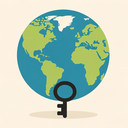
The minimalist geography key icon represents a profound synthesis of cartographic tradition and modern design philosophy. At its core, this icon embodies the essential concept of "key" as both a functional tool for interpretation and a symbolic gateway to understanding spatial relationships. It is not merely an embellishment or decorative flourish but an intentional distillation of geographical knowledge into a clean, geometric form that speaks directly to the viewer’s cognitive processes.
Every element within this icon has been meticulously crafted with purpose. The design begins with a simple, perfectly circular outline—this circular base serves as the foundational metaphor for the globe itself. It is not a literal representation of Earth but rather an abstraction, capturing the idea of planetary scale and global interconnectedness in its most basic form. The circle's minimalist precision suggests universality, emphasizing that geography transcends borders and cultures by focusing on shared spatial principles.
Within this circle rests the central symbol: a stylized keyhole-shaped figure composed of two geometric elements—a vertical line intersecting a horizontal arc at their midpoint. This fusion represents the "key" aspect in its most fundamental sense—the unlocking of understanding. The vertical element signifies direction, alignment, and stability—qualities essential to navigation and mapping. It suggests the meridians that slice through our planet, offering reference points for location and orientation.
The horizontal arc, meanwhile, evokes the concept of latitude or horizons—the equator that divides hemispheres and marks a point of equilibrium in geographical study. This arc is not drawn as a full semicircle but as a subtle curve that gently lifts at its center, creating an open form. The openness suggests access and discovery—this icon doesn’t merely present data; it invites exploration. It functions like an actual key: when inserted into the lock of spatial awareness, it turns, unlocking comprehension.
The balance between negative space and positive form is central to the minimalist ethos of this icon. No extraneous lines or textures clutter its surface. The contrast between the solid black (or a single bold hue) stroke and the expansive white background creates a high-contrast visual that immediately captures attention without overwhelming. This starkness emphasizes clarity—there is no room for misinterpretation, which mirrors how geography itself aims to present objective spatial truths.
From a geographical standpoint, this icon subtly references multiple cartographic conventions. The vertical line can be interpreted as the prime meridian or the axis of rotation; the arc suggests a parallel of latitude or even an imaginary boundary used in thematic mapping. Yet, it never attempts to illustrate any specific region, country, or topographical feature. This deliberate omission reinforces its role as a universal key—not for unlocking one map but for unlocking maps themselves.
Minimalism here is not mere aesthetic preference—it’s a philosophical statement about knowledge. By stripping away complexity and ornamentation, the icon becomes more powerful in its simplicity. It communicates instantly across languages and cultures because it relies on form rather than text or iconography that might be culturally specific. This universal accessibility aligns perfectly with geography as a discipline: global in scope, inclusive in nature, concerned with the shared human experience of space.
Furthermore, the icon’s scalability is a testament to its minimalist design. Whether displayed as a tiny 16x16 pixel favicon or rendered at billboard scale for digital navigation systems, its clarity remains intact. The clean lines and balanced proportions ensure that even when reduced in size, it retains its recognizability and symbolic weight.
Color plays a subtle yet significant role in this design. While the icon can function effectively in monochrome—black on white—it often appears in a single, bold hue such as deep navy blue or forest green. These colors are not arbitrary; they evoke natural elements associated with geography: oceans, forests, and terrain. They ground the abstract form in reality without complicating it.
Ultimately, this minimalist geography key icon is more than a visual symbol—it is an invitation to think geographically. It reminds us that maps are keys to understanding our world; that spatial literacy empowers individuals and communities; and that simplicity can convey profound meaning. In its elegant minimalism, it encapsulates the essence of geography: not just where things are, but how we know where they are—and why it matters.
In a digital age saturated with visual noise, this icon stands as a beacon of clarity. It is both an artifact of cartographic tradition and a forward-looking symbol in modern interface design. By harmonizing the concepts of Geography, Key, and Minimalism into one cohesive form, it achieves what great icons always do: communicates more than words ever could.
Create your own icon with our GoGPT AI prompt:
GoGPT