

Hardware Moon Glassy Free icon download
Download all to grab every PNG variant.
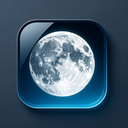
The glassy hardware moon icon is a masterful synthesis of three seemingly disparate elements—hardware engineering, lunar mystique, and a glass-like surface finish—that come together to form a visually captivating and symbolically rich digital emblem. This icon transcends mere visual representation; it functions as a compelling metaphor for the intersection between human innovation and natural wonder. At first glance, one is drawn to its polished transparency—its glassy sheen that catches light like a prism—yet deeper inspection reveals intricate details that speak to sophisticated hardware design and an almost spiritual reverence for the Moon. At its core, this icon captures the essence of modern technology through its carefully engineered form. The structure appears as if forged from precision-crafted metal alloys—perhaps titanium or aerospace-grade aluminum—sleek yet durable, embodying the strength and resilience associated with high-end hardware components. Every edge is perfectly chamfered; every curve follows geometric principles that suggest both functionality and aesthetic harmony. Embedded within this metallic framework are microscopic circuit patterns etched into the surface, resembling microprocessor pathways that pulse with faintly glowing light in cool blue hues. These aren’t mere decorative elements—they symbolize the internal logic of a smart device, an IoT sensor node, or a space-bound computing module designed to operate in extreme environments. Yet what truly sets this icon apart is its lunar motif. The central form mimics the silhouette of a full Moon—perfectly circular and symmetrical—floating at the heart of the hardware structure. However, it is not merely a static image of our celestial neighbor; instead, it’s reimagined through a technological lens. The Moon's surface features subtle craters and basins, but they are rendered with high fidelity, as if scanned from real lunar topography captured by orbital satellites. These geological features are not crude representations—they are textured with precision depth maps that suggest actual gravity wells and impact zones. The craters shimmer faintly under ambient light simulations, evoking the way sunlight glances off regolith in the vacuum of space. Crucially, this Moon is not made of rock and dust—it’s composed of a glassy material that mirrors both technological advancement and aesthetic refinement. The surface possesses an ultra-high-gloss finish with reflective properties akin to polished obsidian or high-grade tempered glass. This glassy quality creates dynamic visual effects: depending on the viewing angle or lighting condition, the icon appears to shift in tone—from deep indigo to silvery white—and refracts light into rainbow halos around its edges. These optical illusions give the impression of depth and movement, as if the Moon itself is alive with energy. The glassy texture also serves a symbolic purpose. It represents clarity—both technological and emotional. In an era dominated by digital overload and information fatigue, this icon suggests transparency in design: clean interfaces, honest data flow, unobstructed insights. The glassy layer acts as a protective yet see-through shield—one that safeguards the delicate hardware beneath while allowing users to glimpse its inner workings with confidence. From a compositional standpoint, the integration of hardware and Moon is seamless. The metal frame surrounding the lunar disc doesn’t obstruct it; rather, it frames it like an astronaut’s visor or a space telescope lens. Within this frame, micro-sensors and optical ports are embedded with lifelike accuracy—tiny lenses that capture light from within the glassy Moon surface, suggesting real-time data collection from an extraterrestrial environment. These elements reinforce the icon’s narrative: a technological instrument designed to observe, analyze, and connect with our Moon on a profound level. Furthermore, the icon exhibits subtle animation potential. When activated—whether through hover states or interactive modes—the glassy surface ripples faintly at the edges, simulating wave propagation across liquid or light-diffusing materials. The lunar craters glow intermittently in sync with data pulses, mimicking heartbeats of a living system. This dynamic behavior enhances its usability as a UI element while deepening its symbolic resonance: a bridge between machine intelligence and celestial wonder. In terms of color scheme, the icon employs an elegant contrast: cool steel grays and deep space blacks form the hardware base, while the Moon’s glassy surface transitions from translucent silver at its center to deep sapphire blue at the periphery. These hues evoke both night sky clarity and high-tech precision. Accents of electric cyan or pale lavender light pulse gently in circuit pathways, echoing neural networks or satellite signals—further emphasizing connectivity. Ultimately, this glassy hardware moon icon is more than a visual symbol; it is a philosophical statement about humanity’s journey into space and technology. It embodies the dream of exploring our nearest celestial body through advanced tools—not with brute force, but with elegant engineering wrapped in an ethereal glow. It reminds us that innovation doesn’t have to destroy beauty—it can amplify it. The Moon, once a distant myth, is now accessible through machines built with care, precision, and a touch of magic. This icon stands as a monument to what happens when we merge our most advanced hardware with the ancient allure of the cosmos—creating something not only functional but profoundly meaningful.
Create your own icon with our GoGPT AI prompt:
GoGPT