

Hardware Robot Monochrome Free icon download
Download all to grab every PNG variant.
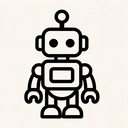
The monochrome hardware robot icon presents a compelling fusion of technological precision, mechanical elegance, and minimalist design philosophy. At its core, this icon embodies the essence of modern digital interfaces while maintaining a timeless aesthetic rooted in industrial design principles. Each line and geometric shape has been carefully crafted to convey not just an image of a robot but the very spirit of hardware innovation—reliable, functional, and forward-thinking.
Visually, the icon adheres strictly to monochrome design conventions, utilizing only black and white or varying shades of gray. This deliberate restriction eliminates any distraction from color psychology or emotional association, allowing viewers to focus purely on form, structure, and function. The absence of color underscores the icon’s identity as a digital artifact—clean, efficient, and universally interpretable across platforms and devices. In this context, monochrome becomes more than an artistic choice; it is a symbolic representation of objectivity, neutrality in data processing, and the fundamental nature of binary systems that underlie all computing hardware.
The central subject—a robot—is rendered with mechanical precision, featuring clearly defined geometric forms that reflect the underlying architecture of physical technology. The body is constructed from segmented rectangular panels resembling circuit board housings or industrial chassis, suggesting a fusion of electronics and mechanical engineering. Angular lines dominate the silhouette, conveying rigidity and structural integrity. These sharp edges are not merely decorative; they evoke the tactile reality of metal casings, bolts, and connectors found in real-world hardware components such as servers, robotics platforms, or embedded control systems.
Distinctive features of the robot include a symmetrical head with two large rectangular sensor eyes—simple yet expressive in their minimalism. These eyes are designed to suggest both visual perception and data intake, aligning perfectly with the function of hardware devices that process sensory inputs. The absence of eyebrows or facial details reinforces the icon’s focus on functionality over anthropomorphism. Similarly, a central antenna or communication port extends from the top of the head, symbolizing connectivity and wireless interaction—key characteristics in modern hardware ecosystems.
The robot’s limbs are articulated with precision joints that mimic real robotic servos or actuator mechanisms. The arms are extended slightly forward as if in active operation, suggesting movement, computation, or manipulation of physical objects. Each joint is represented by clean circular connectors, reinforcing the mechanical nature of the design and hinting at modular assembly—another hallmark of hardware engineering. The hands are simplified into geometric shapes with two or three fingers each, emphasizing grip and functionality rather than naturalistic detail.
The base or feet are designed with stability in mind—wider than the upper body to suggest balance and grounding. They incorporate subtle tread patterns reminiscent of robotic treads or mechanical wheels, further connecting the icon to real-world automation systems such as factory robots, warehouse drones, or autonomous delivery units. These elements collectively reinforce the icon’s identity as a machine built for purpose rather than aesthetics alone.
From a technical standpoint, the monochrome palette enhances scalability and clarity across different display resolutions and screen sizes. Whether viewed on a tiny smartphone screen or embedded in high-resolution UIs, the stark contrasts between black and white ensure maximum legibility. This is especially important for hardware-related icons that must be instantly recognizable within complex software environments—such as device manager interfaces, system dashboards, or IoT control panels.
Furthermore, the icon’s monochrome nature makes it highly adaptable to various design systems and themes. It seamlessly integrates into dark mode interfaces without requiring re-coloring or adjustments. The lack of color also ensures consistency with accessibility standards, as high contrast ratios between foreground and background elements improve readability for users with visual impairments.
Symbolically, the icon bridges the gap between abstract digital representation and tangible physical form. It represents not just a robot in isolation but an entire ecosystem of interconnected hardware—devices that sense, compute, communicate, and act upon their environment. By combining monochrome simplicity with robotic precision and hardware authenticity, this icon serves as a universal signifier for technological innovation: efficient, reliable, and unobtrusively powerful.
In summary, the monochrome hardware robot icon is far more than a visual symbol—it is a conceptual artifact that encapsulates the convergence of mechanical engineering, digital logic, and minimalist design. Through its use of strict black-and-white contrast, geometric clarity, and realistic mechanical details, it communicates both functional purpose and technological sophistication. In an era where software often dominates our digital experience, this icon reminds us of the critical role that physical hardware plays in enabling the systems we rely on daily.
Create your own icon with our GoGPT AI prompt:
GoGPT