

Hardware Smartphone Retro Free icon download
Download all to grab every PNG variant.
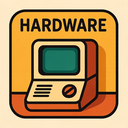
The icon embodies a fascinating convergence of three pivotal concepts—Hardware, Smartphone, and Retro—creating a visual narrative that transcends time while celebrating technological evolution. At first glance, this icon presents an artifact from a bygone era: a stylized smartphone rendered with the unmistakable aesthetic of 1980s and 1990s consumer electronics. Its form is distinctly non-sleek and intentionally bulky, reflecting the physical dimensions of early mobile communication devices like the Motorola DynaTAC or Nokia 3310. The device is not a minimalist slab of glass and metal; instead, it features chunky plastic casing with visible seams, rubberized grips on either side for better handling, and a prominent antenna that juts upward in an angular fashion—a hallmark of retro mobile design.
Every element of the icon's hardware architecture is meticulously crafted to evoke authenticity. The screen is not a seamless OLED panel but rather a small, square monochrome LCD display with visible pixelation, reminiscent of early digital watches and portable gaming consoles. A faint grid pattern overlays the display, suggesting its low resolution and limited color palette. At the center of this screen lies an abstract representation of a keypad: not modern touch buttons, but physical mechanical keys with rounded edges and slight indentations where fingers would naturally press them. These keys are arranged in a classic 3x4 layout, echoing the iconic design that defined early mobile phones before smartphones took over.
One of the most striking aspects of this icon is its deliberate hardware nostalgia. The device's casing is crafted with attention to vintage materials: it features a textured, slightly grainy surface finish that mimics the feel of aged thermoplastic. Colors are intentionally limited to earthy tones—muted green, faded blue, and charcoal gray—harking back to the palette of 1990s consumer electronics. A small plastic "battery cover" is visible on the back, held in place by four screws with slightly worn heads, suggesting years of use and occasional battery replacements. Beneath this cover lies a crude representation of a removable lithium-ion battery, complete with exposed terminals and a tiny "charge indicator" LED that glows faintly in amber.
The smartphone aspect is preserved not through functionality but through symbolic representation. While the device clearly lacks modern capabilities like touchscreen interfaces or app icons, its purpose as a communicator is evident. A small speaker grille appears at the top edge, and a microphone hole near the bottom suggests audio input and output functionality. The antenna—though now more decorative than functional—serves as a visual metaphor for connectivity, bridging the gap between past and present technological ideals. At the front center of the screen, a simple "call" icon—a red phone receiver—is rendered in bold outline style, signaling its primary purpose: making voice calls.
What elevates this icon beyond mere nostalgia is how it masterfully integrates retro design with hardware authenticity. Every physical feature—be it the segmented buttons, the textured casing, or the visible circuit board patterns beneath a translucent section of the back panel—serves both aesthetic and symbolic purposes. The icon subtly implies that technology is not just about progress but about tangible components and craftsmanship. Unlike sleek modern smartphones that hide their hardware behind glass and aluminum, this retro smartphone proudly displays its inner workings: exposed traces, discrete capacitors, and tiny solder joints visible through a transparent section of the casing.
The icon also carries deeper cultural significance. It represents a time when mobile phones were not extensions of personal identity but tools with specific functions. They were less about constant connectivity and more about reaching someone in an emergency or coordinating plans between locations. This sentiment is reinforced by the design: there are no app icons, no notifications, no social media badges—only the essential elements needed for a phone call. It’s a digital artifact that speaks to simplicity, reliability, and durability—qualities often associated with well-engineered hardware from previous decades.
Ultimately, this icon is more than a visual symbol—it’s an homage to the physicality of technology. By combining retro aesthetics with authentic hardware details and referencing the foundational concept of the smartphone as a communication device, it creates a powerful narrative. It reminds us that every modern touchscreen device once began as a clunky plastic box with buttons, batteries, and antennas—and that progress is not just about shrinking devices but understanding what made them meaningful in the first place. In its deliberate imperfections and nostalgic charm lies a celebration of technological heritage: where Hardware isn't just components, Smartphone isn't just software, and Retro isn't merely outdated—it's timeless.
Create your own icon with our GoGPT AI prompt:
GoGPT