

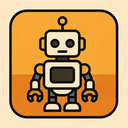
Internet Robot Classic Free icon download
Download all to grab every PNG variant.
```html
At the heart of digital culture lies an icon that transcends mere visual representation—it becomes a symbol of technological evolution, human-machine collaboration, and nostalgic reverence. This particular icon seamlessly integrates three powerful concepts: Internet, Robot, and Classic. Each element is not merely present but thoughtfully interwoven into a cohesive visual narrative that speaks to the past, present, and future of human interaction with technology.
The Internet is not just a backdrop—it’s the very lifeblood of this icon. The central feature is a stylized globe composed of interconnected nodes and flowing lines resembling digital data streams. These streams form an intricate web that pulses with faint neon light, symbolizing the global network that binds people and information across continents. At strategic points along the network, tiny glowing dots represent data centers, satellites, or user devices—tiny beacons in a vast digital cosmos. The globe is subtly segmented into recognizable geographic regions, suggesting inclusivity and universality. This Internet representation is not abstract; it’s alive with motion implied through the flowing lines and animated light patterns that suggest continuous information exchange—the very essence of what the Internet enables.
Emerging from this digital network is a Robot, rendered with deliberate mechanical precision yet imbued with an almost friendly demeanor. This robot is not a menacing machine of science fiction, but rather a benevolent assistant—a digital companion evolved from early 20th-century visions of artificial intelligence. Its body is composed of clean geometric shapes: rounded metallic cylinders for the torso, angular arms with articulated joints, and a head shaped like an old-school computer monitor or CRT screen. Instead of eyes, the robot’s face features a simple LED display that shows changing symbols—a blinking question mark, then a smiley face, then binary code—communicating curiosity and intelligence. This design pays homage to classic robotics aesthetics from the 1950s and 60s while subtly integrating modern UI elements like touch-sensitive screens.
What makes this robot truly distinctive is its interaction with the Internet. One of its arms extends outward, not holding tools or weapons, but cradling a small data packet shaped like a capsule, glowing with light. This gesture symbolizes the robot’s role as an intermediary—accessing information from the network and delivering it to users in a human-friendly format. The other arm gently rests on the Internet globe, indicating harmony between machine and network. This interaction is not aggressive or invasive; instead, it's collaborative, almost nurturing—an embodiment of how technology should serve humanity.
Finally, the Classic aspect is where this icon earns its enduring significance. The entire design adheres to principles of retro-futurism and mid-century modernism—design philosophies that celebrated both technological optimism and aesthetic simplicity. The color palette is restrained: deep navy blue for the background, metallic silver for the robot, warm amber glow for data streams, and soft white highlights to suggest clarity. The lines are clean but not sterile; they have a slightly hand-drawn quality reminiscent of 1970s technical illustrations or early computer schematics. Fonts used in any accompanying text (if present) would be typewriter-style or sans-serif with subtle serif flourishes—evoking the design language of vintage computers like the Apple II, Commodore 64, or IBM PC.
Even in its details, classicism is evident: the robot’s joints resemble those found in old mechanical toys; its torso bears faint grooves and panel lines reminiscent of early arcade machines. The Internet globe features a slight texture resembling brushed metal or aged paper—suggesting durability and timelessness rather than digital impermanence. There are no gradients or drop shadows that scream "modern"—instead, the icon relies on line work, flat colors, and symbolic clarity.
When viewed as a whole, this icon becomes more than a representation of technology—it’s a cultural artifact. It encapsulates the spirit of early Internet pioneers who envisioned global connectivity not as commercial infrastructure but as a shared digital commons. It reflects the hopes and fears of an age when robots were imagined not as replacements for humans but as partners in progress. And through its classic design language, it resists obsolescence, remaining relevant even as technology evolves at breakneck speed.
In essence, this icon is a bridge: between the mechanical and the digital, between past and future, between human imagination and technological achievement. It stands as a reminder that innovation need not discard tradition—that beauty can be found in simplicity, connection in structure, and intelligence in form. In an era of fleeting trends and disposable design, this fusion of Internet, Robot, and Classic offers a timeless vision: where technology serves humanity with elegance, clarity, and enduring grace.
```Create your own icon with our GoGPT AI prompt:
GoGPT