

Internet Robot Retro Free icon download
Download all to grab every PNG variant.
```html
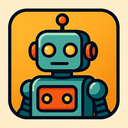
The icon in question is a masterful amalgamation of three powerful conceptual elements: the digital age's backbone—Internet; the futuristic symbol of artificial intelligence—Robot; and the nostalgic charm of bygone technological eras—the Retro aesthetic. This carefully designed emblem encapsulates not just visual elements but also profound cultural and technological narratives, making it an iconic representation of how our digital present is deeply rooted in past innovations while continually evolving toward a future shaped by intelligent machines.
At first glance, the icon presents a striking retro-futurist silhouette: a humanoid robot constructed from 1980s-style circuitry and analog components. Its body is composed of interlocking geometric shapes reminiscent of vintage computer hardware—rectangular modules with rounded edges, metallic gray finishes with subtle greenish-blue glow highlights along the seams, evoking the iconic cathode-ray tube (CRT) screens and blinking LED indicators common in early personal computers. The robot’s torso features a central circular panel resembling an old-fashioned modem or data terminal, pulsing faintly with a warm orange and blue gradient, symbolizing the continuous flow of digital information.
The head is particularly evocative—shaped like a classic 1970s-80s robot from science fiction cartoons and B-movies. It has large, expressive optical sensors that resemble oversized television screens with pixelated displays showing scrolling binary code or abstract network maps. These "eyes" are not just decorative; they actively animate in real-time to simulate data processing, subtly shifting patterns like a live connection to the Internet. The robot’s facial features are minimalistic—two vertical lines for eyebrows and a small, curved line for a mouth—but still convey emotion through slight movement and light modulation.
The most compelling aspect of the icon lies in how it integrates the concept of "Internet." Instead of conventional web symbols like globes or nodes, the robot’s spine is composed entirely of interconnected circuit-like ribbons that form an abstract representation of a global network. These lines resemble vintage telephone wire patterns fused with modern fiber-optic trails, glowing with a soft cyan and magenta light—colors synonymous with early internet culture and dial-up tones. The ribbons spiral upward, connecting to the robot’s head where they converge into a central data hub resembling an old-school Ethernet port or modem jack.
To emphasize the retro theme, the entire icon is framed within a pixelated border that mimics the aesthetic of early video games and 8-bit graphics. This frame features jagged edges, limited color palettes (typically 4-8 colors), and dithered patterns common in systems like the Nintendo Entertainment System (NES) or Commodore 64. The background behind the robot is subtly textured with a scan line overlay, recreating the visual quality of CRT monitors. When animated, faint static flickers appear across the surface—just enough to remind viewers of dial-up connections and early online experiences.
The icon’s color scheme is meticulously curated to reflect its three core themes: cool metallic grays for robot construction; electric blues and vibrant teals for digital network pathways; warm orange and yellow hues for retro glow effects. These colors are not randomly applied but arranged in a deliberate hierarchy, with the robot's body serving as the anchor point, while the Internet elements radiate outward like signals from a central hub. The lighting effects simulate depth—shadows cast beneath components, highlights on edges—as if illuminated by a glowing server rack behind it.
Functionally, this icon would be ideal for representing platforms related to AI-driven web services, retro gaming with online connectivity, digital nostalgia apps, or educational tools about the history of computing. It could serve as a logo for an internet-based robot assistant designed with vintage aesthetics or as a symbol for a community dedicated to preserving early digital culture. Its design allows it to scale seamlessly across devices—from tiny app icons to large banners—retaining clarity and charm at any size.
Ultimately, this icon transcends mere visual appeal. It is a narrative artifact—a visual poem about the journey from analog beginnings to digital infinity, where intelligence is not alien but familiar, where connection is both ancient (through wires and signals) and eternal (through networked consciousness). It honors the past while embracing the future, reminding us that every modern breakthrough stands on the shoulders of retro innovations. In a world increasingly dominated by invisible algorithms and abstract cloud systems, this icon brings back touch, nostalgia, and meaning—proving that even in our most advanced digital era, we still remember—and celebrate—the robots of yesterday.
```Create your own icon with our GoGPT AI prompt:
GoGPT